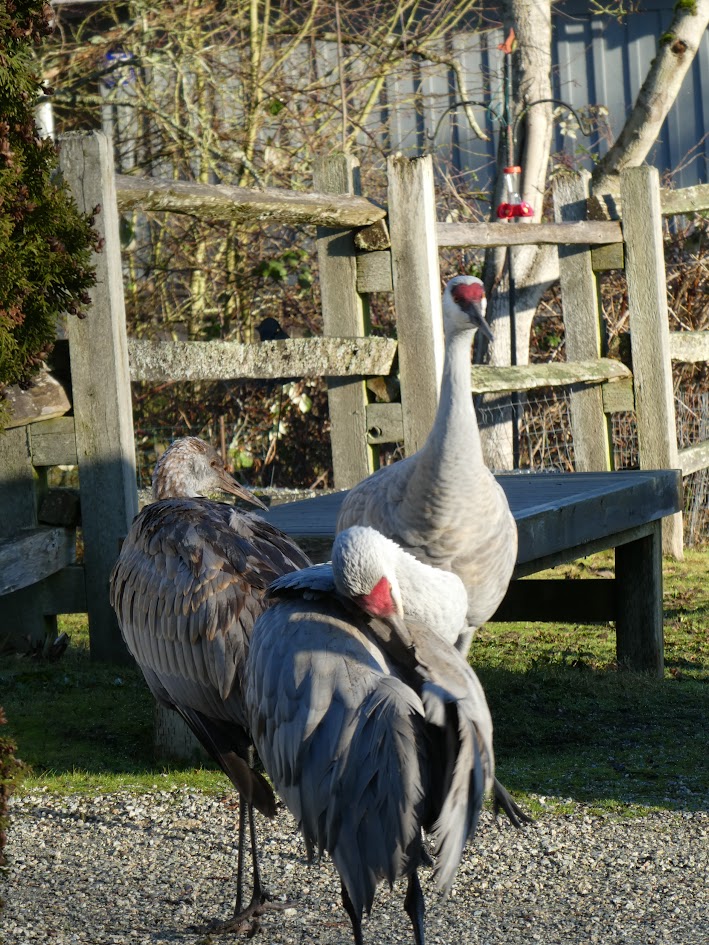
“If you will look in the direction I am pointing,” says Dr. Crane, “you will see that there is a birdfeeder hanging in a shrub. That is meant for the tiny hummingbirds; not for us big galoots. So please try to leave it alone.”
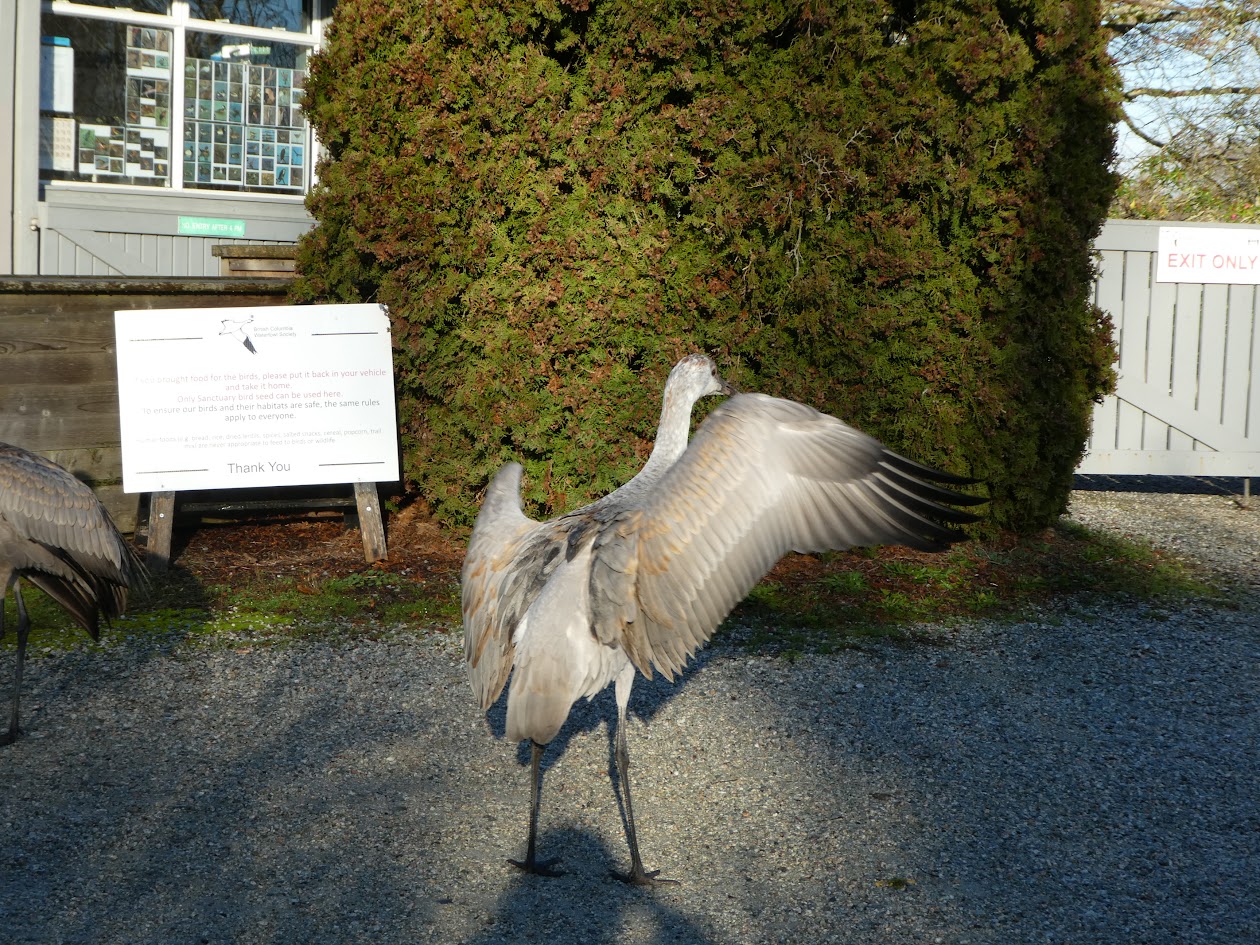
“I see that. It’s just past my head to the right.”
“It’s not for us,” says Sandy. “I’m going to keep preening my feathers so I won’t be tempted.”
“Maybe I’ll check it out later,” mutters Junior, “when Ma and Pa aren’t looking.”
“What a silly family,” the lovebirds say. “Don’t they know it’s just full of sugar water. We don’t eat that!”
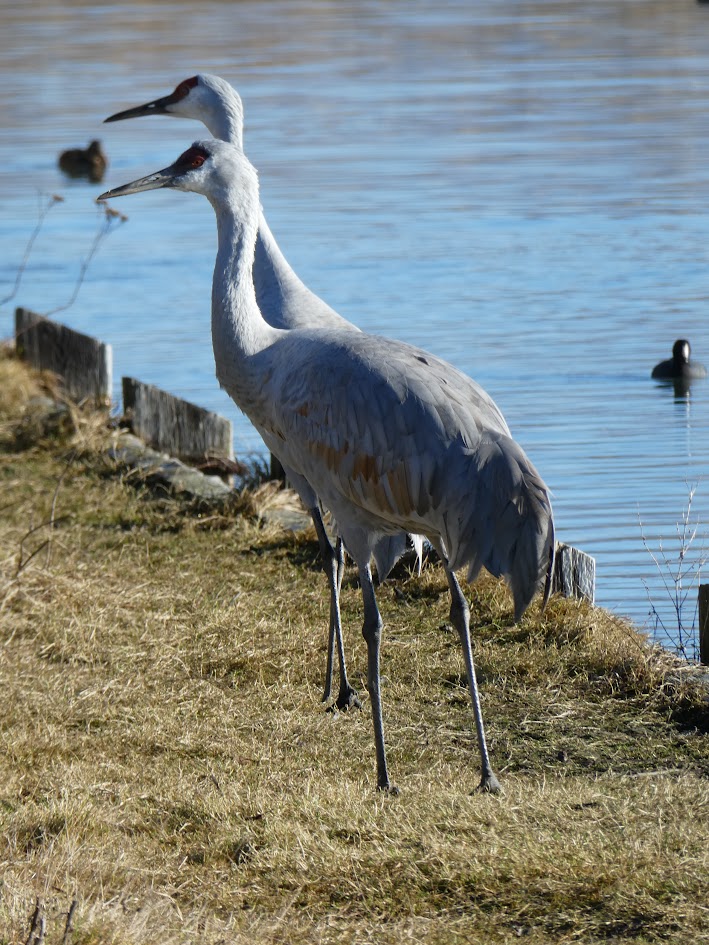
The above three photos were taken by Sonia at the Reifel Migratory Bird Sanctuary.
The sandhill cranes below, could very well be cousins of the ones above.
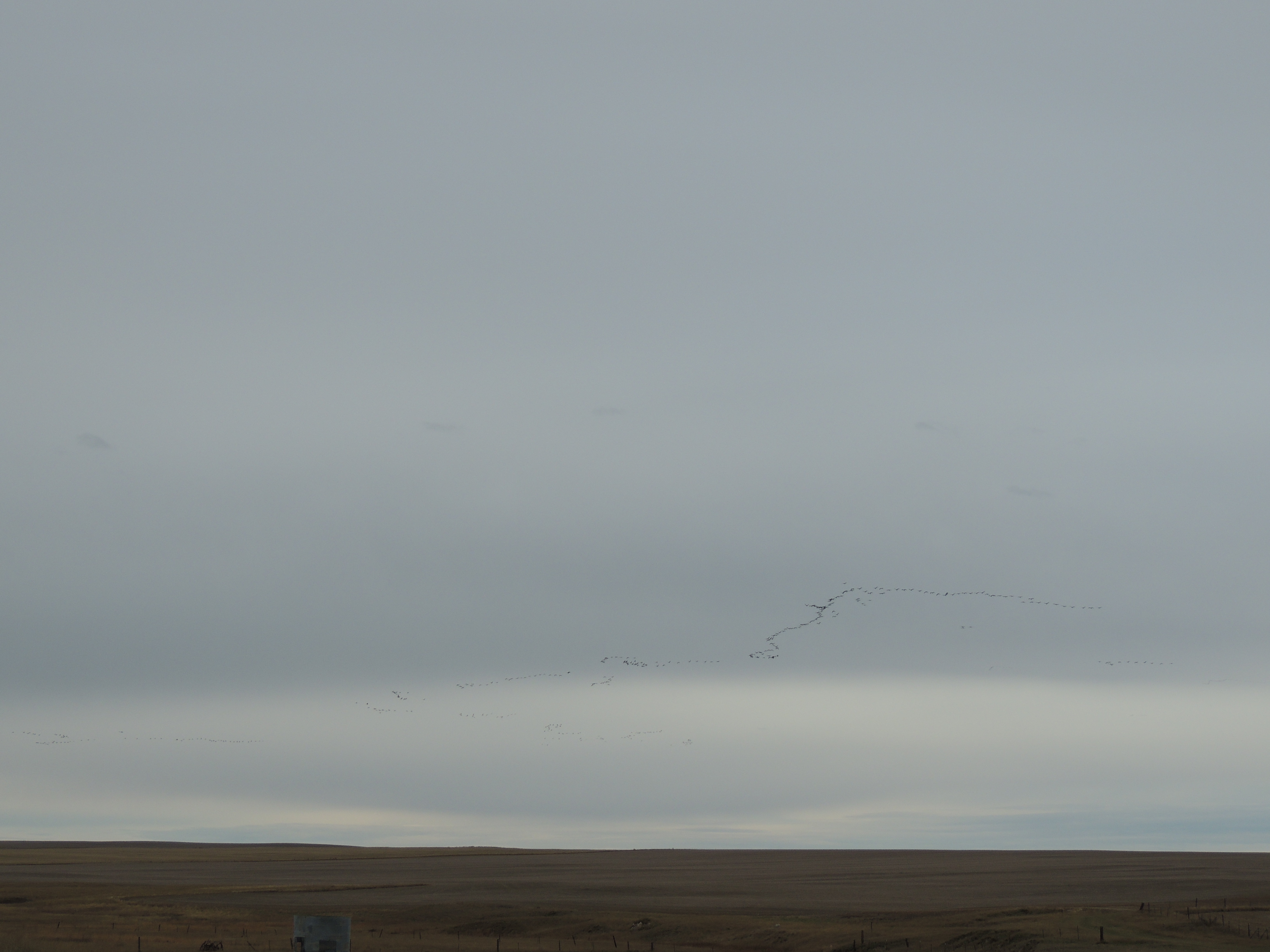
I saw these flying over Montana in the fall a few years ago, on their way south to warmer fields for feeding on grains and plant matter, and possibly snatching up the odd frog or other small animals.
They have to beware of ravens, crows, coyotes, and owls, but sometimes these would-be predators run the risk of being kicked by the cranes’ long legs or speared by their tough, sharp beaks. Even a coyote is not safe from having its skull speared if he is unlucky.
One flock is easier to see, but beyond that one are many more flocks looking like specks of dust in the distance.

Please turn the volume way up loud to hear the sound of sandhill cranes migrating. Unfortunately the first part of the video is not in focus, until I “got it together.” These sandhills were migrating over Montana when I noticed flock after flock after flock flying over. This video is mainly for the sound of the sandhills flying over.
 wordsfromanneli