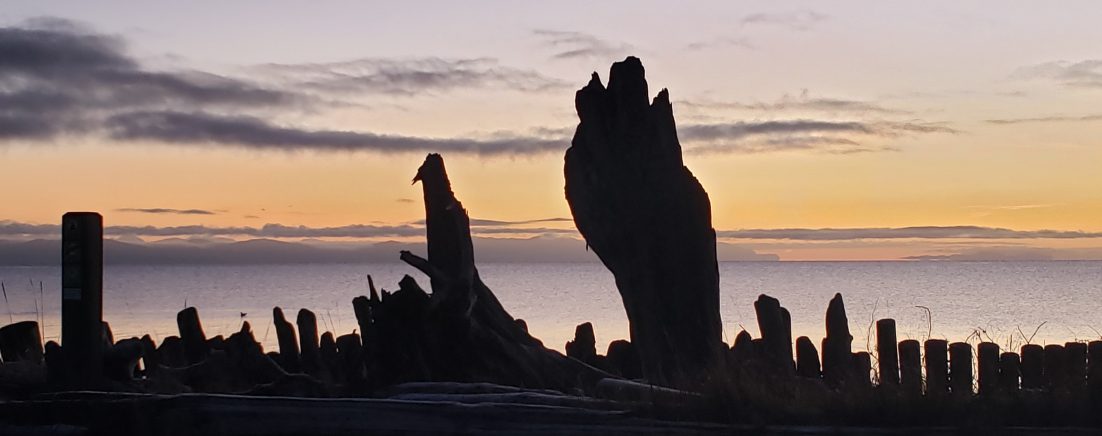
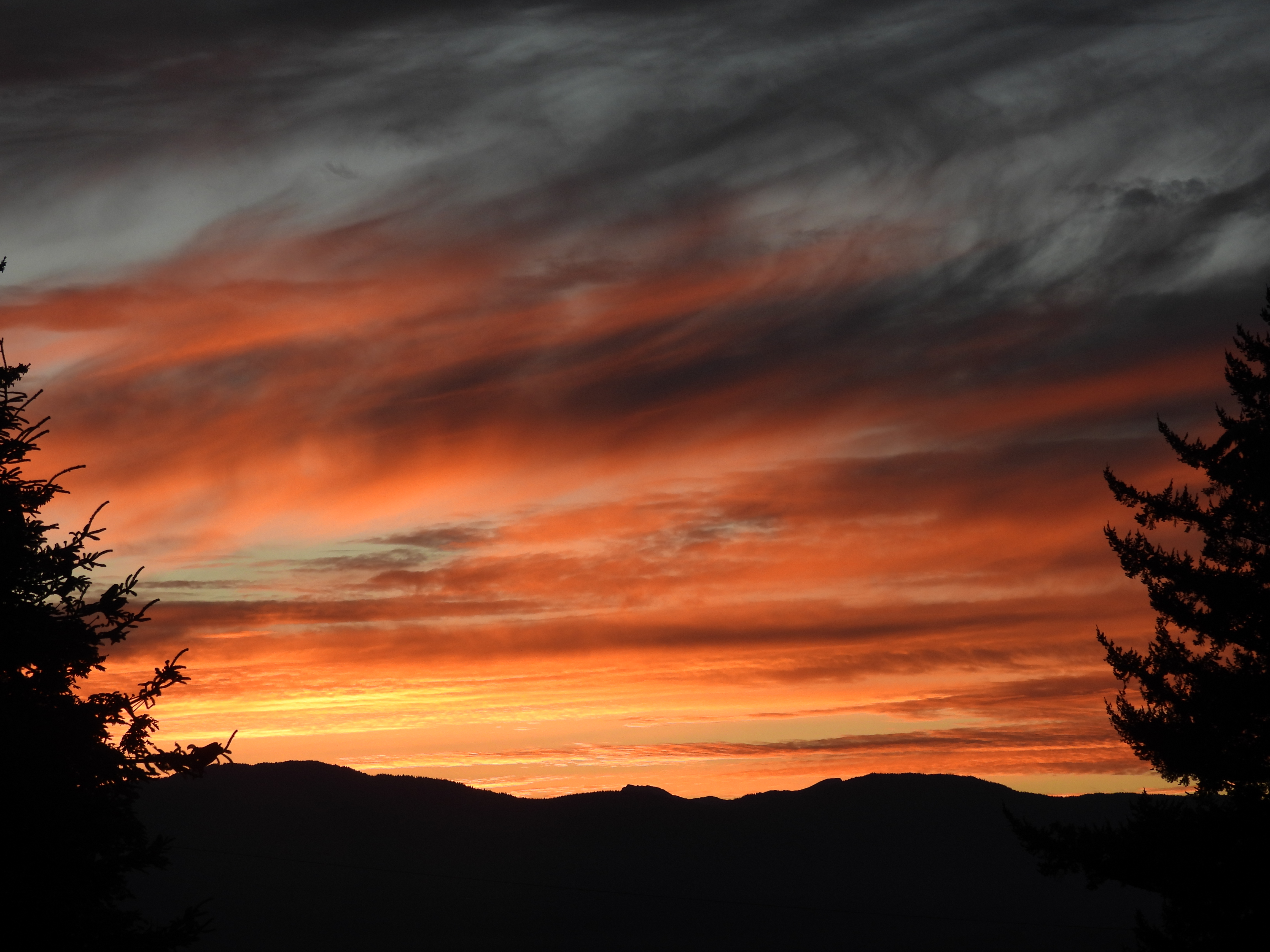
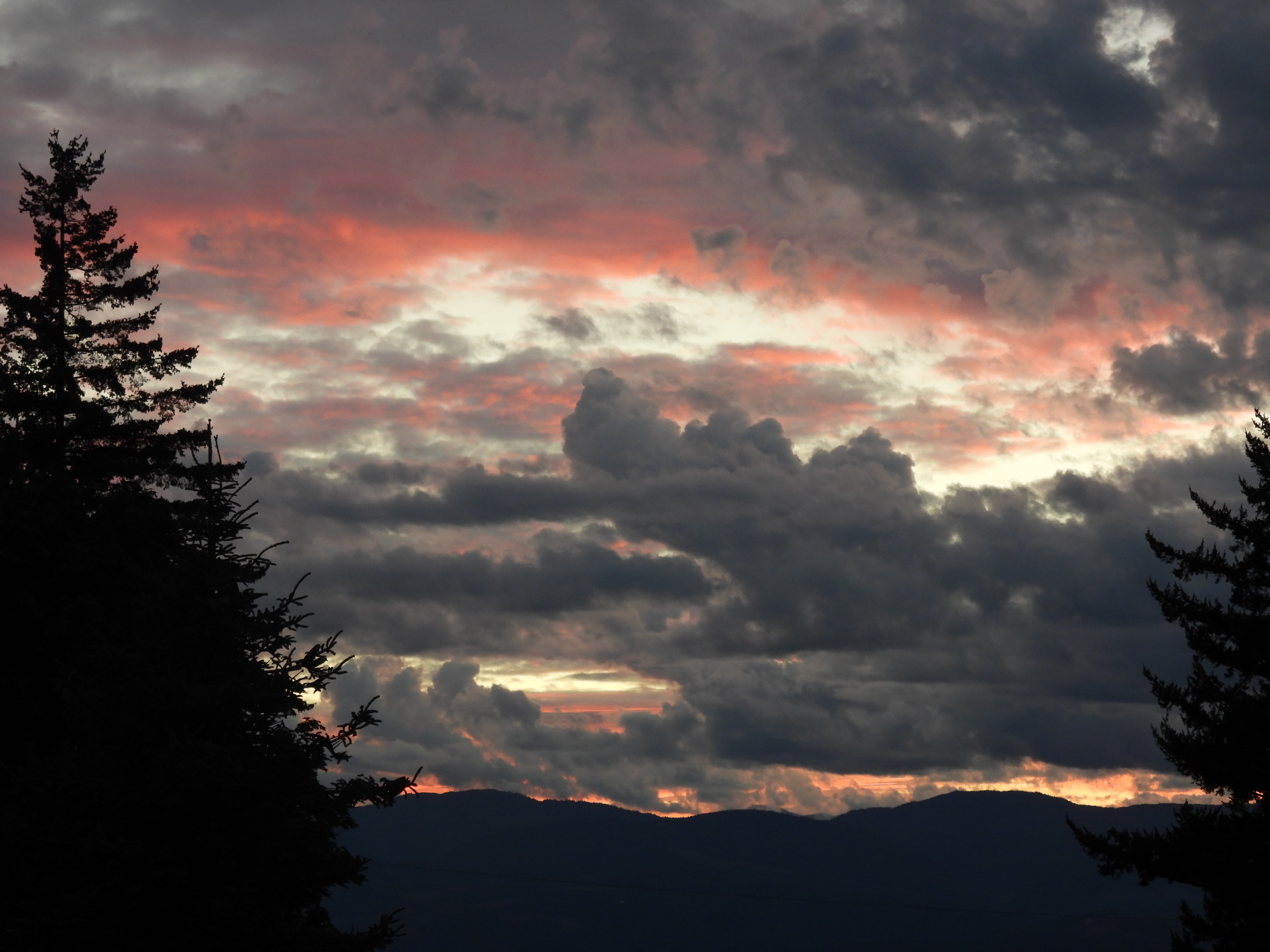
It was just another ordinary evening, until I went to open the deck door to cool the house a bit. The colours were amazing. I had to remind myself to close my mouth, stop gawking, and run for the camera.
Come Swim with Me
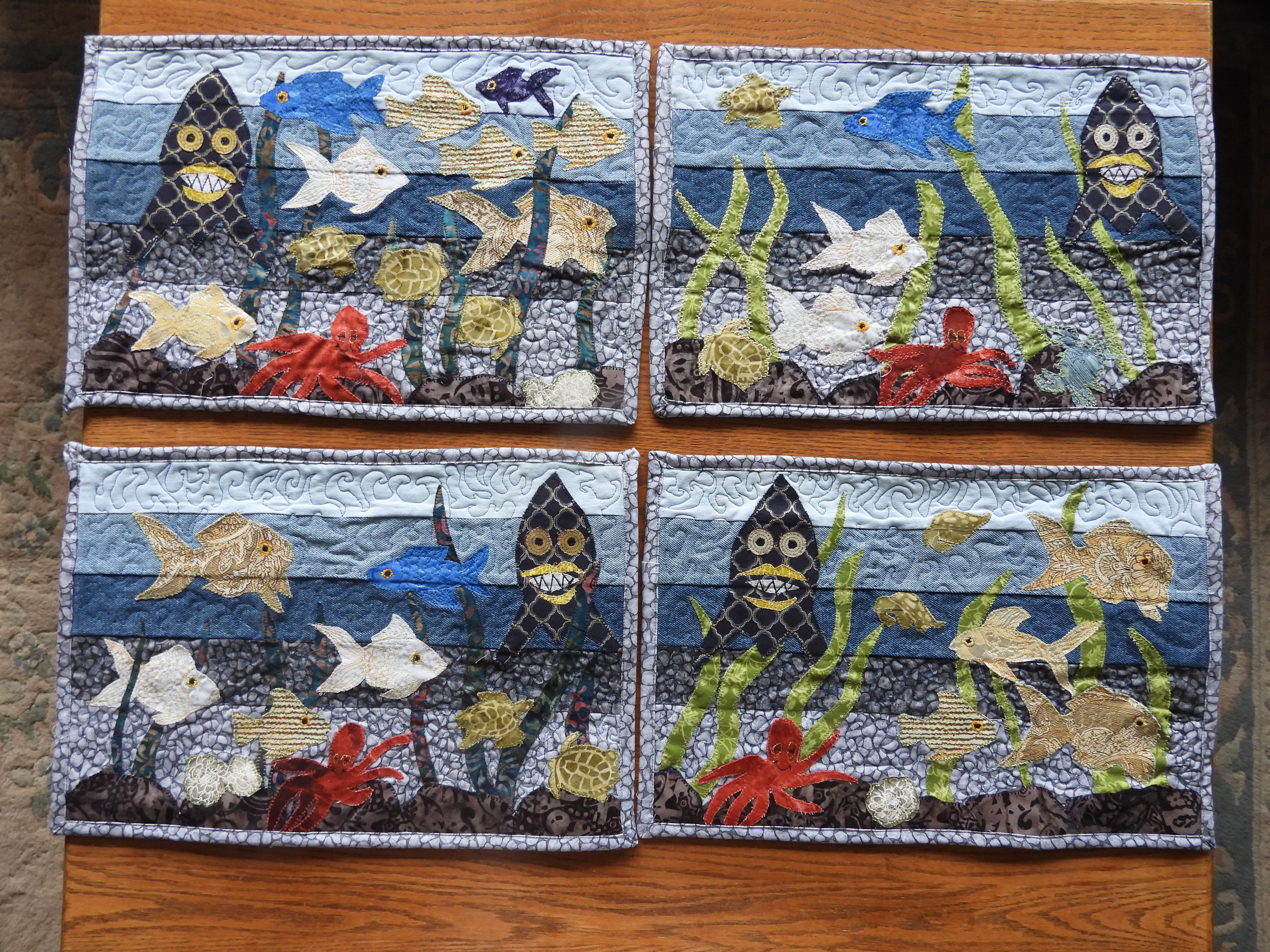
Next time you have a fish dinner, you may not even have to go fishing first. The meal is all served up on your new placemats.
I worked on these for many days, and when it was time to do the last step, I must have had that “horse to the barn” feeling and rushed through the corners when I was putting on the binding. Don’t look too closely. They are not neat and squared off.
BUT, I had a lot of fun making up these placemats, cutting out the shapes and finding a fabric that would serve as a reasonably close match to their colours in real life – not that you’d ever encounter the Darth Vader fish in real life. Each piece is first ironed on with some slightly sticky white webby material called Steam-a-Seam. When you peel off the fusible material, you iron the shape onto the place where you want it to be and then sew around it with your choice of stitch. Mine was a blanket stitch that grabs the edges every second stitch.
I doodled around with my free-motion stitching (which just means you can go in any direction by moving the material around – not just forward and back when the machine does the steering) and was able to put some scales on some of the fish and lines on their fins, and make the pupils and irises of their eyes.
In the background, I see two strips of material from the Captain’s old jeans, one light and one dark, to make up part of the water, and a light blue denim shirt for the top layer of water.
In case you were wondering, I do know that an octopus has eight legs, but he’s sitting on one of them.
That strange creature reminded me of one of my favourite Ogden Nash poems:
Tell me, O Octopus, I begs,
Is those things arms, or is they legs?
I marvel at thee, Octopus;
If I were thou, I’d call me Us.
Now the placemats are all done, it’s time to use them when we set the table. I wonder who will get the first big blob of greasy gravy on them?
If it’s YOU, beware.
Darth Vader of the Sea is watching.
Autumnal Equinox
All those lovely summer days
Under the warming sun
Turning to changes not
Unexpected, but which had perhaps been put out of
Mind.
No more leisurely days of morning birdsong
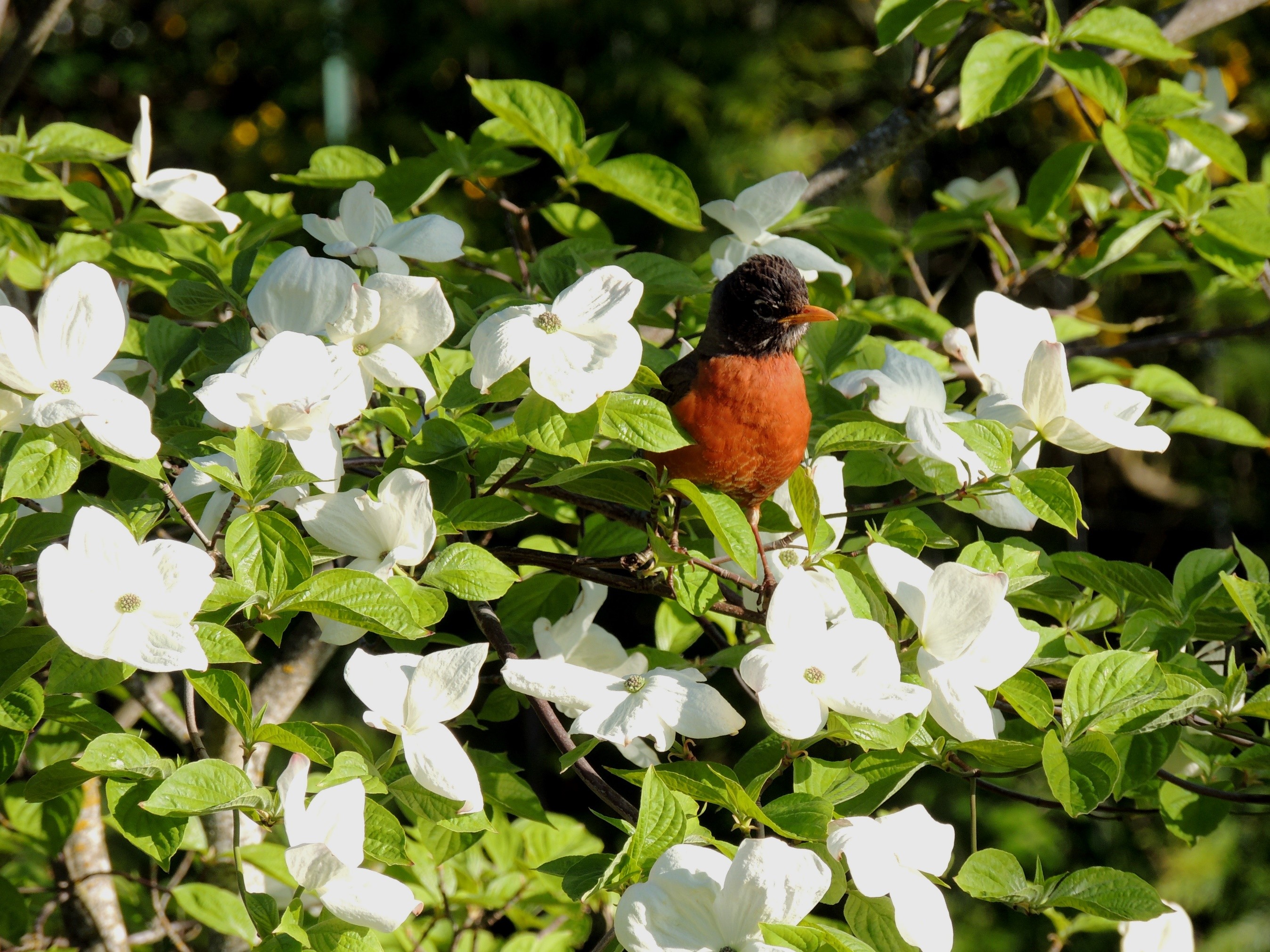
Allowing robins to
Land on my branches, singing
Ecstatically, and
Quite boldly,
Uncaring of who hears them
If they are out of tune.
Nothing to look forward to
On this autumnal equinox
Xcept to hope for a mild winter and that another spring comes soon.
I can’t wait for spring!
Changing Seasons
It is almost time for the Autumn Equinox. Depending on which part of the world you live in, you will have equal number of hours of daylight and darkness on September 22 – 23. It marks the beginning of the autumn season in the northern hemisphere and spring in the southern hemisphere.
For us in North America it marks the official beginning of autumn as we head into cooler temperatures and shorter hours of daylight.
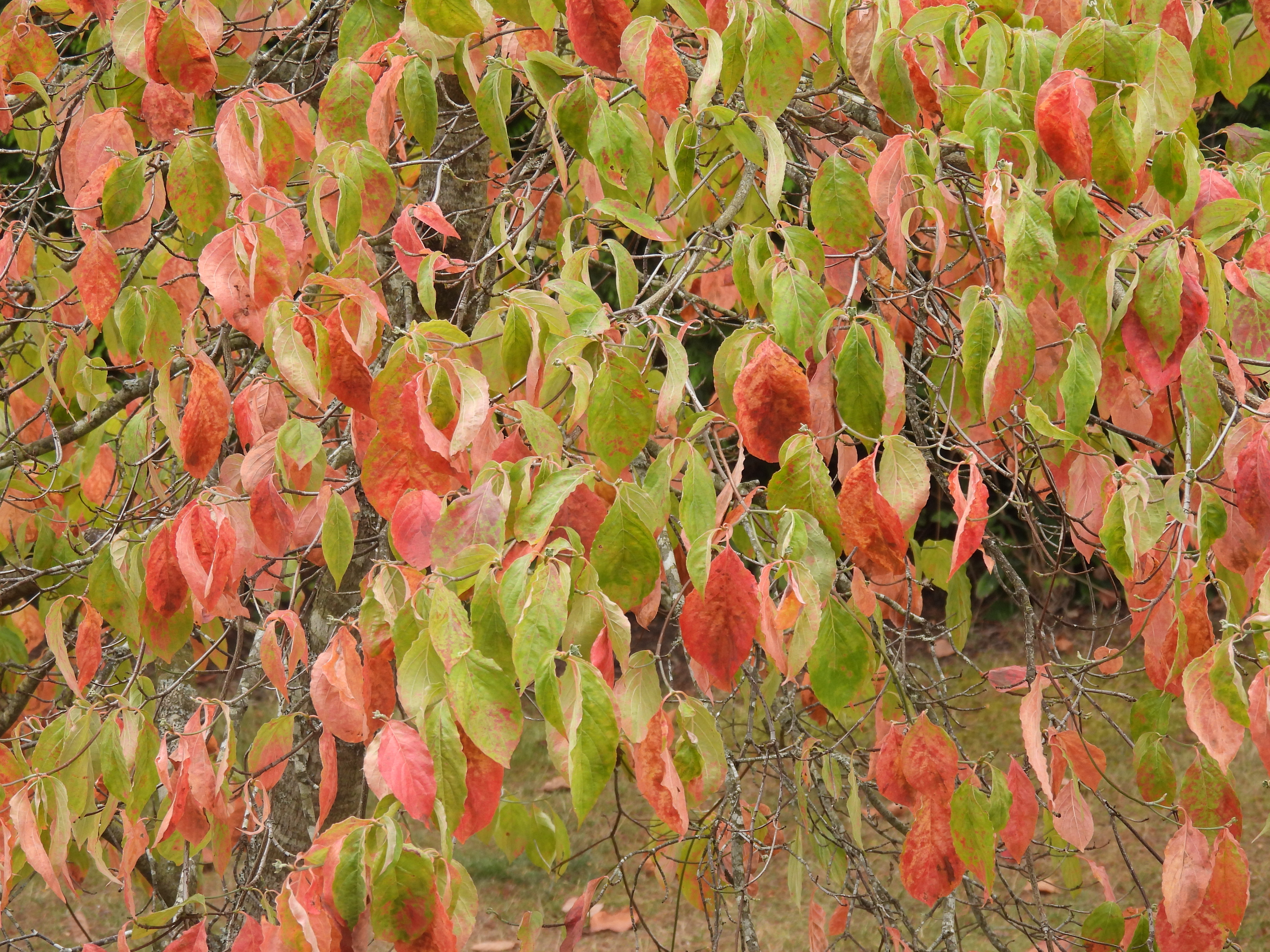
The trees and shrubs notice the change to cooler temperatures and the leaves begin to die, but as they “leave” us, as “leaves” do, they put on a magnificent show of colour on their way out.
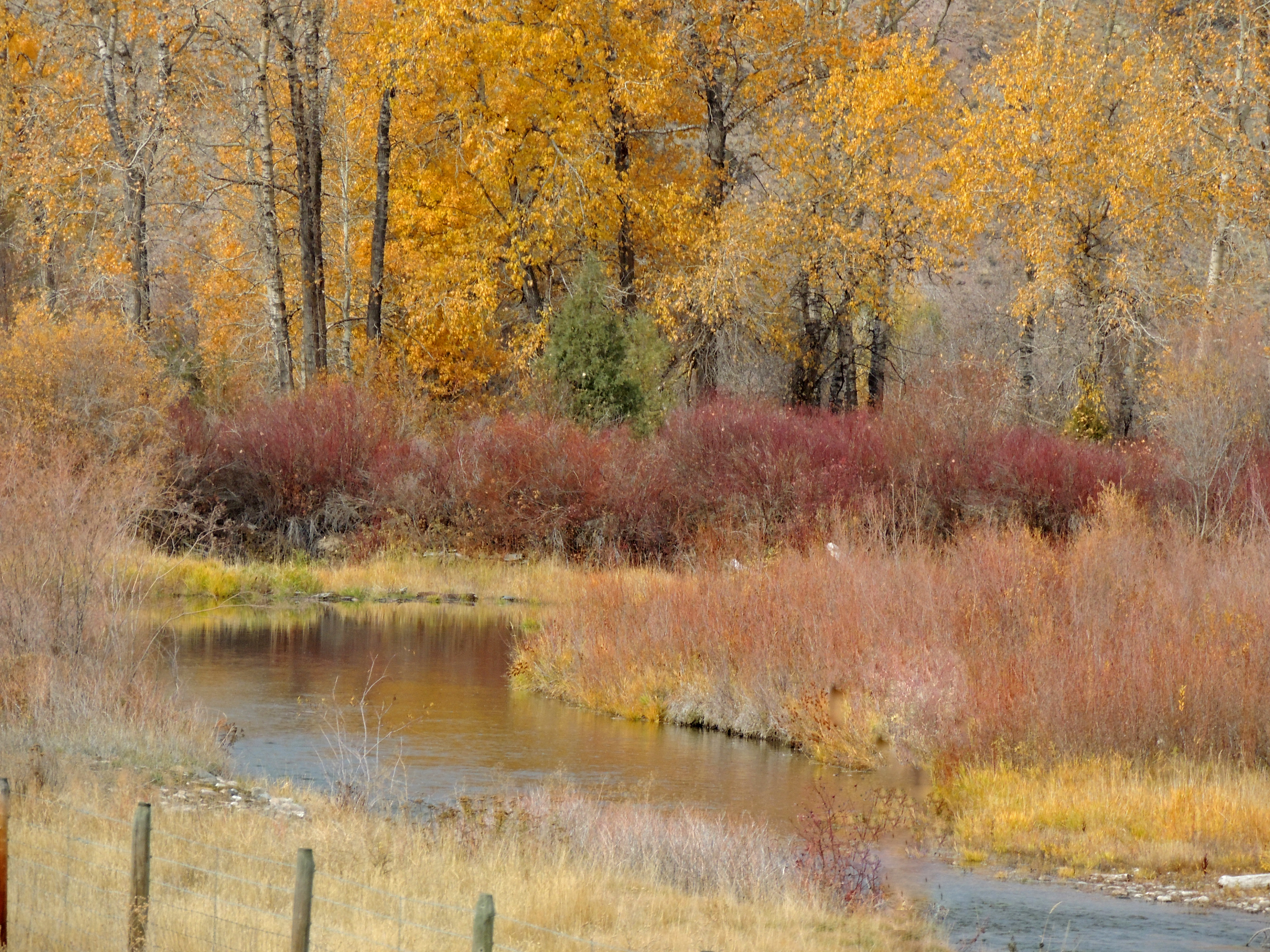
This picture was taken in Montana, in October of 2016. It is one of my favourite photos because of the natural colour display.
“Oh, look at me, all dressed in gold,”
The quaking aspen trembles,
“Although I’m told I’m far too bold,
No other tree resembles
My shivery whispering leafy talk
When breezes tease my branches,
Admirers smile when on a walk
Around Montana ranches.”
Turn on your sound. In the following very short clip, you can hear the black cottonwoods, whispering. Ignore the whistle blowing in the middle of the clip. The captain is calling his dog.
Shapes
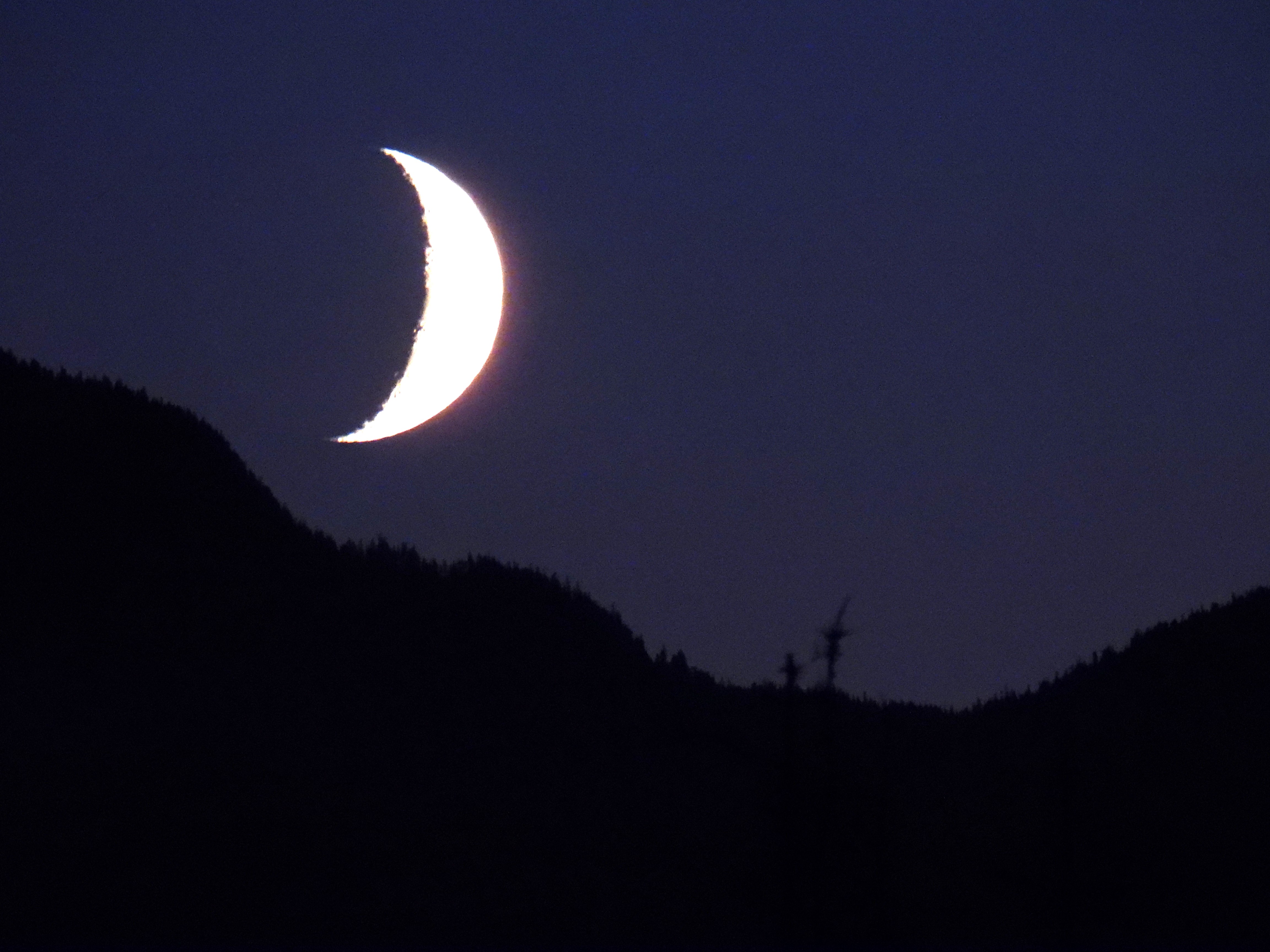
The crescent moon hovered over the hills across the bay last night.
The moon was only partially visible last night because of the angle of the sun shining on it, as seen from our perspective. I originally had the information wrong, about why we only see part of the moon, and Thomas kindly corrected it. Please see his comment below and the link to a well-illustrated diagram.
Anyway, I began to think of geometric shapes and their occurrences and practical applications.
First the circle, the general shape of our planets and their moons. Round, like apple pie, chocolate cookies, and coins….
Then the partial circle, such as the crescent. I’ll come back to that.
The lumpy rest of the moon when it’s not quite full is not such an interesting shape, but maybe it has a special name. I’m not sure.
Then we have ovals, squares, rectangles (and their many variations), and triangles.
Ovals, so named because of the shape of eggs, I suppose.
Squares? Very useful for so many things; the town market place for one. Almond squares for a treat with coffee.
Rectangles. Squares that are adjusted to fit if the sides are not equal all the way around, only those across from each other. Placemats.
Triangles. For Napoleon’s hat, and some boat sails.
But somehow, I am most impressed by the crescent shape of the moon.
Crescent, or croissant, is one of my favourite shapes, especially when it comes in the form of a shrimp croissant with a cup of Wicked Thai Soup at my local lunch place.
Do you have a favourite crescent shape?
False Alarm
Tumbling Down
When the Canada geese (not Canadian geese, please – they don’t have passports) start moving between fields and estuaries, in morning and evening flights, you know they are into autumn behaviour. They graze in the fields, picking at kernels of corn and anything else left behind in the harvest. Part of the day is spent near the water, preferably a river estuary, where they are relatively safe from approach by land, and where they can find bits of food, as they keep their feet cool while they soak up any sunshine that might still peek through gathering clouds.
Flights are constantly moving between field and stream, usually early in the morning and late at night. In the first video clip, the flocks are moving from the fields to the estuaries. In the second one you can see them tumbling out of the sky as they get ready to approach their destination. They seem to fold up their wings and tumble, open them to steady themselves, and then fold them again as needed. It’s their way of putting the brakes on and coming in for landing.
Please turn on the sound.
Anybody Home?
Are you in there, Turtle dear,
Hiding in your shell?
I don’t mean to make you fear,
I would treat you well.
But you’re smart to stay inside,
Waiting ’til it’s quiet,
Better to keep still and hide,
Not to cause a riot.
When my footsteps fade away,
And it’s safe to peek,
You will live another day,
Playing hide and seek.
A Gift
The Useful Fig Tree
This fig tree came to my garden as a rooted cutting, a gift from a friend. It was about ten inches high in a small black pot. I found a place for it in the corner of my veggie garden. Little did I know that the compost bin next to it would seep out nutrition for it and turn it into a seven foot tree in just a few years.
This year it had 52 figs on it, and after I picked them, the branches loaded up again with a second crop. I think it’s one of the few plants in my garden that really likes me.
I live on Vancouver Island – not in the Mediterranean or western Asia where they originated – but my fig tree grew happily anyway.
Thank heaven, the Mediterranean fig trees had leaves that were supposedly perfect for covering the private parts of those famous ancient naked sculptures. Fig leaves must have seen a lot of use, as there are so many sculptures made in the old civilizations.
So now I know the answer to something I’ve questioned all these years. Why did the old masters make so many of their sculptures naked? The answer is of course, they had a lot of fig leaves available.