A thin layer of snow covers the usual feeding grounds of ducks, geese, and swans. While the nearby preferred agricultural fields are frozen over with snow and ice, the birds find food and shelter on the edges of the salt water.
The estuary of the Courtenay River holds a lot of bird life. Depending on the wind direction, waterfowl can find sheltered indentations in the shoreline where they can forage for food in the shallows. Rather than feeding on seeds and bits of plant roots when cold weather freezes their usual fields, they make the switch to marine vegetation and bits of animal matter (shrimp, crustaceans) that they find in the tidal areas of the shore. Once in a while, a faint ray of sunshine warms their backs on this southern exposure in spite of the cold day.
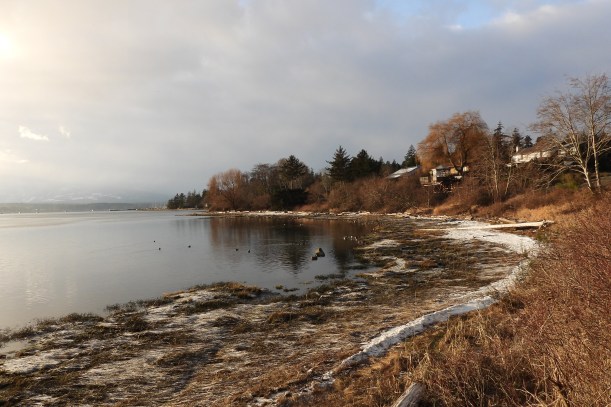
Looking upriver at Comox Bay
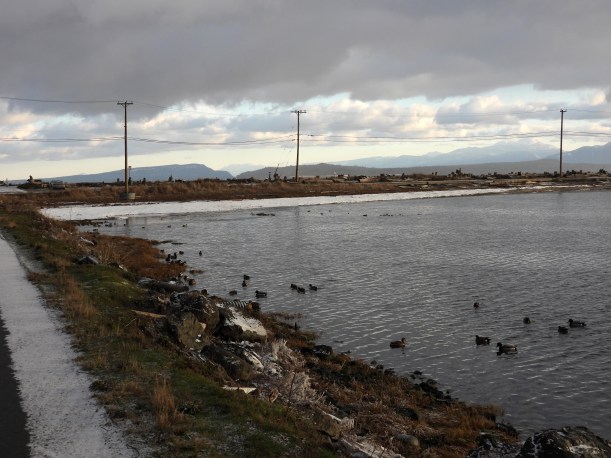
Looking outwards to the spit
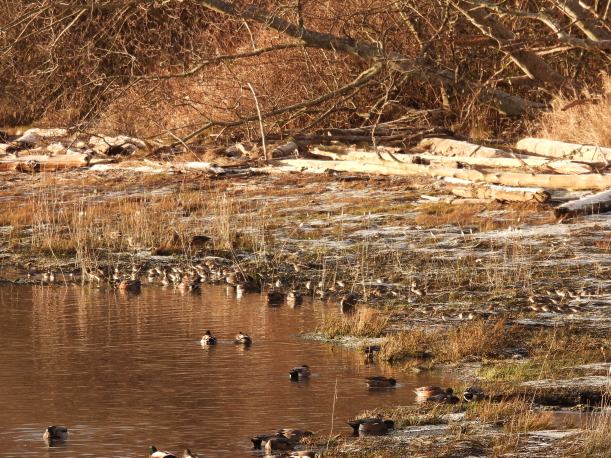
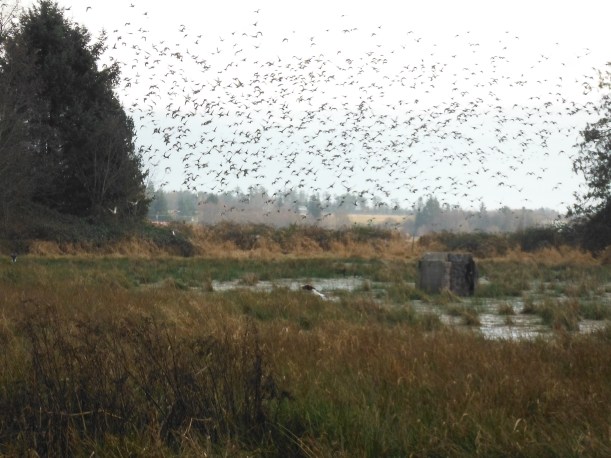
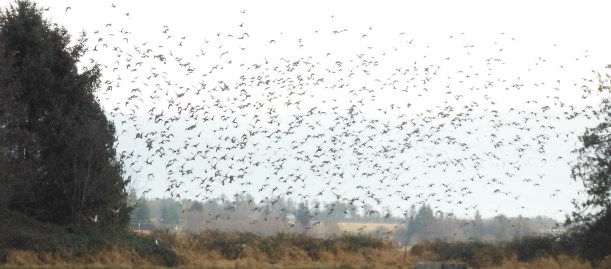
Mainly widgeons and dunlins.
In these very short video clips you can see a swarm of what I think are dunlins flying in to land near the beach. Although it is a very small flock, it reminds me of those murmurations of birds, when they fly so close together in an incomprehensible formation without crashing into each other. If you make the videos full screen you might be able to see the fine snowflakes blowing around as well
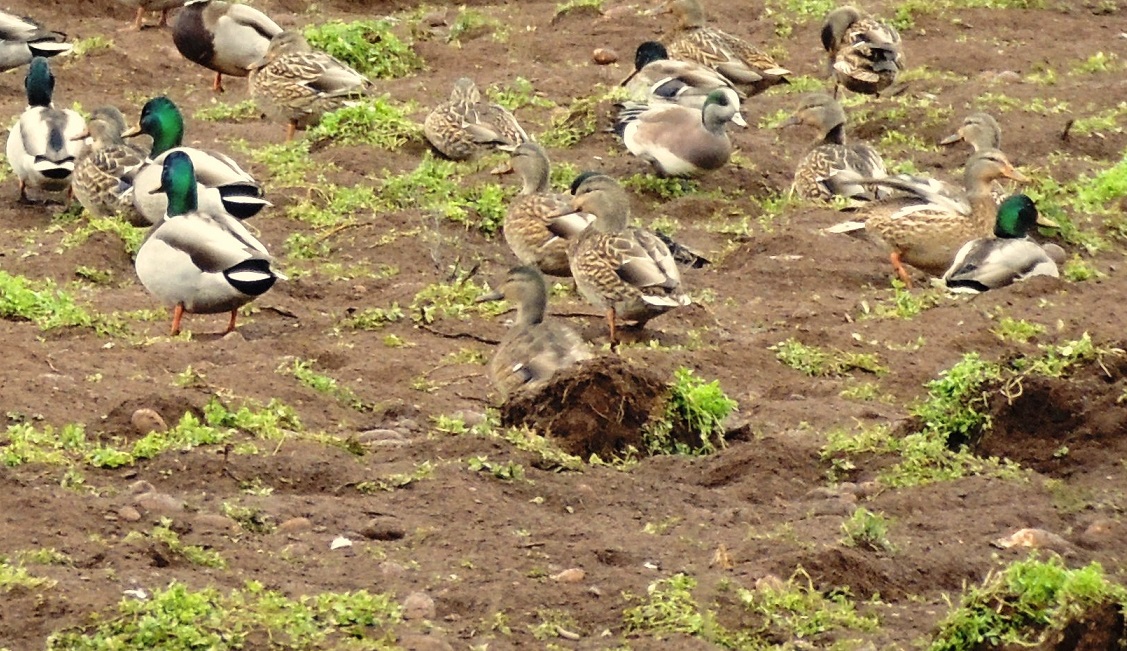
These mallards are close to shore for several reasons. They have slightly more cover in case of predators (better than being “a sitting duck” in the open water), and there is probably more food available in the shallows where they can probe the sand with their bills and find small beach creatures to eat. At high tide there is also marine vegetation that is available only at this level, lifted up by the rising water.

They are in survival mode for now, waiting for a good low pressure southeast system that will bring wind, rain, and warmer temperatures, thawing out the farm fields that offer their preferred diet. I hope they are all lucky ducks.



 wordsfromanneli