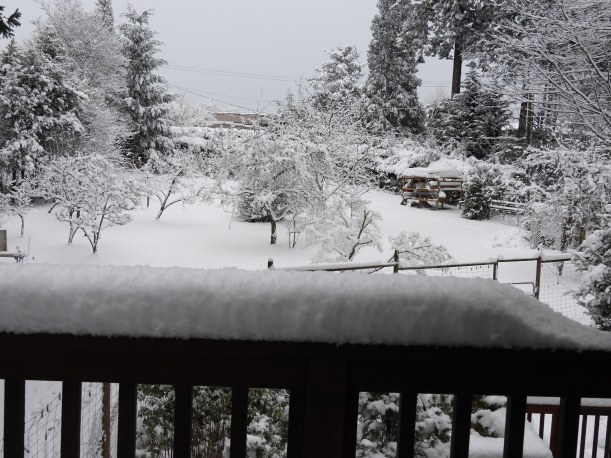
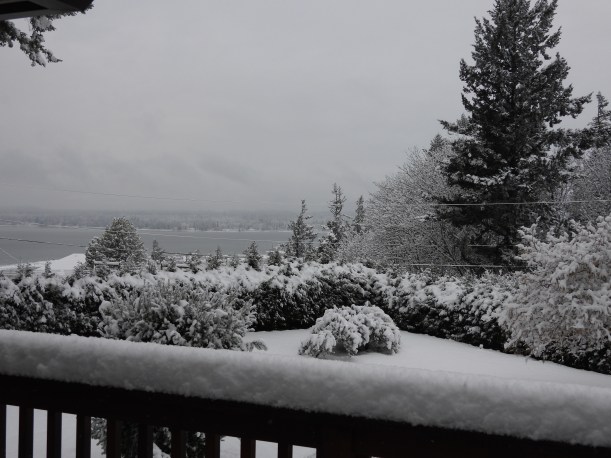
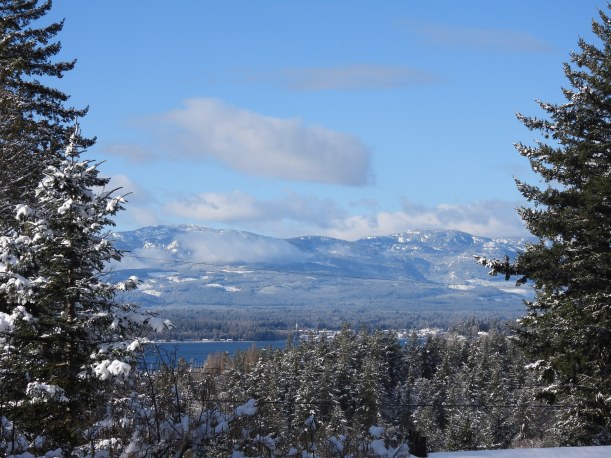
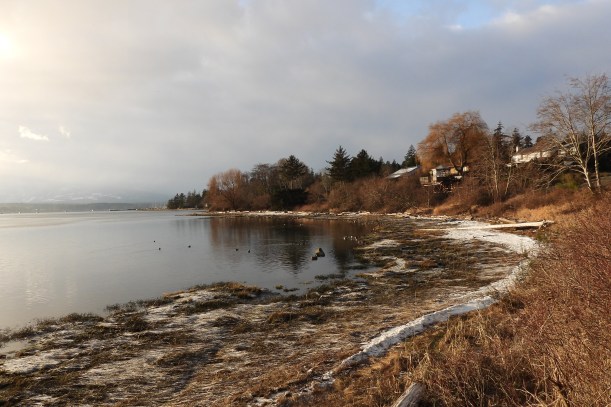
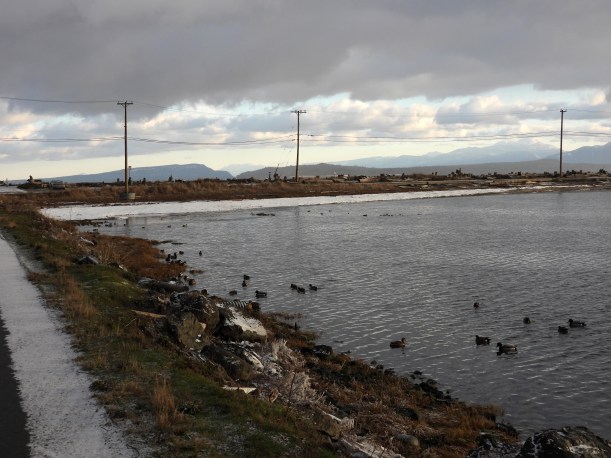
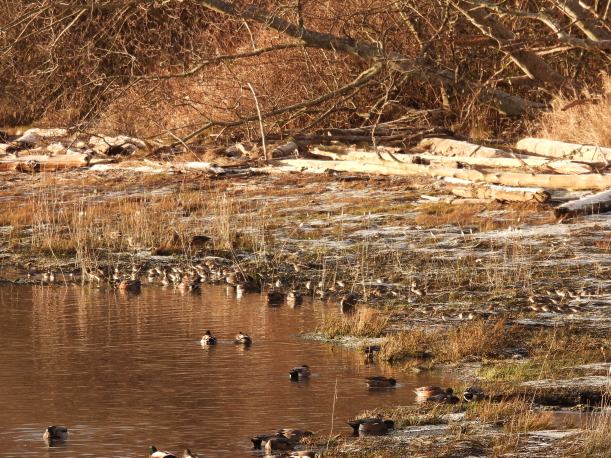
A thin layer of snow covers the usual feeding grounds of ducks, geese, and swans. While the nearby preferred agricultural fields are frozen over with snow and ice, the birds find food and shelter on the edges of the salt water.
The estuary of the Courtenay River holds a lot of bird life. Depending on the wind direction, waterfowl can find sheltered indentations in the shoreline where they can forage for food in the shallows. Rather than feeding on seeds and bits of plant roots when cold weather freezes their usual fields, they make the switch to marine vegetation and bits of animal matter (shrimp, crustaceans) that they find in the tidal areas of the shore. Once in a while, a faint ray of sunshine warms their backs on this southern exposure in spite of the cold day.
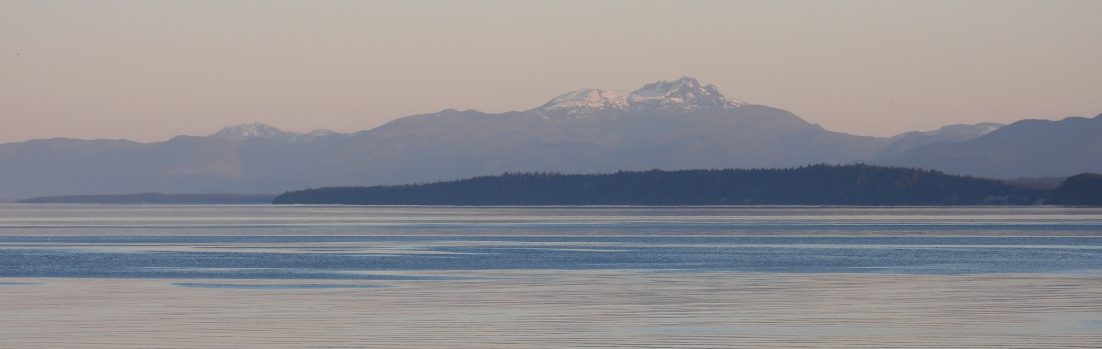
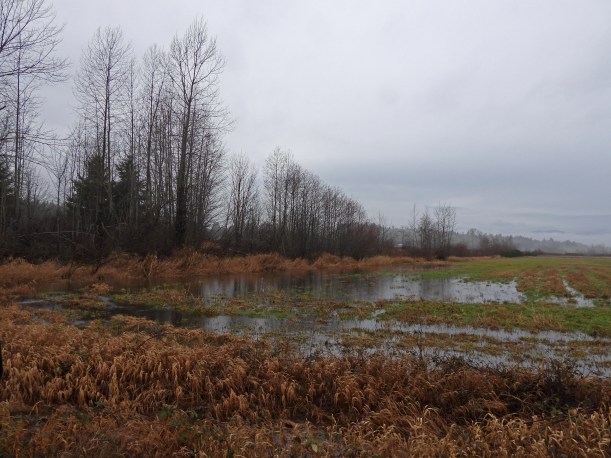
Looking upriver at Comox Bay
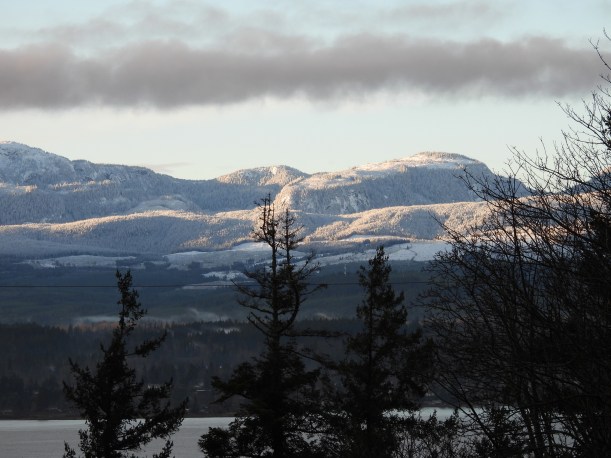
Looking outwards to the spit
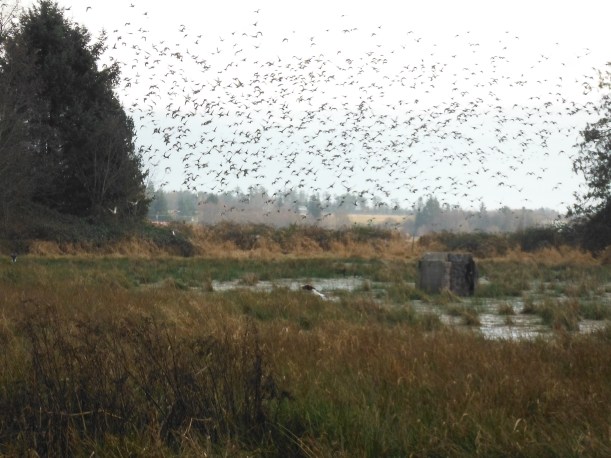
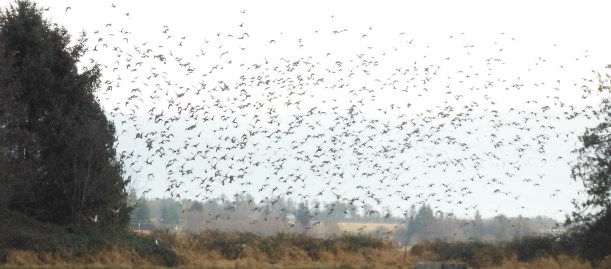
Mainly widgeons and dunlins.
In these very short video clips you can see a swarm of what I think are dunlins flying in to land near the beach. Although it is a very small flock, it reminds me of those murmurations of birds, when they fly so close together in an incomprehensible formation without crashing into each other. If you make the videos full screen you might be able to see the fine snowflakes blowing around as well
These mallards are close to shore for several reasons. They have slightly more cover in case of predators (better than being “a sitting duck” in the open water), and there is probably more food available in the shallows where they can probe the sand with their bills and find small beach creatures to eat. At high tide there is also marine vegetation that is available only at this level, lifted up by the rising water.
They are in survival mode for now, waiting for a good low pressure southeast system that will bring wind, rain, and warmer temperatures, thawing out the farm fields that offer their preferred diet. I hope they are all lucky ducks.
You can hear the great horned owl shrieking, trying to scare the rat (or anything that moves). He’s hard to see in the dark, but watch to the end and you’ll hear him screeching back and forth to his girlfriend, telling her to come over and have supper with him.
Turn on your sound. If you click to make the video clip full screen, it will look better.
My five novels are now available on Amazon for Kindle for only 99 cents in time for the holiday season. Just click on the cover images on the side of the blog post.
If you have another kind of e-reader, you can visit smashwords.com where you can download my books for the same price of 99 cents for your type of e-reader.
The geese are moving in from places farther north where they have enjoyed warmer weather until now. They sense that the season is cooling off and have come to visit the fields of southern BC to fatten up on leftover grain, bits of corn, and anything else that looks good. Once they have met up with their friends in ever greater numbers, and they have rested and feasted and done little test flights during this staging time, many of them will fly farther south where the winter is not as harsh. A few smaller flocks will settle in to spend the winter here on Vancouver Island, in the hope that the coldest weather will be bearable and not last too long.
The eagle watches and waits. He will take advantage of any stragglers or injured birds to supplement his diet. Once the spawned out fish carcasses are cleaned up by scavengers like seagulls, crows, and eagles, it will be time for a new food source. For the eagles it will often be crippled waterfowl of many kinds.
This bald eagle has a good view of a cornfield that often attracts ducks and geese. If any of them are not able to keep up with the flock, they will make an easy target for a predatory bird.
Little songbirds like these chipping sparrows will be targeted by hawks who sit silently in the nearby trees, waiting for an opportunity to swoop down and scoop up a little snack.
This broad-winged hawk would be happy with a songbird or even a careless squirrel. Patience and alertness are what it’s all about.
The merlin doesn’t mind picking up a songbird either. He’ll happily take down a flicker that might be almost the same size as him.
The red-shafted northern flicker had better be alert. It’s a dangerous world out there.
The general rule for non-predatory birds, especially in the autumn, is “heads up or be eaten.” It’s the raptors who are the meat eaters, while the gentler plant- and insect-eaters need to fear them.
And I haven’t even mentioned the owls yet. Rabbits and mice beware!
Folks, I want you to know that this year it has been great to visit Anneli’s garden. It’s quiet (she’s hardly ever out here), and it’s so-o-o-o … shall we say, to be polite … it’s “au naturel.”
She thinks it’s a mess, but to me, it looks better than ever. Bugs are hiding everywhere, under weeds she hasn’t cleared away. A smorgasbord for me!
As a matter of fact, I think I might have one of those little critters on me. “Well, surprise, surprise, little bugs. There’s no free ride on me! You will be on my dinner menu. Heh, heh, heh, haaa-hooo!”