uniquely shaped pods
hold seeds of toxic milkweed
safe for next year’s crop
Seasonal changes are happening in full force now that summer has said goodbye, and autumn is settling in with the morning dew. The colour of the leaves changes, the fruit is ripe and dropping on the ground, the geese are moving from one location to another, trying to settle into new patterns to accommodate the need for shelter and food as the days and nights are cooler.
Have you noticed the fruit flies and yellow jackets? Who better to take advantage of this new availability of food than the spiders? It’s the time when the tiny spiders try to come into the house and hang unnoticed in a ceiling corner.
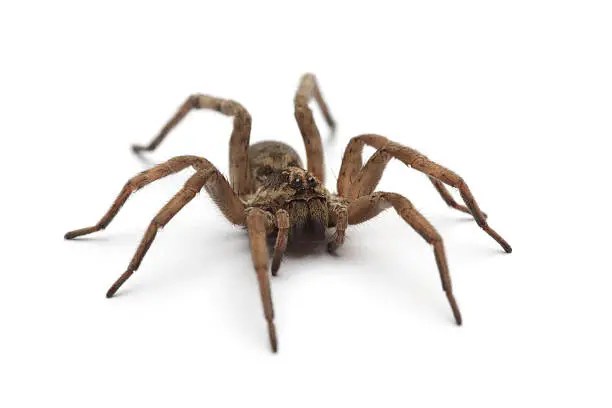
The giant house spider also senses that it’s time to find more warmth and tries to come inside. While these black monsters are horrifying to me, it’s the fat beige ones that make me shudder most. They hang in the fruit trees and coat my hands with their sticky webs as I try to pick fruit. They build webs, across the corners of the door to my deck and between the hanging baskets and the wall – right in my face as I walk by.
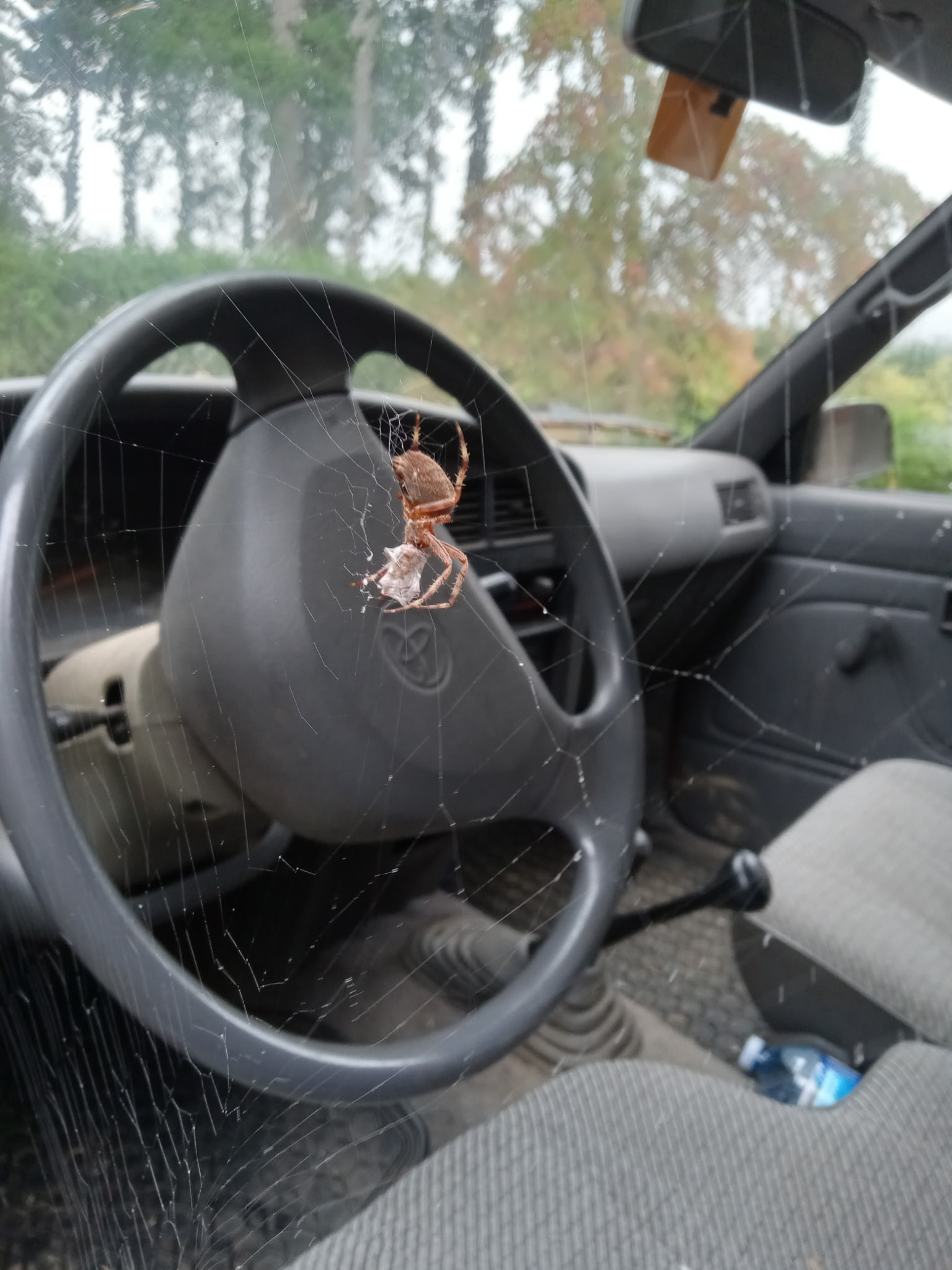
But this one! This one gets the prize. The Captain was about to get into his old beater truck to move it. He opened the driver’s side door to get in, and stopped just in time before he might have ended up wearing this spider on his nose. The spider had caught something, but it was so wrapped up that it was hard to tell what poor insect was the victim. Yes, it’s spider time!
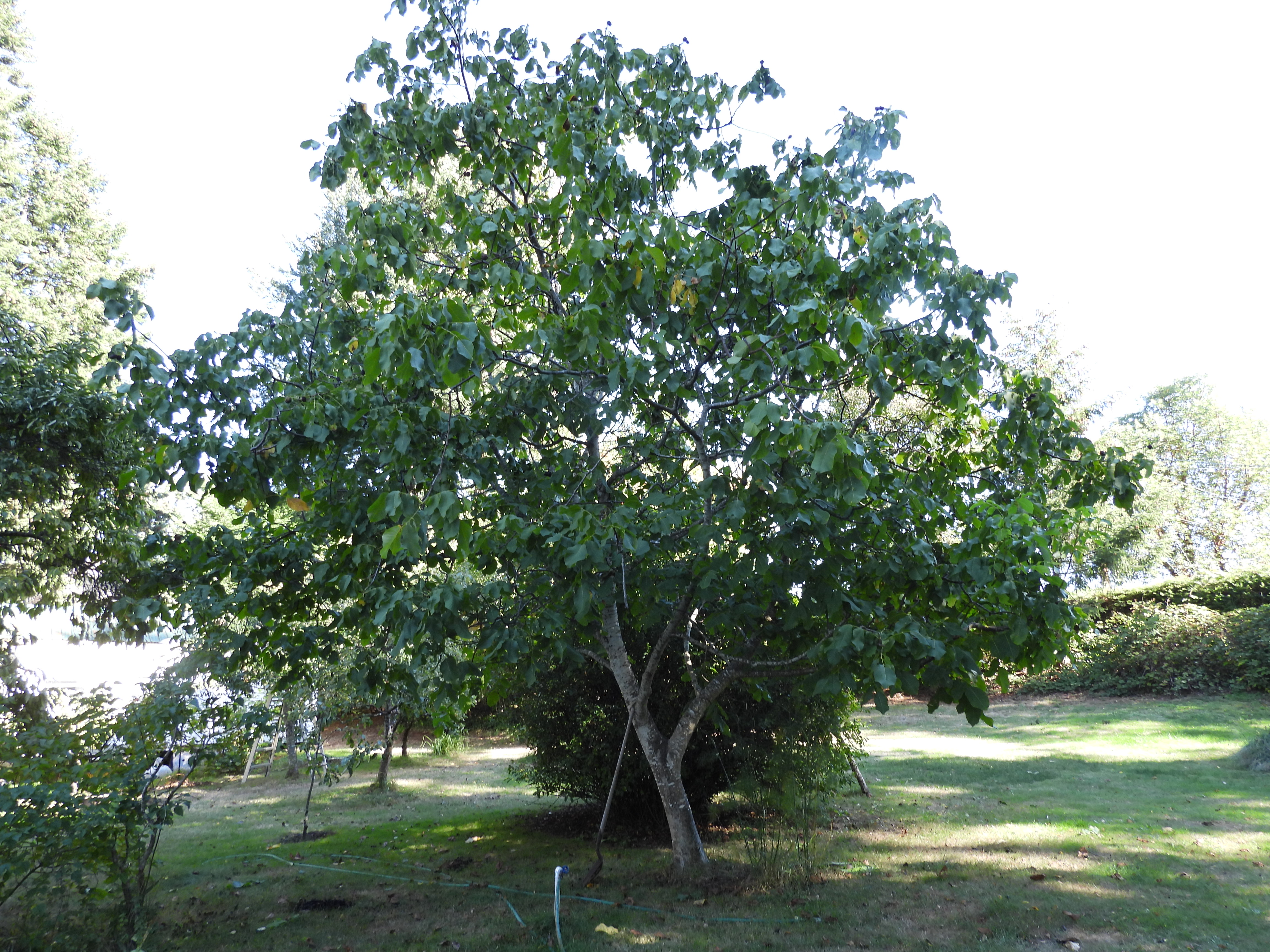
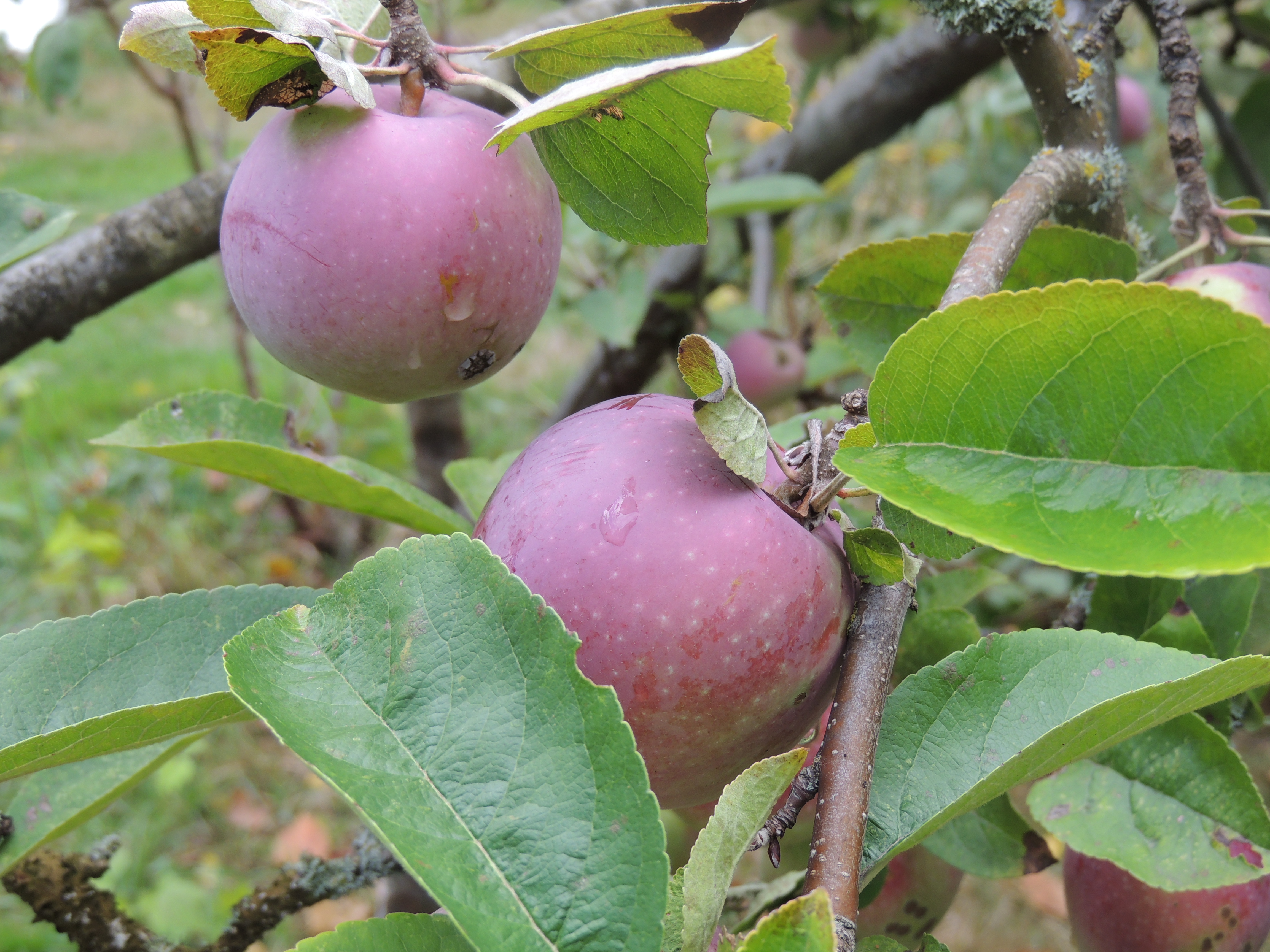
I’m tired of washing, pitting, and freezing plums. The pears and apples are finished except for one winter apple tree that will be ready in about three weeks. So now it’s time to have a look at the walnut tree.
A closer look will show a few walnuts still hanging on. Some look dark and some quite green, but that is only the outer husk you are looking at. As the nut grows and the husk dries out, the nut and what’s left of its husk fall to the ground.
This one shouldn’t be too hard to pop out of its husk, but beware, the inside of that green coating stains like crazy. It would make a perfect “walnut” furniture stain. My hands always seem to end up looking like part of a walnut end table.
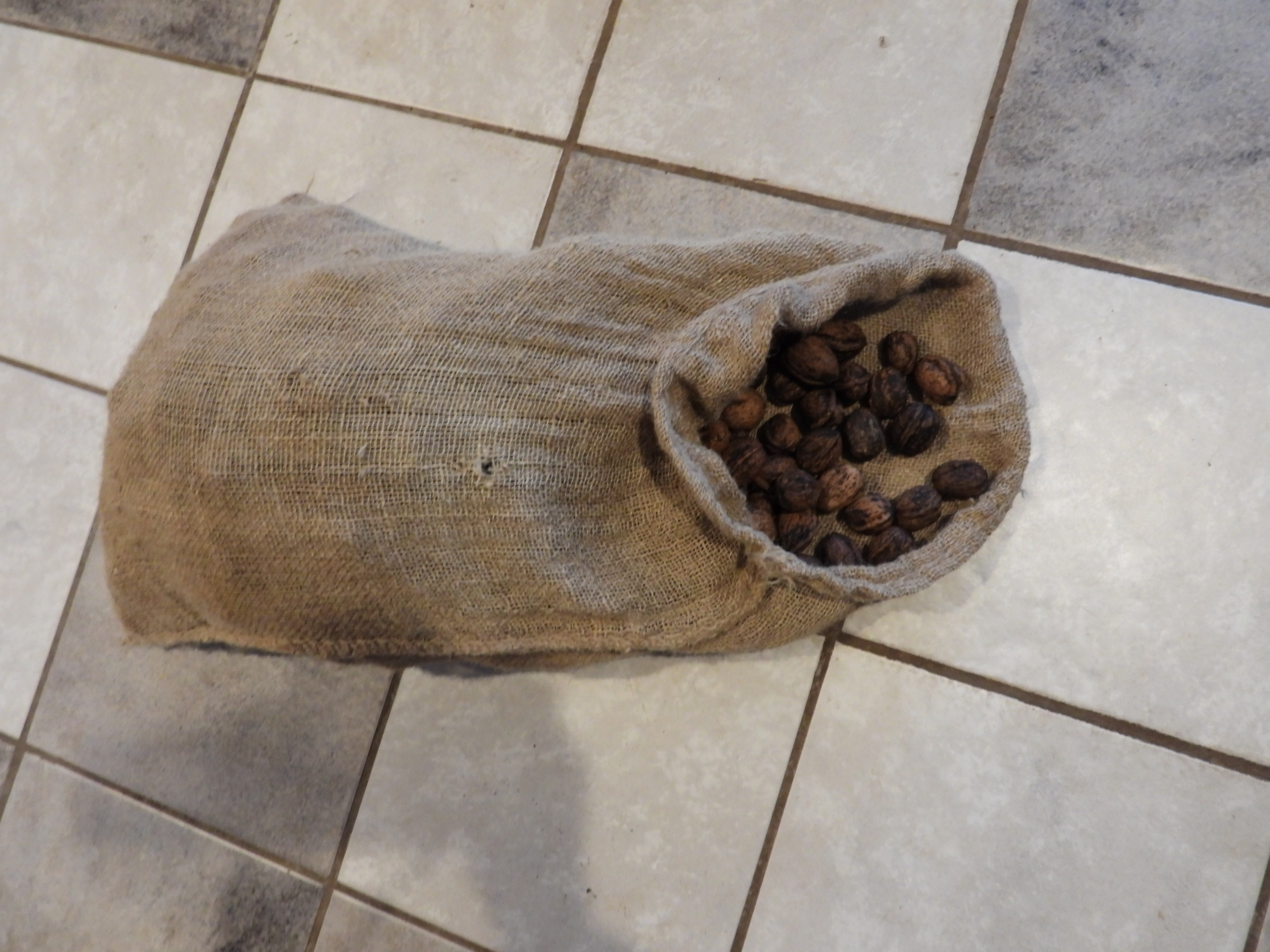
Once the husk is off the walnut, you can see the walnut that we are more familiar with, but it still needs some drying time. A burlap bag hung on the wall beside the woodstove is the perfect place to dry the walnuts.
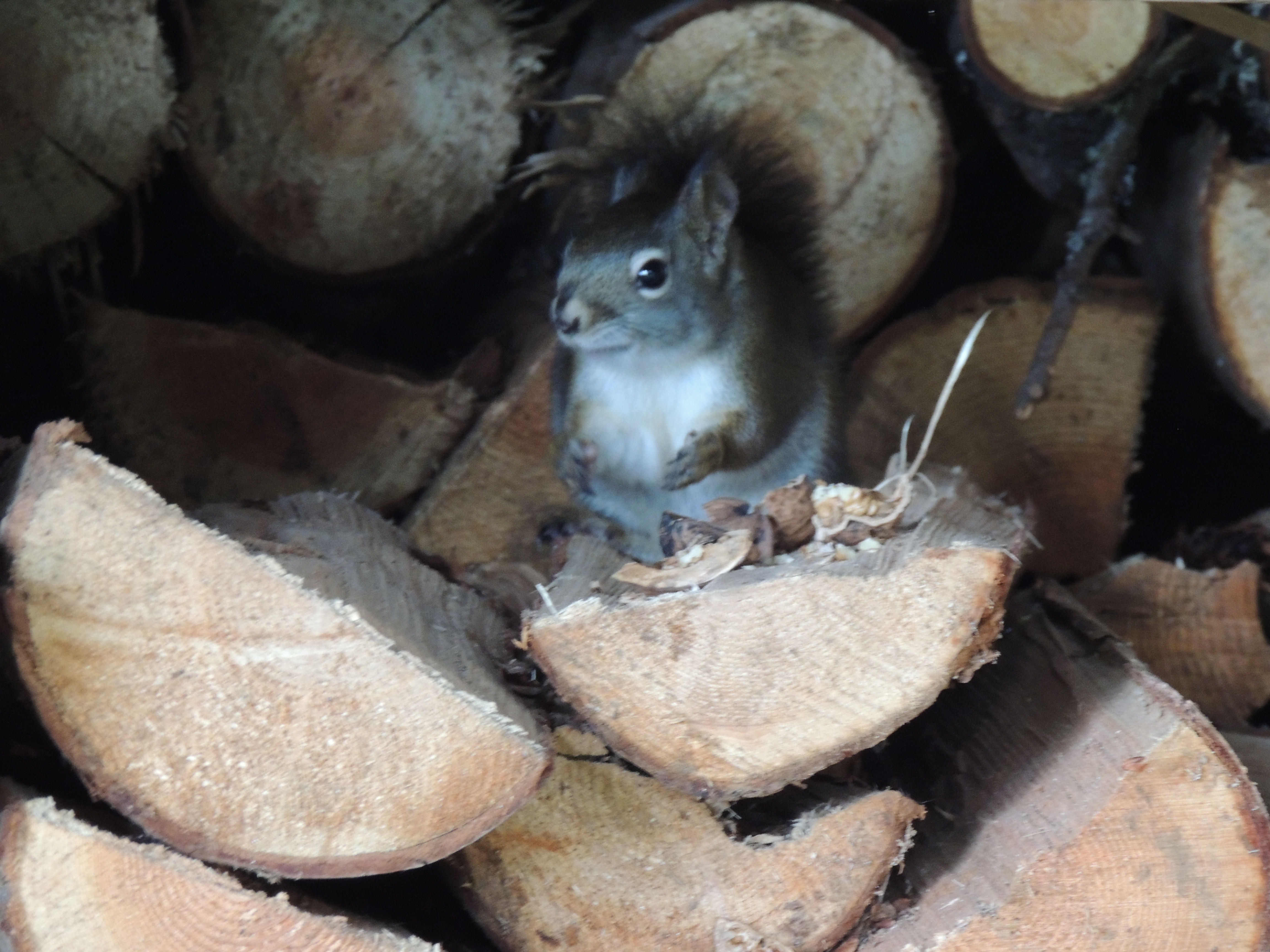
Every couple of days I sneak some and take them to the woodshed as an offering to my squirrels.
“Thank you, Anneli,” Crispin chatters.
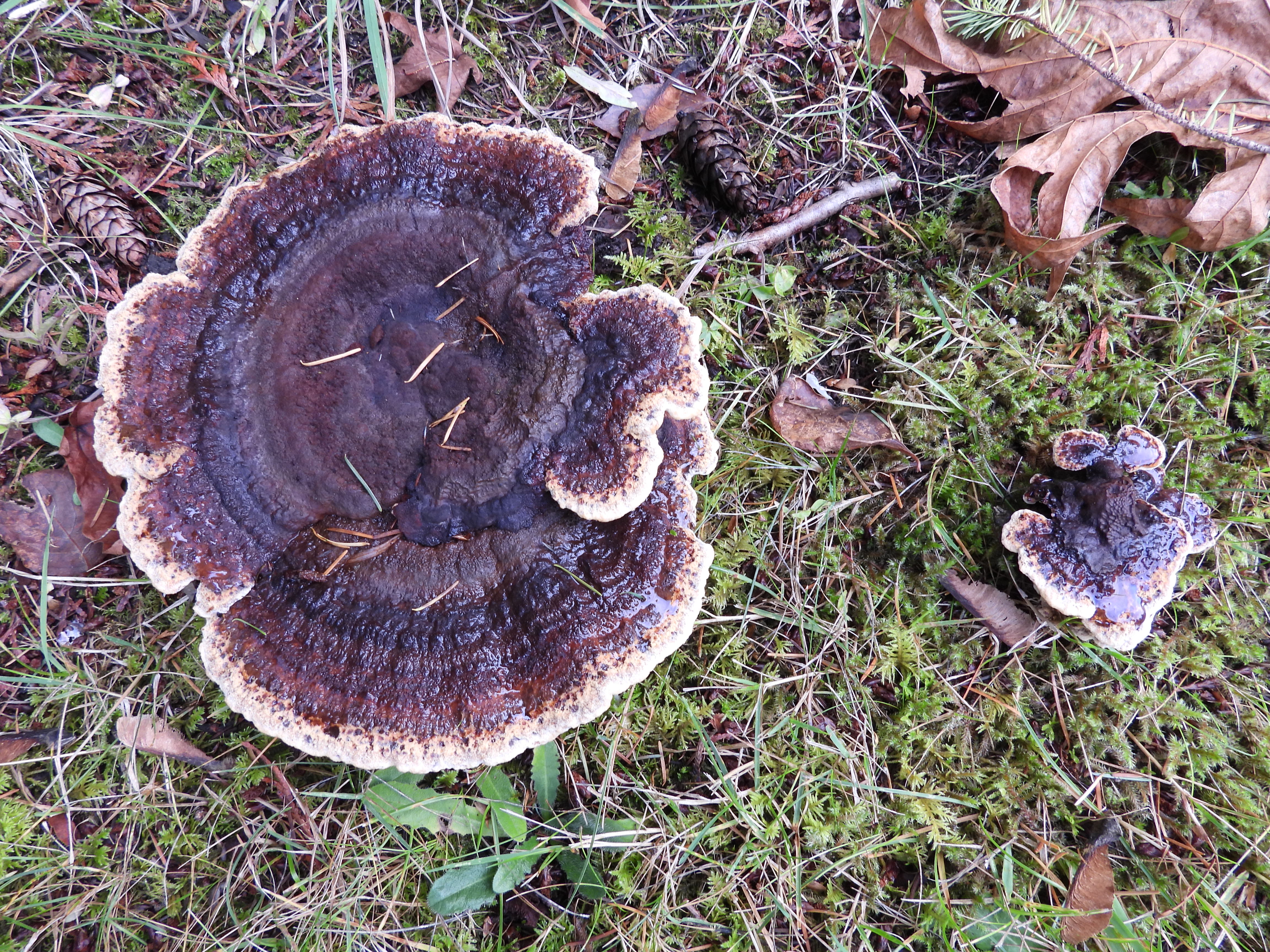
This fungus is called phaeolus schweinitzii, or more commonly, Dyer’s polybore. It is also called velvet-top fungus, or pine dye polybore, or Polly, as I call it.
In my yard, it seems to come back every year in this same location, near the roots of a large fir tree that was felled several decades ago, and usually Polly has a “baby” nearby. It’s not a good fungus to have near your trees, as it will rot the roots and do a lot of damage to the tree.
The redeeming quality about Polly is that this fungus was used for making a dye to colour wool or other materials, hence the name Dyer’s polybore.
But definitely, do not try to eat it. Polly will make you very sick.
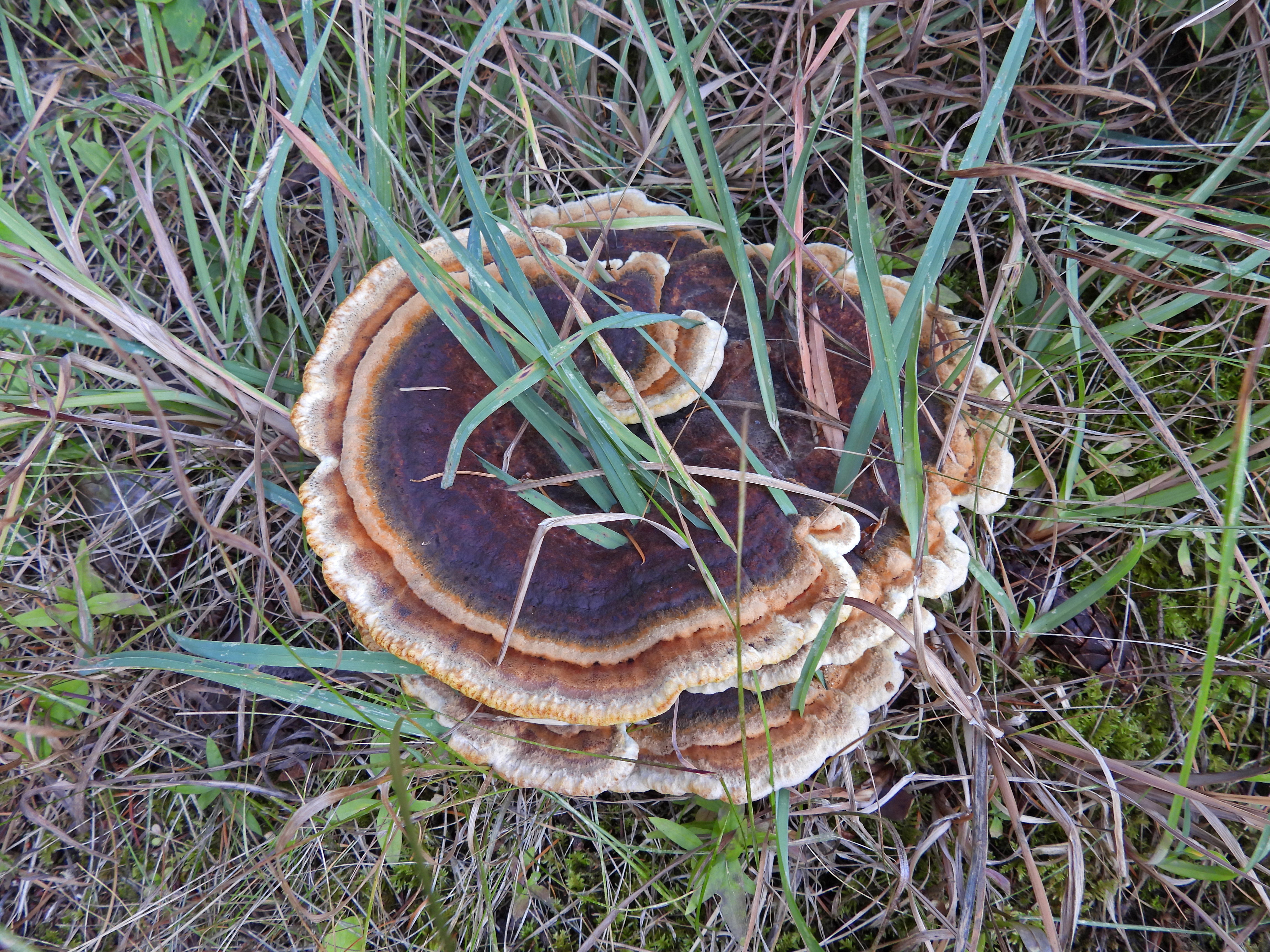
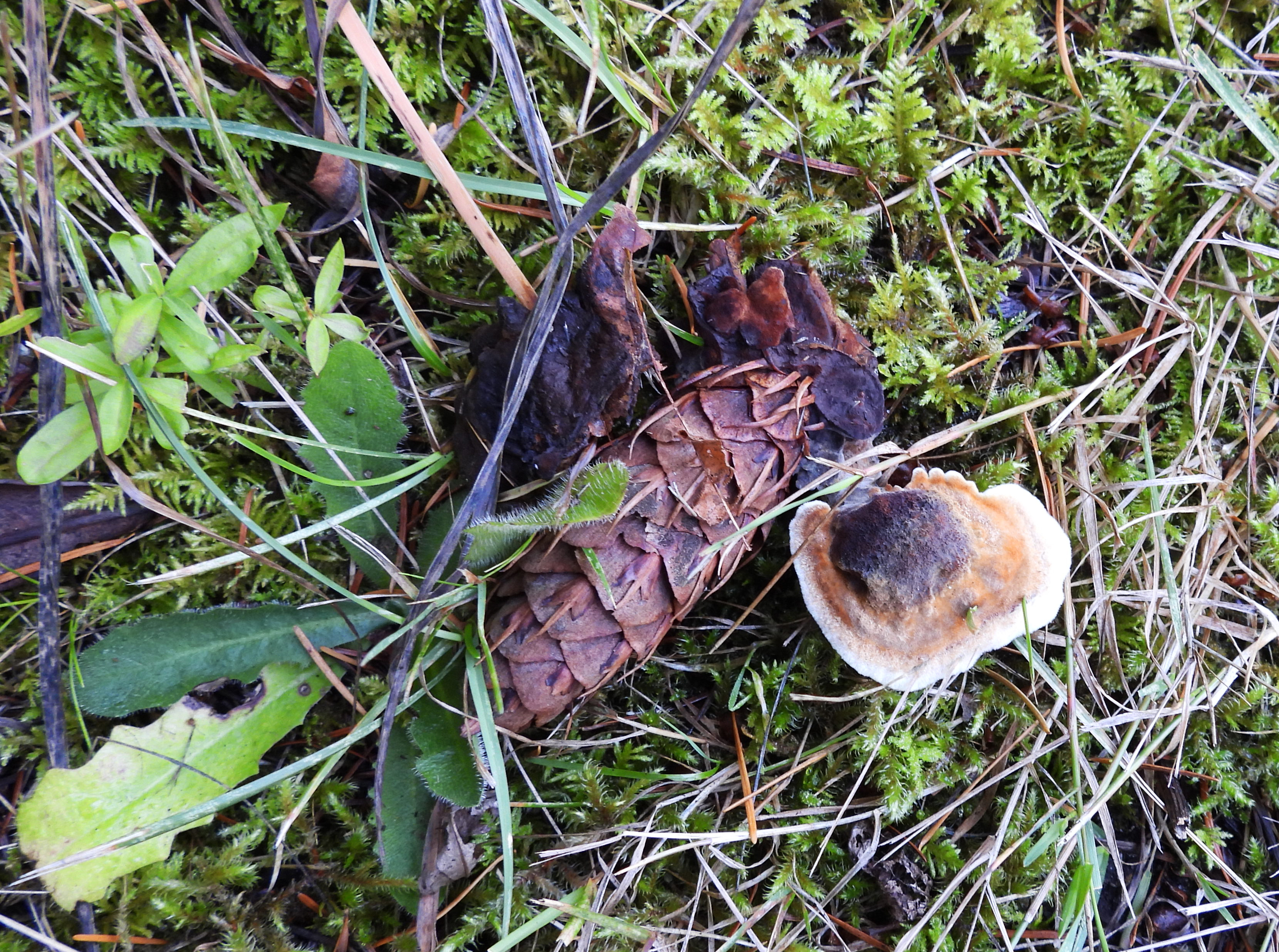
The photo above was taken a few days ago, but the ones below were taken last year in the same location. I thought it was interesting that it grew around blades of grass – or maybe the grass grew through the fungus. I’m not sure what the process was.
Last year, just like this year, a baby polybore was growing nearby.
Notice that the baby Polly in each case looks like its mother.
I wonder if Polly will show up again next fall.

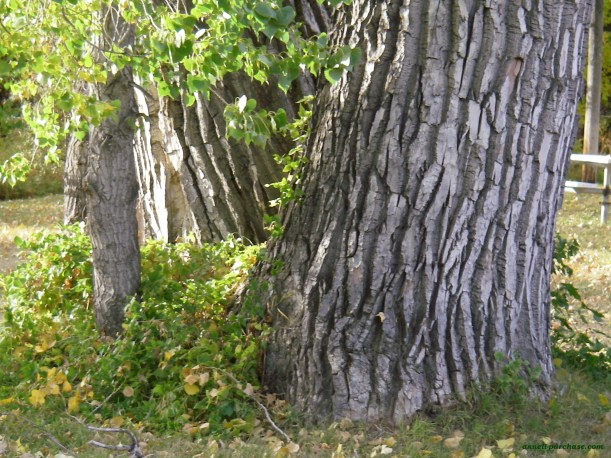
When I was a young girl, and had finished elementary school, I had to go to a school closer to downtown to attend junior high. I used to love walking home from there, past a traditional neighbourhood like this one with its huge, well-established trees.
It was different from my own neighbourhood where newcomers had built their homes on the outskirts of town, without even a proper street in place yet. Our house was reached by following tire tracks in a grassy field. Much later the roads were built, and eventually the town even put in ditching to redirect spring meltwater that had been running over the road and into everyone’s basement each year.
But closer to downtown, the homes had been there long enough for large trees to grow and add a stately touch to the neighbourhood. Sidewalks were a luxury. We had none yet. I felt as if I were walking through one of the stories in my grade three reader, where people lived in perfect suburbs – the kind every middle class family could be proud of in the 1960s.
The yards were untidy enough to be something close to natural, but not wild and messy with garbage. Safe enough for a person to go for a run without fear of being mugged.
Back then, people were not afraid of being hit on the head or stabbed or shot when they went into town to do their shopping. The worst thing that happened was that someone went up our street at three in the morning stealing the milk money from the empty bottles everyone put out for the milkman each day.
Most townspeople had never heard of home invasions. Many of the houses didn’t even have a lock on their door. We didn’t.
Can you even imagine that?!
Back then, I would have loved to live in a neighbourhood like the one in the photo above.
Of course we have more modern houses now with all the special gadgets and electronics to run our appliances and Internet to put us in touch with the whole rest of the world, but I wonder if I wouldn’t be tempted to give it all up to have the laidback lifestyle of those days back again.
How about you? Are there aspects of those more gentle days that you wish we had been able to keep?