wordsfromanneli

Thoughts, ideas, photos, and stories.


35 Comments

American Wigeon

I have been using the alternate spelling of “widgeon” for some time now, but apparently it is considered old-fashioned, so I’ll go back to the “wigeon” (like “pigeon”) spelling.


***** After reading several comments about the spelling of this bird, I’m thinking I should go back to spelling it with the “d,”  (widgeon). Oh, deardeardeardeardear. Whattodo?Whattodo?Whattodo?Whattodo?

The American wigeon (Mareca americana) likes small lakes, ponds, and marshes where it dabbles for plant and animal matter, but it also is often found in fields, yanking out small plants by the roots. Their short bills give them good leverage for this and they can decimate newly sprouted grain fields if they get in there to feed on the small shoots.

The drake wigeon has a distinctive green stripe on the side and back of his head, but it is the white feathers on top that give him the nickname “baldpate” (because he looks bald at a distance).

Mrs. Wigeon doesn’t mind him looking “bald.”

She says, “God only made so many beautiful heads; on all the others He put hair … er … feathers.”

I think they look quite cute together.
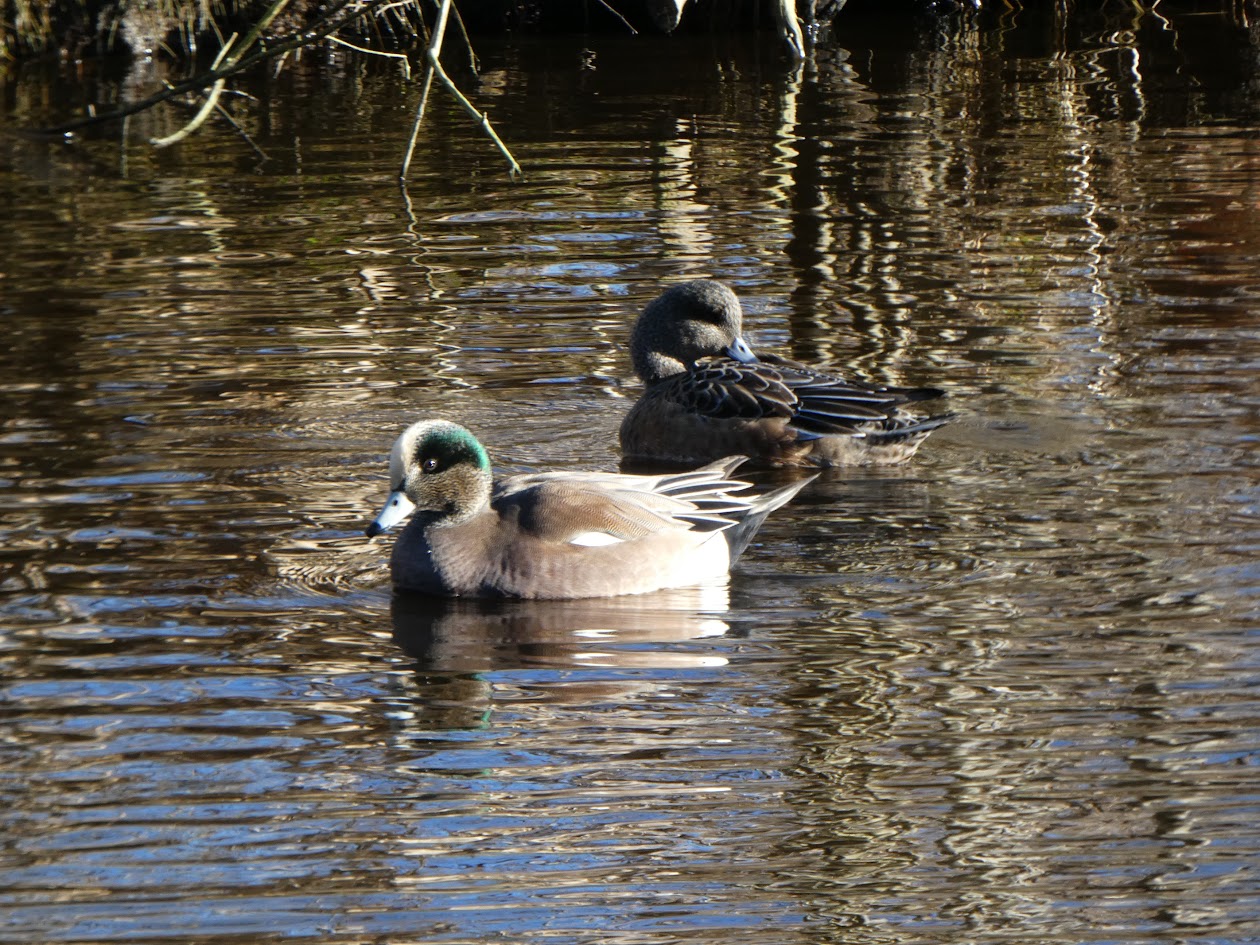
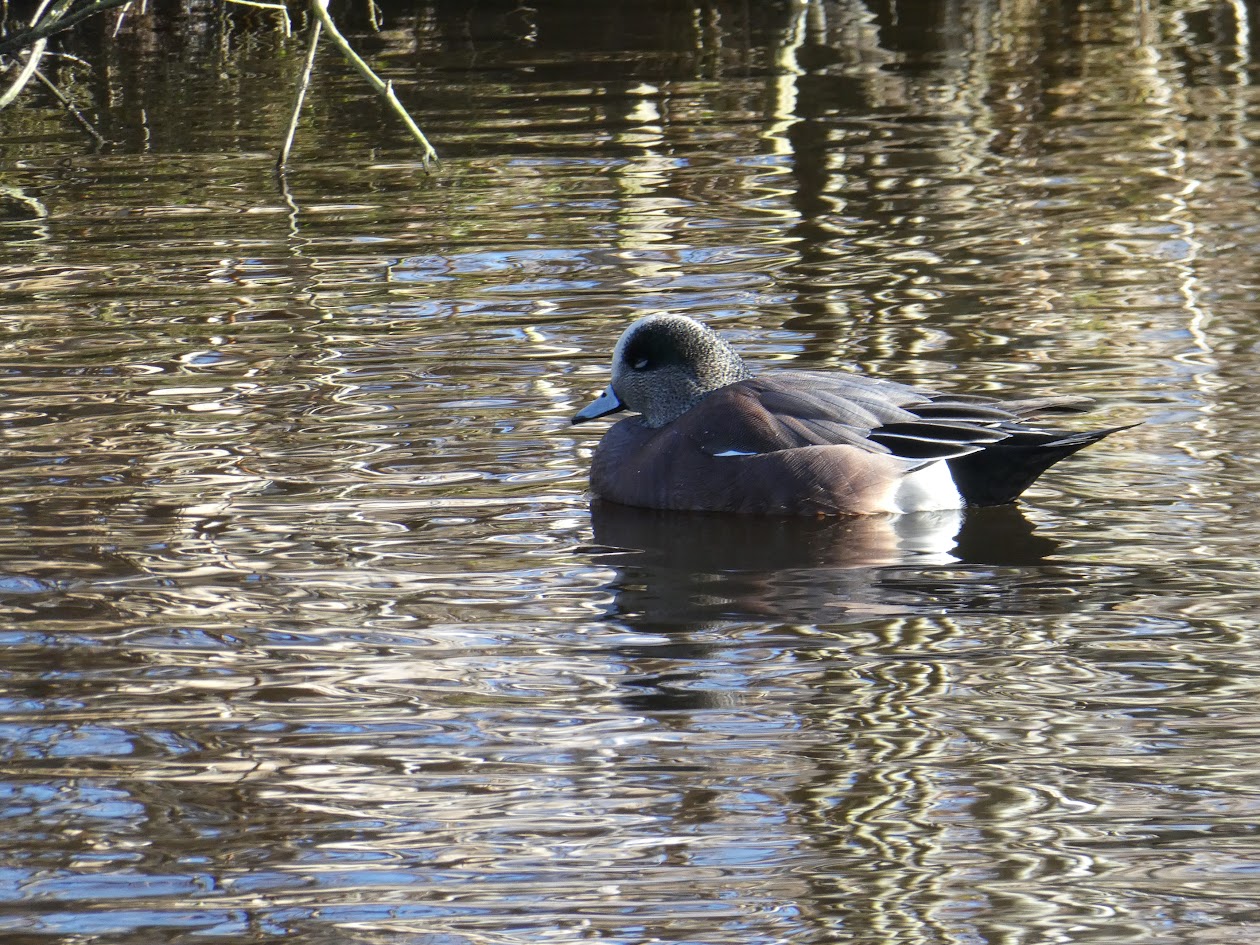
With a bit of shade on his side, Mr. Wigeon’s light rusty colours are more noticeable, and we can more easily see that his bill is a lighter slate blue than Mrs. Wigeon’s is, but both have a black tip on their bill.
Thank you, Sonia, for the photos.
25 Comments

Pintail Duck

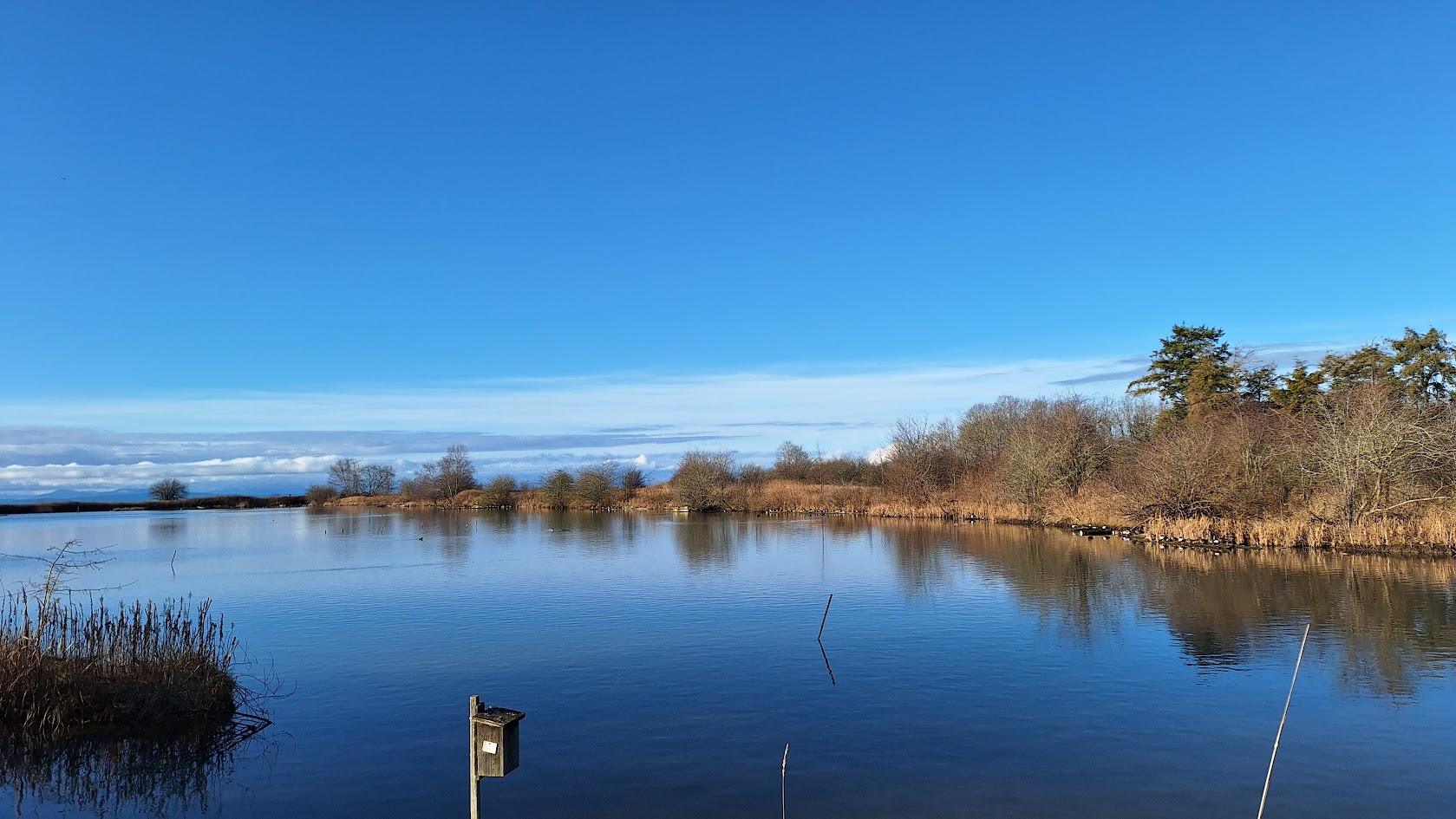
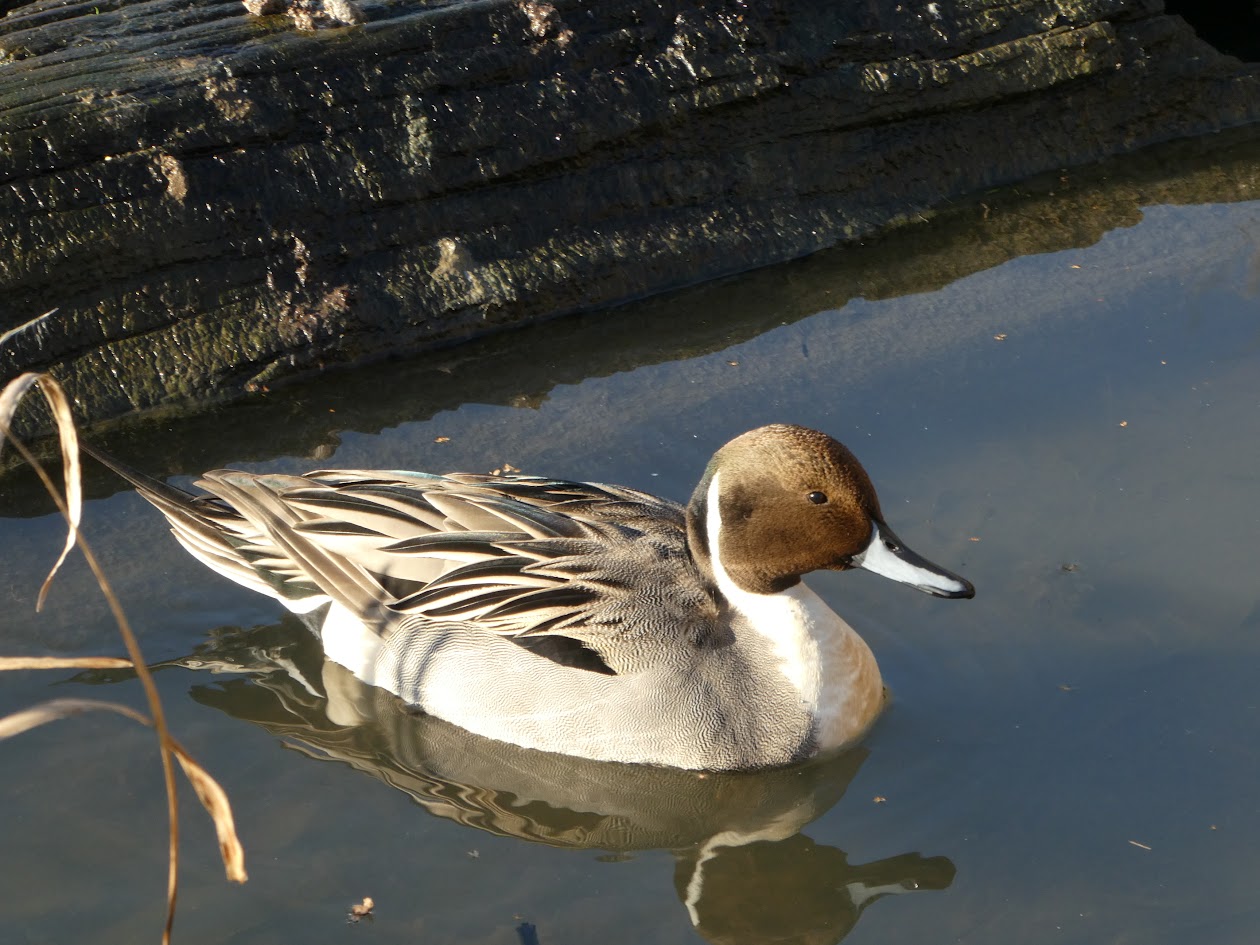
At the George C. Reifel Bird Sanctuary in southwestern BC, you can see may different species of waterfowl and other birds. These photos were taken by a friend, Sonia, who kindly allowed me to use them after her visit to this sanctuary. Many kinds of ducks visit this waterfowl refuge. The pintail (Anas acuta) is one of these.


I grew up thinking that all ducks were yellow when they were little and brown or white when they grew up. It was an eye-opener to me when I learned, a long time ago,  that there were so many kinds of ducks, each with special features that made each type unique and helped to identify them.

The pintail is obviously named for its long pointy tail, as you can see in the last photo, but another special feature of this duck is its long neck. Notice the long streak of white that goes up his neck to the side of his head. This one has his neck pulled in somewhat, perhaps to keep warm, but if it were stretched up to take a good look around, you would see that he has a much longer neck than most other ducks do.

And have you even seen such a beautiful design of feathers as what this duck has on his back?


The pintail tips up in shallow water to reach for plant matter in and above the soil under the water. Its long tail helps to balance it as it forages for seeds and rhizomes. It also finds food on land,  in fields where it eats  roots, grains, and other seeds.  In the nesting season it feeds mostly on aquatic insects, invertebrates, molluscs, and crustaceans.


These photos are of the drake pintail. The hen (female) pintail has a similar shape, without the long pointy tail feathers, and with more muted colours (keeping her safer when nesting).