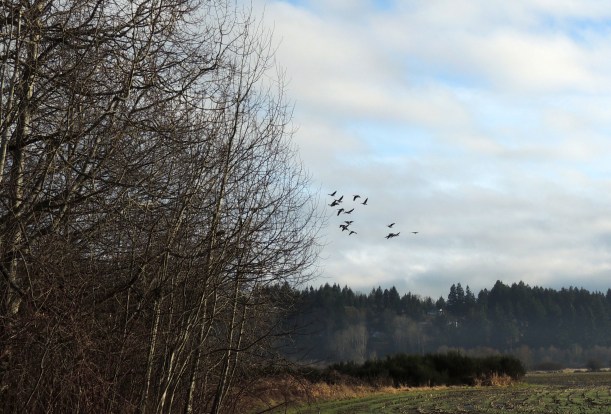
The geese are moving in from places farther north where they have enjoyed warmer weather until now. They sense that the season is cooling off and have come to visit the fields of southern BC to fatten up on leftover grain, bits of corn, and anything else that looks good. Once they have met up with their friends in ever greater numbers, and they have rested and feasted and done little test flights during this staging time, many of them will fly farther south where the winter is not as harsh. A few smaller flocks will settle in to spend the winter here on Vancouver Island, in the hope that the coldest weather will be bearable and not last too long.
The eagle watches and waits. He will take advantage of any stragglers or injured birds to supplement his diet. Once the spawned out fish carcasses are cleaned up by scavengers like seagulls, crows, and eagles, it will be time for a new food source. For the eagles it will often be crippled waterfowl of many kinds.
This bald eagle has a good view of a cornfield that often attracts ducks and geese. If any of them are not able to keep up with the flock, they will make an easy target for a predatory bird.

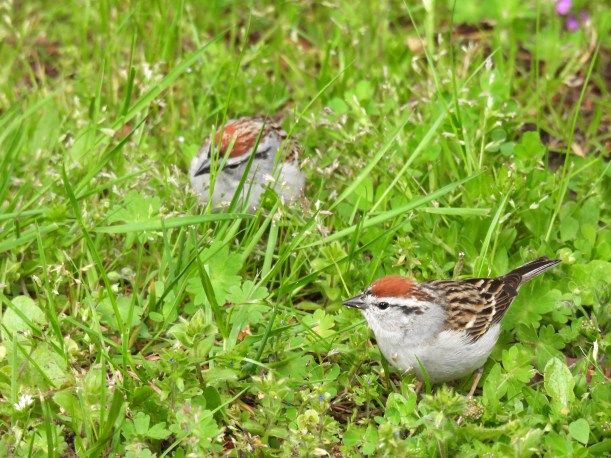
Little songbirds like these chipping sparrows will be targeted by hawks who sit silently in the nearby trees, waiting for an opportunity to swoop down and scoop up a little snack.
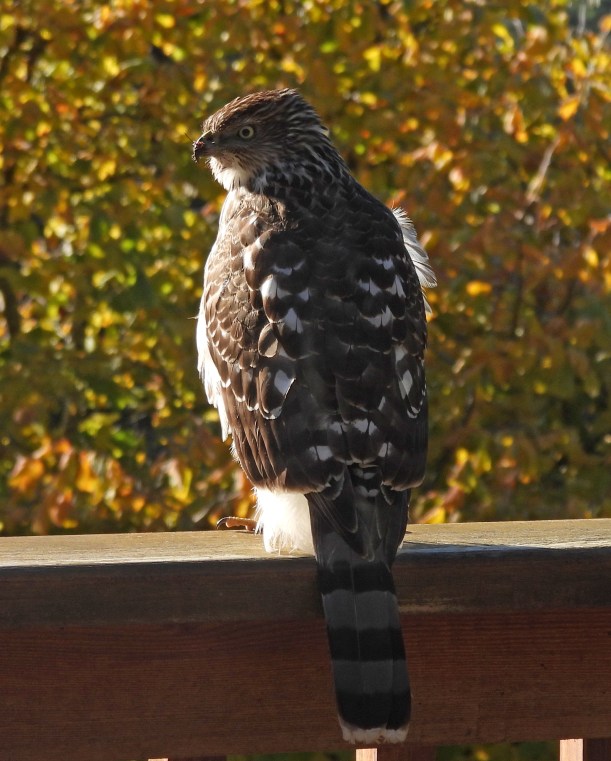
This broad-winged hawk would be happy with a songbird or even a careless squirrel. Patience and alertness are what it’s all about.
The merlin doesn’t mind picking up a songbird either. He’ll happily take down a flicker that might be almost the same size as him.

The red-shafted northern flicker had better be alert. It’s a dangerous world out there.
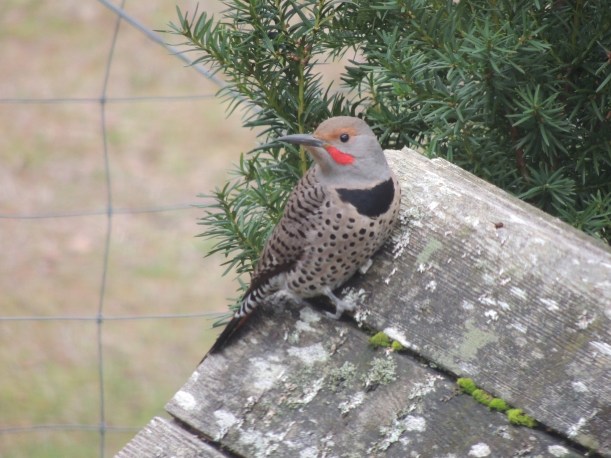
The general rule for non-predatory birds, especially in the autumn, is “heads up or be eaten.” It’s the raptors who are the meat eaters, while the gentler plant- and insect-eaters need to fear them.
And I haven’t even mentioned the owls yet. Rabbits and mice beware!


 wordsfromanneli