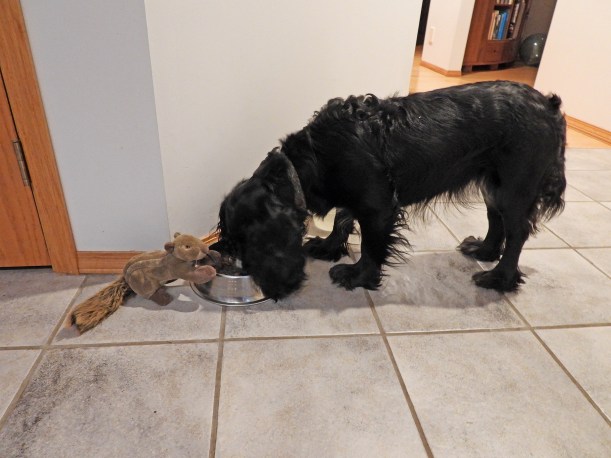
Same old kiblets from the bag,
No enhancements added,
But the squirrel is such a nag,
Trying hard to grab it.
If I’m picky I’ll lose out,
“Get your own, you sneak,
Lucky I don’t bite your snout,
Then we’d hear you squeak.”

Professional sushi makers will roll their eyes, but I don’t care. The only thing I’m interested in rolling are the sushi rolls. These are the easy do-it-yourself sushi rolls – not fancy, but easy to make and good to eat.
I don’t care for the idea of eating raw fish, but I’m told that when it is used, it has been frozen enough to kill anything that would make me nervous. Still, I prefer to use cold-smoked salmon (which has also been frozen, but is also salted and cured).
The ingredients you’ll need are dried seaweed sheets (sushi nori), mayonnaise, sticky rice (I prefer Kokuho Rose, but you can use regular rice by soaking it in warm water for half an hour before cooking it), and your choice of fillers. I like to use cold-smoked salmon, carrots, and asparagus, but you can substitute all sorts of things.
I pre-cook the carrot strips and the asparagus just slightly – a minute or two in the microwave in a dish with a bit of water. Drain and cool those before using.
The rice, cooked earlier, should be chilled. I have a bowl of water handy to dip my fingers in, so I can press the rice onto the seawood sheets without too much rice sticking on my hands.
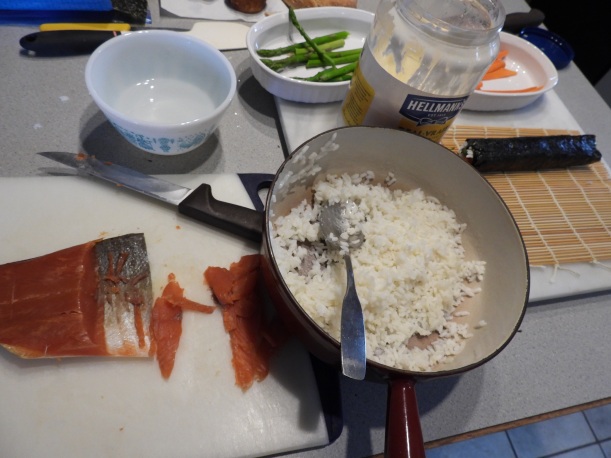
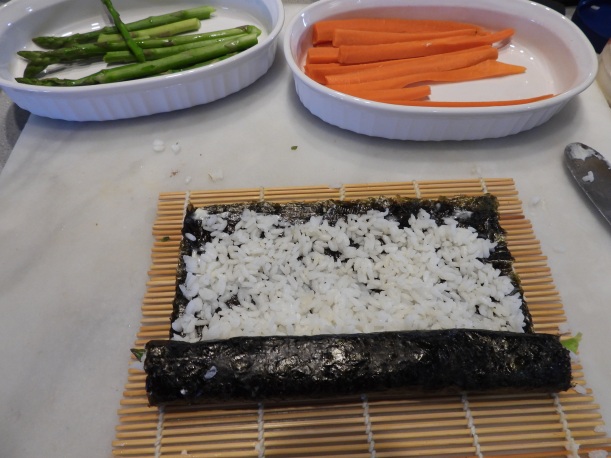
On the cluttery photo below you can see the things you’ll need. I had already made one roll, and then decided to cram all the things I was using into one picture to show you.
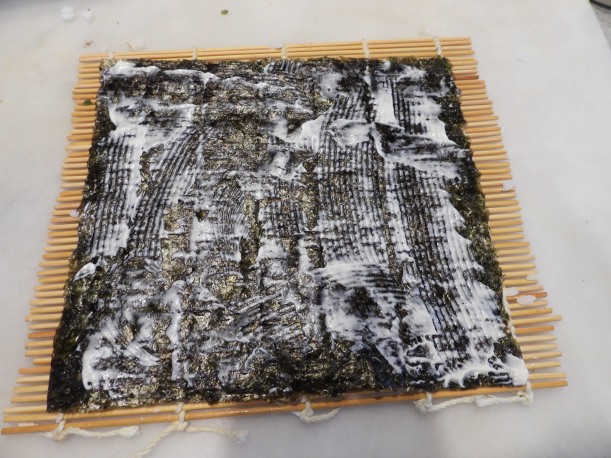
First, spread some mayo to coat the dull side of the seaweed sheet. I’m sure yours will look neater than mine did. Then put on a handful of rice and spread it as evenly as possible so the seaweed is covered except for the last half inch that is farthest away from you. This is where you will stick the last part of the roll to itself.
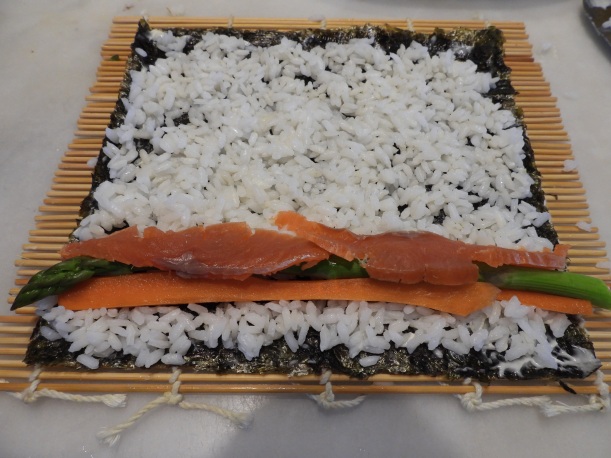
Make a little ditch in the rice and place your filling ingredients into it as shown in the photo below.
Begin to roll the sushi away from you, using the bamboo mat to help make the first roll evenly and press it down before continuing to roll toward the farther end of the seaweed sheet. You might want to push any stray rice grains into the roll before pressing it closed.
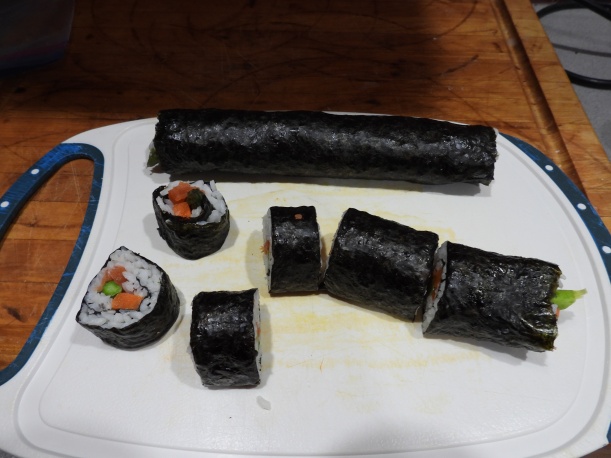
For this next step you need a very sharp knife. Cut the roll in half, then cut each half in half again, and repeat that until you have eight pieces. The photo shows some the progress of cutting the pieces.
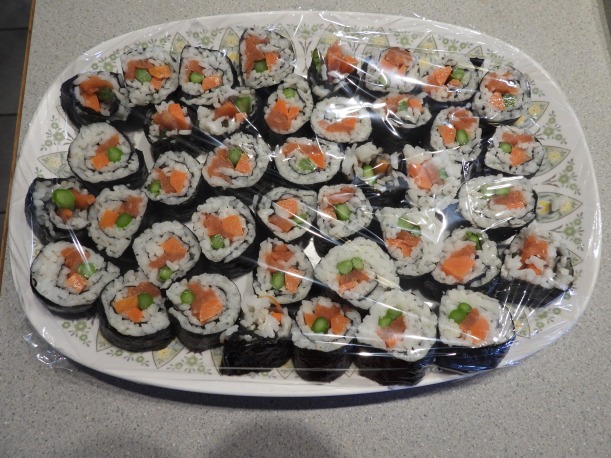
Place all the pieces on a platter, cover with plastic wrap and place in a cool place to chill before serving.
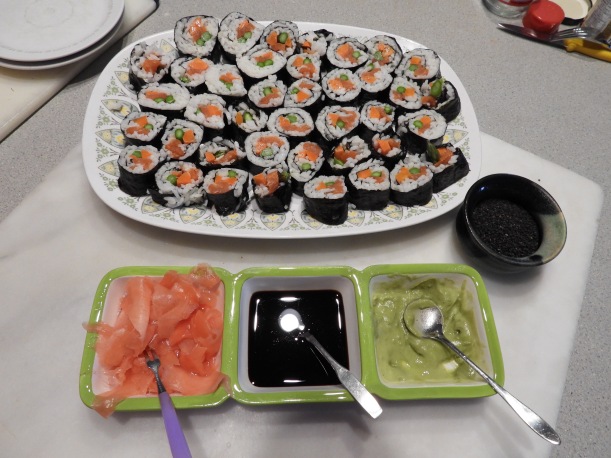
The condiments you may want to use with the sushi are pickled ginger root, soya sauce, wasabi (powdered horseradish with water added – or you can sometimes buy it already mixed in a tube), and some toasted sesame seeds. Have a small dish to place your sushi on, and add the condiments to it as you eat the sushi pieces one by one.
A platter of sushi like the one below took five sheets of seaweed and I used one cup of rice (two cups of water). You end up with 40 pieces of sushi (5 rolls of 8 pieces each).
Enjoy!
Two Eurasian collared doves have come out of the woodwork to be lovey-dovey for Valentine’s Day.

It sure is lonely at the top.

Will you look at that!?

Oh no! It’s that dog again.

You stay down there!

Come on down here. We can play tag.

You just stay here by me, darlin’. I’ll take care of you. How about a little snack? I’m not afraid of that dog. I’ll find you something to eat. Make you forget about all your troubles.

Good! The doggone dog’s gone. The coast is clear for foraging.

That little bit of corn? That’s it? Don’t you think I’m worth more than that? You’re going to have to do better than that if you want to be my buddy.

Okay, what’s the trouble here? I see there are some ruffled feathers. Looks like someone’s head is hanging in shame. Let’s fix this up. Come on, you two. Kiss and make up. And remember she gets the kiss and he gets the makeup. Hahaha. Get it? Get it?
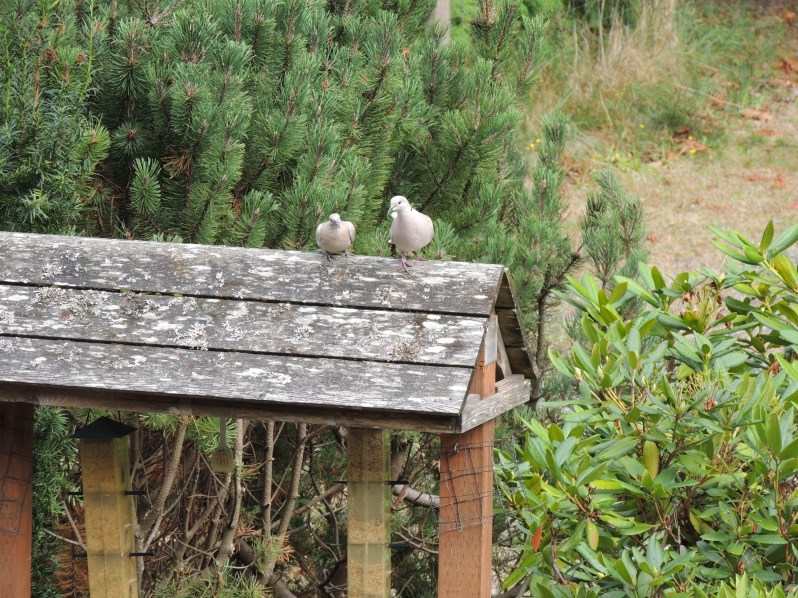
I’ll get you something bigger, darlin’. Be right back. And remember, I want you to be my Valentine. Is that a deal? Okay, that’s good then.

Good grief, she’s high maintenance. But I suppose she’s worth it. Life is such a fine balance. I’d better practice on this balance beam.
Have a happy Valentine’s Day on February the 14th and be happy every day after that too.
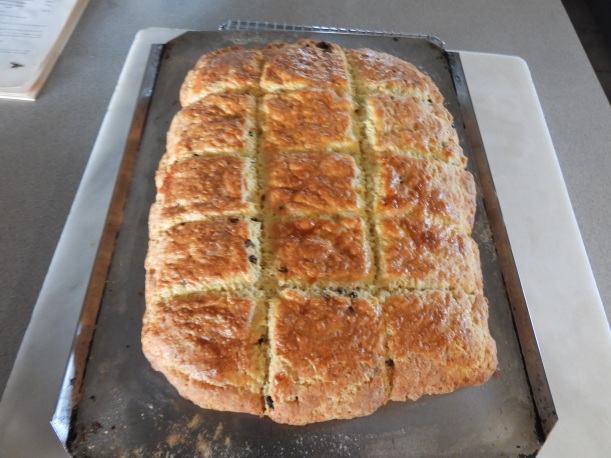
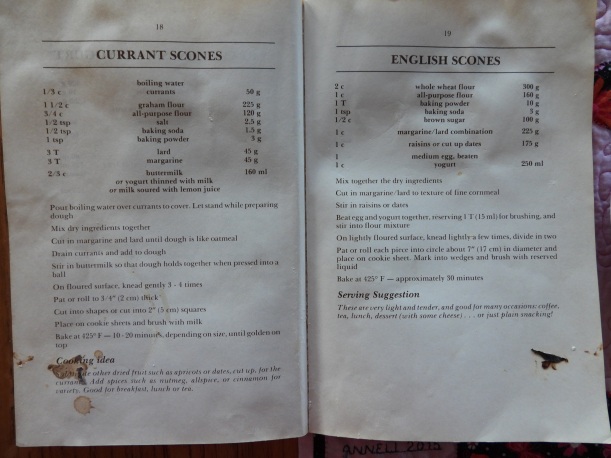
I have copied two recipes here. I have ended up combining them and making small changes. I’ve put my own (easier) version at the end of this post, but feel free to try out these recipes straight from the book. Beware of the ingredient list saying to use lard and/or margarine. I didn’t notice that it says that on the recipe until a commenter pointed it out. I always use butter, even though it has fat problems of its own. But margarine makes me shudder (sorry, if you’re a margarine fan) and lard is probably a quicker path to a heart attack than butter is, but that’s just my humble opinion.
The scones are very easy to make if you have a food processor to mix the butter with the flour. The old pastry blender method is just too much work.
Some changes to the recipe?
I only use the baking soda if I add a squeeze of lemon (and I usually do add lemon).
I use two eggs if I have them to spare, rather than only one. One time I completely forgot to put the eggs in and they still turned out okay. The biscuit is very forgiving that way.
You can add grated cheese instead of currants. Probably there are a lot of things you could add if you wanted (chopped nuts, dried cranberries, raisins), but preferably not all in one batch.
One thing you don’t want to do is handle the dough too much. It makes the biscuits tougher if you do.
Here is my version of the recipe. You can substitute and change things without fear of doing too much damage. I like to use a lot of sour cream and less milk, but it depends what’s in the fridge that day.
Scones
All the dry ingredients go into the food processor:
3 cups flour
1/2 tsp. salt
3 tsp. baking powder
1 tsp. baking soda (if using a squeeze of lemon for flavour)
3 Tbsp. sugar (optional)
Then add about 3/4 cup (or up to 1 cup) of butter and pulse the food processor until the butter is cut into the flour mixture evenly.
Pour the dry mixture that now has the butter in it, into a large bowl.
Add the currants or whatever additive you’ve decided on (dates, dried cranberries, nuts, or cheese) and stir them into the flour mixture.
Next step:
In a large measuring cup, stir an egg (or two if you like) with a whisk, reserving some of the egg mixture for a wash on top of the batter before putting it in the oven. Add enough milk to make a cup. At this point I also add, as part of that one cup of liquid, whatever I have on hand (yogurt or sour cream) and a generous squeeze of lemon or lime – just to get the baking soda working well. You may have to add a drop more liquid if you use sour cream or yogurt. Mix the liquid well with a whisk.
Pour the liquid into the large bowl with the dry ingredients and mix gently (more like folding it in).
Pat the dough together and flatten it on a buttered cookie sheet. Use your lightly floured hands to press it out into a rectangle about half to three-quarters of an inch, and paint with the egg wash. Cut the batter into about 15 squares (two lengthwise cuts and four crosswise cuts). Put into the preheated oven at 400 for 25 to 30 minutes until they are golden brown.
Make yourself a cup of tea or coffee and enjoy.
We don’t have groundhogs around here, and the closest thing to them might be our marmots who live up in the hills. So Crispin has to do double duty while scratching out a life. He has to predict whether we’ll have an early spring or six more weeks of winter. I asked him what he thinks.

 wordsfromanneli