wordsfromanneli

Thoughts, ideas, photos, and stories.


39 Comments

The Spider and the Fly

Mary Howitt lived from 1799 to 1888. Her poem, The Spider and the Fly, was first published in 1829, almost 200 years ago.

The first line of the poem – “Will you walk into my parlour?” said the spider to the fly – is often misquoted, and you may have heard people say, “‘Come into my parlour,’ said the spider to the fly.” It is used to show that someone is trying to tempt another to do something they probably shouldn’t do.

In her poem, which is about seven stanzas long, the spider tries to lure the fly into coming into her trap. I’ve quoted some parts and paraphrased others.

#1 Spider: Will you walk into my parlour … up a winding stair.

Fly: Oh, no, no … For who goes up your winding stair can ne’er come down again.


#2 Spider: I’m sure you must be weary, dear. Will you rest upon my little bed?

Fly:  Oh, no, no … They never, never wake again, who sleep upon your bed.


#3 Spider: I have within my pantry good store of all that’s nice;
I’m sure you’re very welcome; will you please to take a slice?

Fly: I’ve heard what’s in your pantry, and I do not wish to see.


#4 Spider: I have a little looking-glass upon my parlor shelf,
If you’ll step in one moment, dear, you shall behold yourself.

Fly: I thank you, gentle sir,” she said, “for what you’re pleased to say,
And bidding you good-morning now, I’ll call another day.”


#5 Spider: He wove a subtle web, in a little corner sly,
And set his table ready to dine upon the fly.

(Then he said all kinds of flattering things to the fly, until the fly couldn’t resist).

Fly: She came nearer and nearer, listening to the flattery, thinking of how pretty she was.


And then: Up jumped the cunning spider, and fiercely held her fast.
He dragged her up his winding stair, into his dismal den,
Within his little parlor; but she ne’er came out again!


The lesson is basically, “Don’t fall for flattery,” or you might end up like this fly that was caught by a spider on my living room window yesterday.
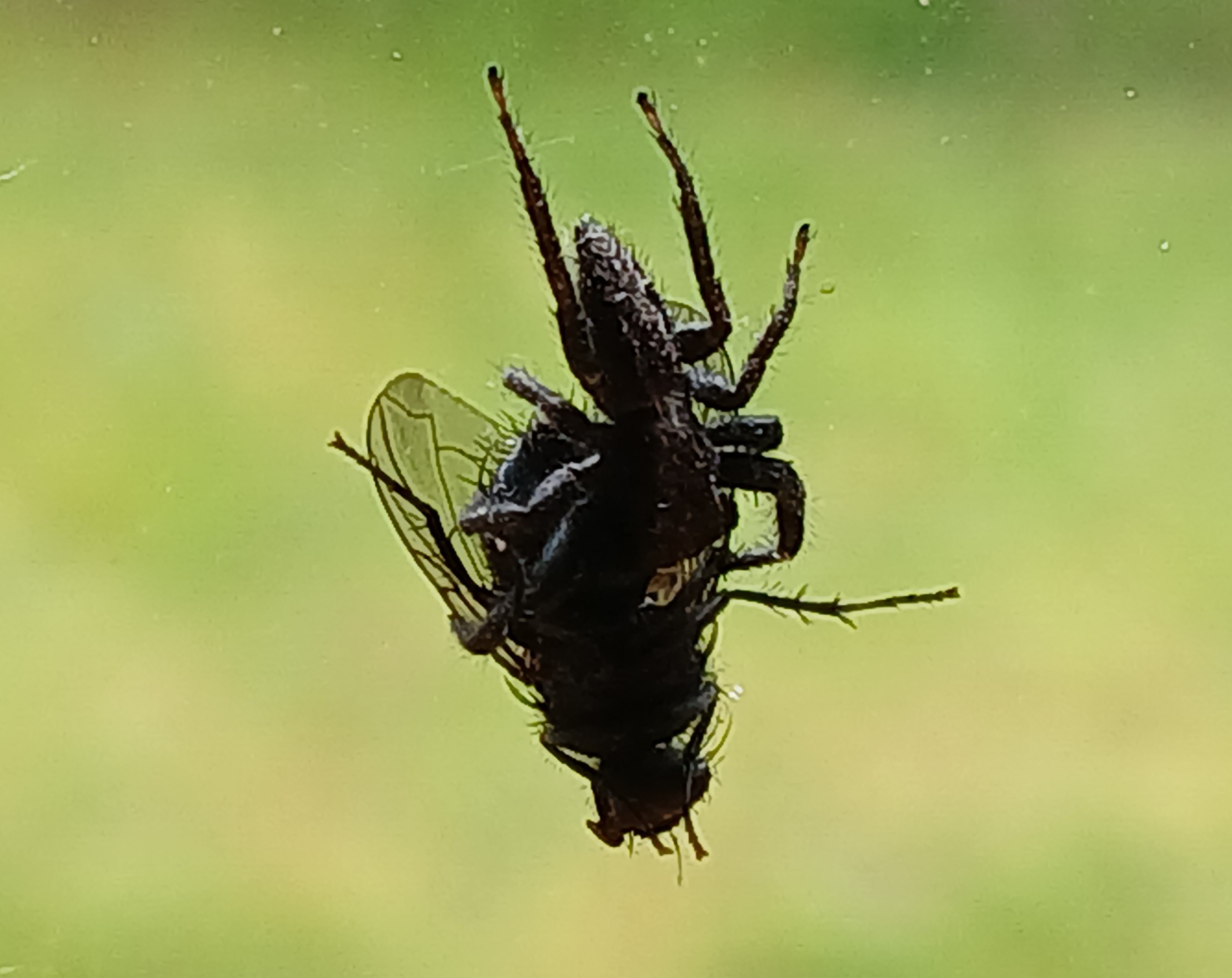
Epilogue: (Apologies for no proper poetic meter.)

The fly was sucked dry.

The spider had her inside ‘er.

She was dropped on the sill, my dog ate her at will.

The spider returned to the scene of the crime, and Anneli smashed her and turned her to slime.

Some regret did I feel, but it had one last meal.


33 Comments

There Otter be a Law

An unsuspecting young fellow had a big surprise at a local lake when he tried to bring ashore a trout he had hooked on his fishing line.

Turn on your sound and watch his surprise.

I hope the thief has enough skill to work around the hook and doesn’t eat it.


P.S. I would like to give credit to the photographer but at the same time I am trying to keep the young fellow relatively anonymous.


54 Comments

The Lonely Sea and the Sky

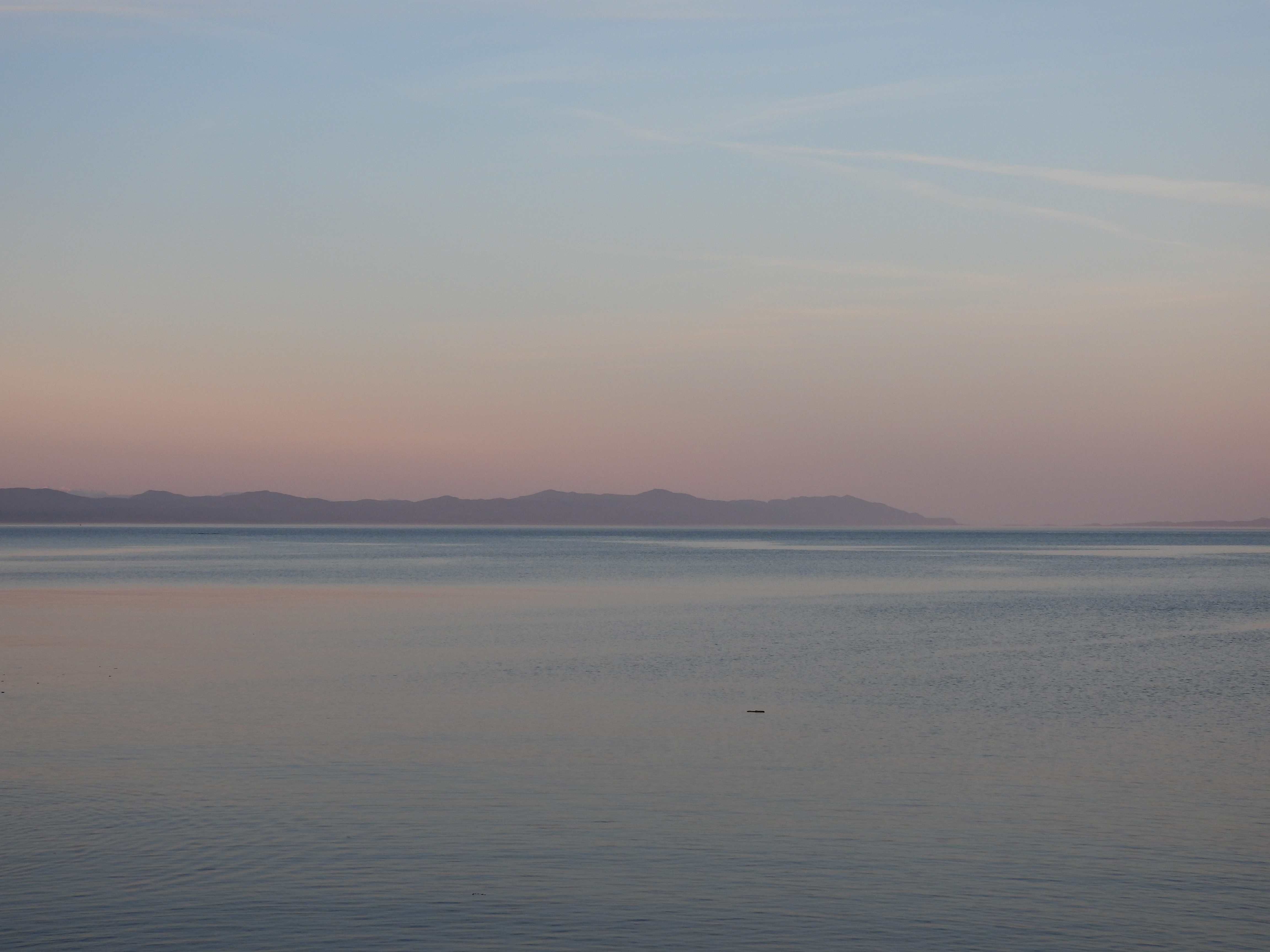
Last week the Captain and I went to a nearby beach. I took a few pictures and thought, “Why am I taking pictures of nothing?” When I looked at the photos later, I thought how lonely the sea and the sky looked and John Masefield came to mind. I have always loved his poem, “Sea Fever.”

(By the way, did you know that John Masefield was England’s poet laureate from 1930 to 1967?)

The first line was especially appropriate.

I must go down to the seas again, to the lonely sea and the sky,

The rest of the poem didn’t fit because the sea was really quite tame, and the wind was not like a “whetted knife.”

But the loneliness of the great expanse of water was prevalent.

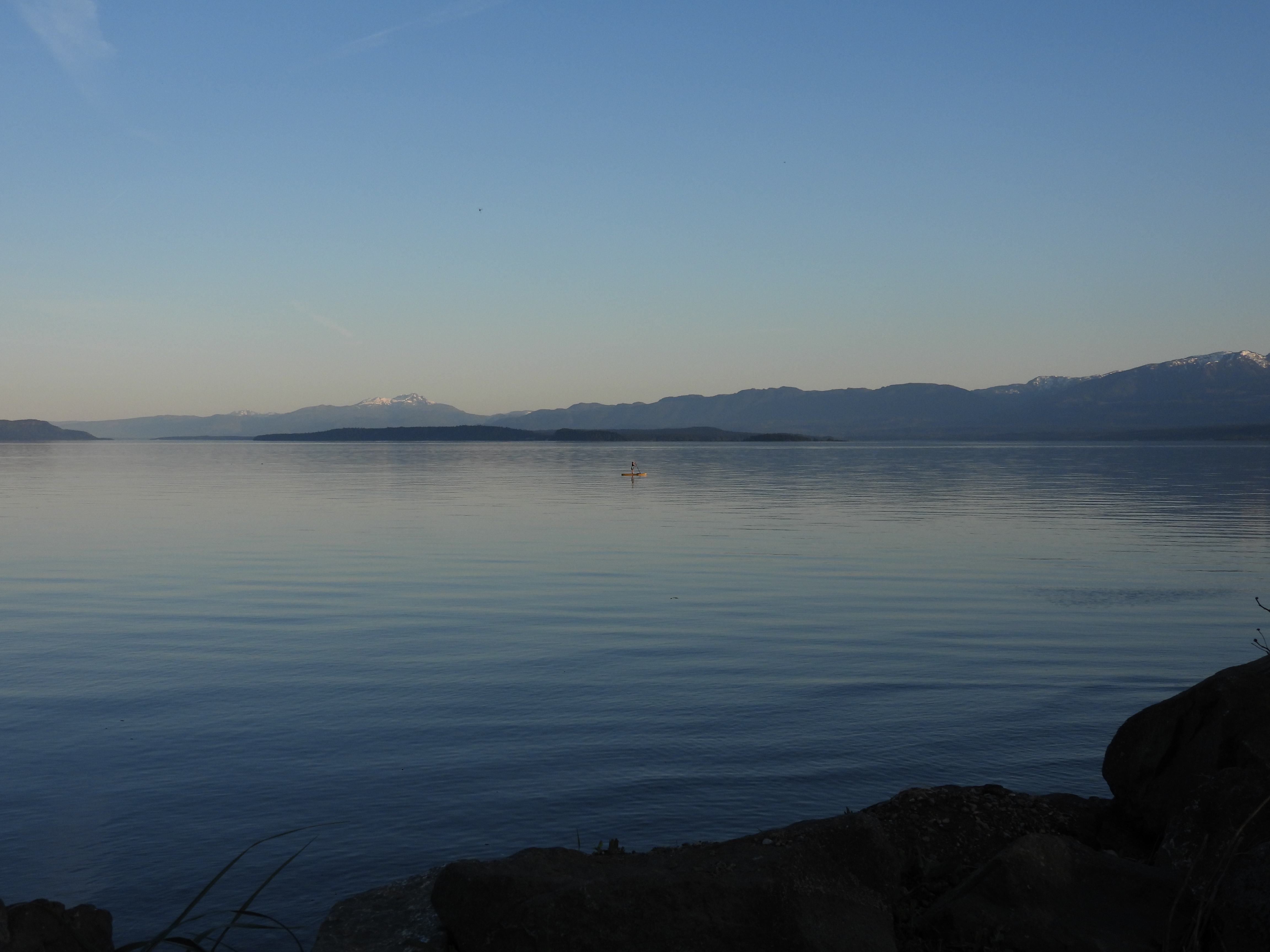
You may want to click on these photos to enlarge them, especially the ones with the lonely creatures in them. They are so tiny in an immense world.

In the first photo, the general setting. Notice the pink and blue striations in the water.

Now, notice in each subsequent photo, the one lonely thing in the setting.  You will need to click to enlarge or you won’t see much. Use the back arrow to return to the page afterwards.

A sea duck, minuscule, the ocean immense,

Alone though he be, he relaxes, not tense.

The marker buoy rocking so gently and slow,

It warns of the rocks where the water is low.


A lone paddleboarder, is breaking the rule,

She stands as she’s dipping the water so cool.

The seal glides alone but with grace and finesse,

He searches for love and is feeling distress.

Could that be his love on the far other side?

Stay cool and don’t splash, just swim up with a glide.

**For sure you need to click to enlarge the photo to find Mrs. Seal on the far side of the photo.

And lastly and leastly, a lone club is measly,

But even a stick can feel beastly.


58 Comments

A Glimpse of May

Scotch broom is considered invasive because it crowds out other plants, but it provides shelter for many birds who can hide in its thick growth. Bees love it too.

It makes a background for puppy poses. Here is our springer spaniel, Ruby, when she was a pup.

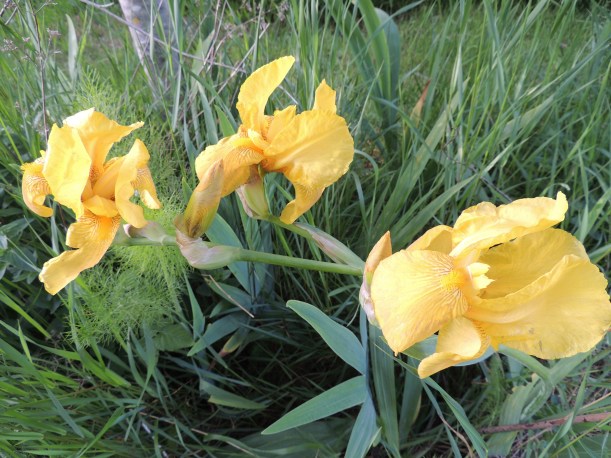
The irises are having a little chin wag.


Miss Bossie runs the meetings.

Other members of the community listen in.

The columbines provide a slurpy snack for the hummingbirds, who then zoom off to spread the word that spring is really and truly here.

Precious first flowers

That bloomed after showers

Are chatting and preening all day.


Puppies roll over

As if they’re in clover,

Now spring has come, why don’t we play?


Hummingbirds sipping,

They fly away dipping

And buzzing, “Hurrah, now it’s May!”


45 Comments

It’s Dogwood Time

It’s time for the dogwoods to bloom. There are many bigger dogwood trees around, but ours is still quite small.

The robin is enjoying the spring morning sunshine while he wonders about the petal count of these flowers.

Most flowers have a number of petals that fall into the Fibonacci sequence, a mathematical sequence in which each number is the sum of the two preceding ones. So it goes like this: 0, 1, 1, 2, 3, 5, 8, 13, 21, 34, 55, 89, 144 … and it goes on forever.

Our Pacific dogwood usually has between four and six petals, so it’s different from most flowers which tend to follow the Fibonacci sequence.

Next time you’re in a flower garden, see which flowers you can find that have either  3, 5, 8, 13, or 21 petals. You’ll be surprised at what you find.

*Fibonacci sequence was used and further explored by an Italian mathematician, Leonardo Bonacci, who was called Fibonacci, possibly as a name made up from “filius Bonacci” (son of Bonacci). He was born about 1170. Yes, about 850+ years ago.

I bet he loved doing puzzles or writing code.

So what’s the next number after 144? The first nine commenters got it easily, so how about the next three numbers?


49 Comments

It’s Just Lunch

This is a post I did ten years ago, but I was reminded of it this morning when I heard the unmistakable DEE-di-di-di-di of a merlin in our nearby wooded area.

Warning: This is from a sad but true story that happened in my own yard back then (ten years ago).


The songbirds always let it be known when there’s a killer in their midst, be it a cat, a raccoon, a hawk, or a crow. Today, it seems that every bird in my little acre was shrieking with alarm — not just the usual robin whose nest was threatened, but the chickadees, nuthatches, and many others as well. When all the birds sing happy songs, it’s background music, but when they sound like several fire alarms going off, something is wrong. I went out onto the deck to have a look.

In the tall firs next to the house, many songbirds were divebombing a predator who sat and watched from her perch on a dead broken branch. I ran back into the house for my camera. The merlin (a small falcon) didn’t seem to care about me being there. She was either a juvenile or brazen or both. However it was, she allowed me to take many pictures, even posing a bit.

She ruffled her feathers, being Mrs. Cool. I’m not afraid of you!

??????????

The songbirds set up the alarm in the whole mini forest around my yard. A chickadee and a nuthatch, both tiny birds who are often chosen by the falcons as appetizers, bravely sat on the branch directly behind the merlin, scolding her.

The merlin merely gave them a look that said, “Who? Me?”

031

Then she looked down at the ground to see if her lunch was still there. I suspected she had done something because she had blood on her hands … er … beak.

033“Yes, it was me,” she said. “I’m not proud of myself.”

035

She shrugged her shoulders.  “It’s just lunch.”

039My little puppy, Emma, found the falcon’s intended lunch, lying on the ground below the tree. A juvenile red-shafted northern flicker, one of my favourite birds in this area.

??????????

I was choked. I don’t want to hear another person say a word about “Mother Nature.” There is nothing “motherly” about nature. As beautiful as nature is, it is also very cruel when we apply our human values to it. But that’s how it has to be.

And I do think the falcon was sorry.

003

I waved my arms but the falcon didn’t want to fly away. It was only when I opened the big patio umbrella that she flew off. The songbirds settled down and silence hung in the air.

??????????

When I picked up the flicker, a single tail feather fell to the ground and as I walked away, I heard one lonely bird calling. It had to be the mother giving one last quavery call to say an anguished goodbye to her baby.


My apologies that the story is so sad, but life can be like that sometimes.