It is my honour and great pleasure to introduce you to Jacqui Murray and her novel, Endangered Species, the first in her latest trilogy in the series called Man vs. Nature. Summaries of the novels in this trilogy may be found near the end of this post.
Who is Jacqui Murray?

Jacqui Murray is the author of the popular prehistoric fiction saga, Man vs. Nature which explores seminal events in man’s evolution one trilogy at a time. She is also author of the Rowe-Delamagente thrillers and Building a Midshipman , the story of her daughter’s journey from high school to United States Naval Academy. Her non-fiction accomplishments include 100+ books on tech into education, as well as reviews as an Amazon Vine Voice , and articles as a freelance journalist on tech ed topics.
*****
While reading about the Neanderthal tribes in this trilogy, it is natural to wonder about some things regarding how these primitive people lived. Here is a question many readers have about the people of those long ago times. Jacqui Murray explains the answers based on her extensive research of the topic.
Did Neanderthals Have a Language?
Language, like so much about Neanderthal culture and lifestyle, didn’t preserve over the four-hundred thousand years of their existence. The best we can do is extrapolate what might be based on what we do find.
Three questions dominate the discussion of whether Neanderthals had a language:
- Could they speak?
- Did they speak?
- Could they write a language?
Could they speak?
Yes. They had the physical ability to speak.
First: The Neanderthal hyoid was indistinguishable from ours so there is no reason to think it wasn’t used exactly in the same way as ours. Their voice box was higher in the throat than ours, which could mean their voices were higher pitched, but it would have no impact on their ability to speak.
Second: Their chests were large. They could control their breath in the same way we do, which is a requirement of speaking.
Third: Their ears were attuned to human speech, as are ours, which meant vocal sounds were important. I won’t try to explain the physiological details of that, but it is documented scientifically by paleoanthropologists. You can dig into that topic if you like–it’s pretty interesting.
Because of all this, there is every reason to believe Neanderthals could speak.
Did they speak?
So, physiologically, they could speak, but did they? Two details to consider with this question:
First: The types of tasks Neanderthals accomplished were complex–turning bark or pitch into glue, hardening spear tips in fire and not burning them, hunting in a group. These were accomplished best by talking to each other and planning. Rebecca Wragg Sykes, author of the acclaimed Kindred: Neanderthal, Life, Love, Death, and Art goes so far as to assume these sophisticated tasks couldn’t be accomplished without talking:
“Some kind of vocal communication was a really important everyday part of Neanderthal life.”
Second: Speaking is noisy. Neanderthals were more likely to want to melt into their environs rather than stand out. Speaking might have been less common outside their homebases and more common inside.
Could they write a language?
I’ll stipulate that writing as we know it was well beyond their cerebral toolkit, but they were playing with its elements. Shapes and geometric figures that have no basis in nature are found throughout Neanderthal habitats. To take this a step further, the same 32 geometric designs–lines, rectangles, ovals, dots, triangles, circles–occur in caves and on rock walls throughout Europe over tens of thousands of years, many at a time when only Neanderthals inhabited the caves.
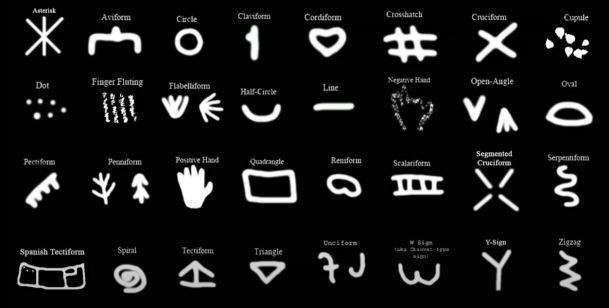
Called art by some experts, but “graphic symbols with meaning” by others, these predate common cave art that includes animals and spears and human activities. These symbols (handprint aside) appear nowhere except in the mind of the creators. Whether they were for writing or art or something else, we don’t know, but they are curious. In my trilogy, Savage Land, I propose that they were used by Neanderthal tribes to share information with other tribes about the area. Because Neanderthals were nomadic by nature and shared their caves with whoever was passing through, this could make sense.
*****
Savage Land is the third prehistoric man trilogy in the series, Man vs. Nature. Written in the spirit of Jean Auel, Savage Land explores how two bands of humans survived one of the worst natural disasters in Earth’s history, when volcanic eruptions darkened the sky, massive tsunamis crossed the ocean in crushing waves, and raging fires burned the land. Each tribe starring in the story considered themselves apex predators. Neither was. That crown belonged to Nature and she was intent on washing the blight of man from her face.
In Endangered Species, Book One of the trilogy, Yu’ung’s Neanderthal tribe must join with Fierce’s Tall Ones—a Homo sapiens tribe–on a cross-continent journey that starts in the Siberian Mountains. The goal: a new homeland far from the devastation caused by the worst volcanic eruption ever experienced by Man. How they collaborate despite their instinctive distrust could end the journey before it starts or forge new relationships that will serve both well in the future.
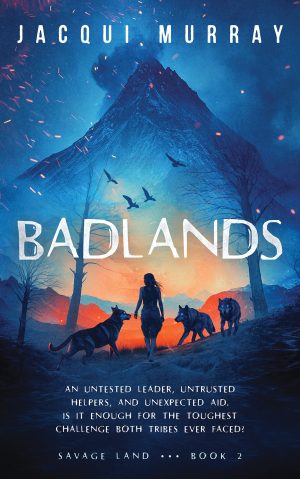
In Badlands, Book Two, the tribes must split up, each independently crossing what nature has turned into a wasteland. They struggle against starvation, thirst, and desperate enemies more feral than human. If they quit — or worse, lose — they will never reunite with their groups or escape the most deadly natural disaster ever faced by our kind.
Join me in this three-book fictional exploration of Neanderthals. Be ready for a world nothing like what you thought it would be, filled with clever minds, brilliant acts, and innovative solutions to potentially life-ending problems, all based on real events. At the end of this trilogy, you’ll be proud to call Neanderthals family.

Endangered Species – Book 1 of the Savage Land trilogy
Endangered Species trailer: https://youtube/AxBlmays3vE?si=1SMtqDJiLYCRZvB6
Badlands – Coming soon – Book 2 of the Savage Land trilogy
Book information:
Endangered Species—Print, digital, audio available: http://a-fwd.com/asin=B0DJ9Y7PQ8
Badlands—digital on presale now: http://a-fwd.com/asin=B0DFCV5YFT
Genre: Prehistoric fiction
Editor: Anneli Purchase

 wordsfromanneli
January 17, 2025 at 12:33 am
Very interesting post, Anneli. 😊Congratulations, Jacqui. Good luck with your launch. 😊
LikeLiked by 3 people
January 17, 2025 at 6:44 am
Thank you, Lynette. I love sharing the wonders of our ancestors.
LikeLiked by 2 people
January 17, 2025 at 5:17 am
Thanks for sharing Anneli and good luck Jacqui. Allan
LikeLiked by 2 people
January 17, 2025 at 6:45 am
Thank you! I appreciate the visit.
LikeLiked by 1 person
January 17, 2025 at 5:21 am
Another interesting post. It makes sense they had some way to communicate which is required to live in a community. As for writing, signs and symbols make sense as opposed to an alphabet.
LikeLiked by 2 people
January 17, 2025 at 6:46 am
The surprise to me was so many of them–living so far apart–used the same symbols. I can’t figure that one out.
LikeLiked by 1 person
January 17, 2025 at 7:39 am
I wonder if the language and symbols had similarities because the groups traveled.
LikeLiked by 1 person
January 17, 2025 at 7:41 am
There’s a thought. Hmm…
LikeLiked by 1 person
January 17, 2025 at 6:55 am
Thank you for hosting me, Anneli! This will be a fun day.
LikeLiked by 1 person
January 17, 2025 at 7:41 am
It really is my pleasure to host you, Jacqui. Your stories are so well researched, but at the same time, the storylines in your books are something we can always relate to and enjoy.
LikeLiked by 1 person
January 17, 2025 at 8:39 am
It sounds like an interesting trilogy.
LikeLiked by 1 person
January 17, 2025 at 8:47 am
They are page-turners, Brad! You wouldn’t think so, being about people from so long ago, but they had problems with each other just as modern day people do (plus the extra challenges of simply surviving). I think you would love reading these books.
LikeLiked by 1 person
January 17, 2025 at 10:24 am
Thanks Anneli.
LikeLiked by 2 people
January 17, 2025 at 12:41 pm
If you like historical fiction or thrillers, you’ll probably like these. They’re based in history, but with so much action, it’s hard to believe our ancestors survived it all.
LikeLiked by 2 people
January 17, 2025 at 2:12 pm
Thanks Jacqui.
LikeLiked by 2 people
January 17, 2025 at 2:55 pm
It sounds like very interesting reading. Thank you for the introduction.
LikeLiked by 2 people
January 17, 2025 at 4:49 pm
Very readable and unputdownable!
LikeLiked by 2 people
January 17, 2025 at 5:50 pm
Thanks for visiting. Always good to learn about relatives, don’t you think?
LikeLiked by 1 person
January 18, 2025 at 9:20 am
I absolutely love Jean Auel’s Clan of the Cave Bear series, so these also sound worth a visit. Thanks, Anneli, for introducing me to a new (to me) author.
LikeLiked by 2 people
January 18, 2025 at 9:32 am
Hi Helen. If you liked Jean Auel’s books, you will love Jacqui’s books. She has done tons of research so you feel like you are learning something as you read, but the personal relationships and dilemmas of the characters keep you turning pages. I hope you try Jacqui’s books. I guarantee you will love them.
LikeLiked by 2 people
January 19, 2025 at 7:47 am
Jean Auel and I share a passion for prehistoric man, but different voices. I hope my storytelling is as compelling!
LikeLiked by 2 people
January 19, 2025 at 9:45 am
It definitely is, Jacqui!
LikeLiked by 1 person
January 18, 2025 at 9:54 pm
It’s great to learn about the Neanderthals and their language, Jacqui. They at least used some sounds to communicate even if their language wasn’t as complex as ours. The written symbols were interesting. Thank you for hosting, Anneli!
LikeLiked by 2 people
January 19, 2025 at 7:38 am
What stunned me most was that so many of them across thousands of miles used the same ones. How’d that happen? No one knows the how, just that it did!
LikeLiked by 2 people
January 19, 2025 at 9:45 am
I think we should email them and ask how they did it.
LikeLiked by 1 person
January 19, 2025 at 10:43 pm
They must have had a great teacher teaching the tribes as they moved from place to place. It’s amazing. 😍
LikeLiked by 1 person
January 18, 2025 at 10:11 pm
Thanks for your interesting comment, Miriam. It’s a fascinating topic.
LikeLiked by 1 person
January 19, 2025 at 11:46 am
Those symbols look like a “written language” to me, Jacqui. The didn’t seem to have an alphabet of sounds, but they remind me of Egyptian hieroglyphs. Fascinating. And I love how you included it all in your books. Thanks, Anneli, for hosting!
LikeLiked by 2 people
January 19, 2025 at 4:26 pm
I would love to know more about the symbols. Maybe I could find some old tablets to copyedit (haha).
LikeLiked by 1 person
January 20, 2025 at 10:00 am
LOL We still use symbols all the time! Traffic signs and emojis come immediately to mind. They’re very efficient! 🙃
LikeLiked by 1 person
January 20, 2025 at 10:38 am
YES, we do! I hadn’t thought of it that way.
LikeLiked by 2 people
January 19, 2025 at 5:16 pm
As you say, like hieroglyphs, or Chinese. It’s pretty interesting and no one really knows what’s going on with them.
LikeLiked by 2 people
January 19, 2025 at 9:26 pm
We need a pre-historic Rosetta Stone to figure it out.
LikeLiked by 1 person
January 20, 2025 at 10:19 am
Ha!
LikeLiked by 1 person
January 20, 2025 at 10:03 am
But at the time, I’m sure they made perfect sense. 💕
LikeLiked by 2 people
January 20, 2025 at 10:37 am
Yes, it must have served them well enough for their needs.
LikeLiked by 2 people
January 19, 2025 at 1:25 pm
Great to see Jacqui here and congratulations to her on her new book. I really enjoyed Born in a Treacherous Time and I’m glad to see there’s lots more where that came from 🙂
LikeLiked by 2 people
January 19, 2025 at 4:25 pm
Yes, lots of adventures, and the great thing is that each one has some new element in it. They are not all the same by any means.
LikeLiked by 2 people
January 19, 2025 at 5:17 pm
Thank you so much. This moves you forward about 1.8 million years. Our ancestors are a lot more modern now.
LikeLiked by 2 people
January 20, 2025 at 2:50 am
It is fascinating how much is still unknown about the Neanderthals and how we try to understand their culture and way of life through archaeological finds and scientific analysis. I think the three central questions presented here – whether they could speak, whether they actually spoke, and whether they developed writing – are important not only to linguistics, but also to our understanding of human evolution as a whole. Thank you for these good tips and explanations!
Greetings….Rosie from Germany
LikeLiked by 2 people
January 20, 2025 at 10:00 am
Most of what we know about them is from bones, artifacts, and soil. They’re barely pre-writing, and scientists do wonder about some of what we find–were they writing?? Thanks for visiting!
LikeLiked by 1 person
January 20, 2025 at 10:38 am
I would love to know!
LikeLiked by 1 person
January 20, 2025 at 10:37 am
It’s something I often wonder about when I read Jacqui’s books – (how are they communicating?)
LikeLiked by 1 person
January 20, 2025 at 10:38 am
Hi Anneli and Jacqui – certainly at the beginning of their time … my guess is they whistled to communicate … and used sign language when they were together … speech would have followed on … certainly lots to think about – cheers Hilary
LikeLiked by 2 people
January 20, 2025 at 10:40 am
I like the whistling, Hilary (as you know)
LikeLiked by 1 person
January 20, 2025 at 10:45 am
Most likely they used animal and bird sounds a lot (I’m guessing, of course, but that would make sense to me).
LikeLiked by 2 people
January 20, 2025 at 10:47 am
Yes Anneli – I’m sure the copied animal and bird sounds … parrot like … but it’s the way we started out communicating … good points – thank you – cheers Hilary
LikeLiked by 2 people
January 21, 2025 at 12:08 am
An interesting idea that their art was a way of communicating …if you look at our road sign symbols are used still today…I find it amazing how different and how alike we are…Nice to see Jacqui here Anneli..Congrats Jacqui on another well researched book launch post…every post is a learning curve 🙂
LikeLiked by 2 people
January 21, 2025 at 7:36 am
Here in America, we are getting away from words with road signs and more because of all the languages. Images–and symbols–communicated an idea without having to learn a foreign language. Maybe this was part of it?
LikeLiked by 1 person
January 21, 2025 at 9:30 am
Probably more universal.
LikeLiked by 1 person
January 21, 2025 at 9:33 am
Thanks for your comment, Carol. Good points.
LikeLiked by 1 person