wordsfromanneli

Thoughts, ideas, photos, and stories.


13 Comments

The Royston Wrecks

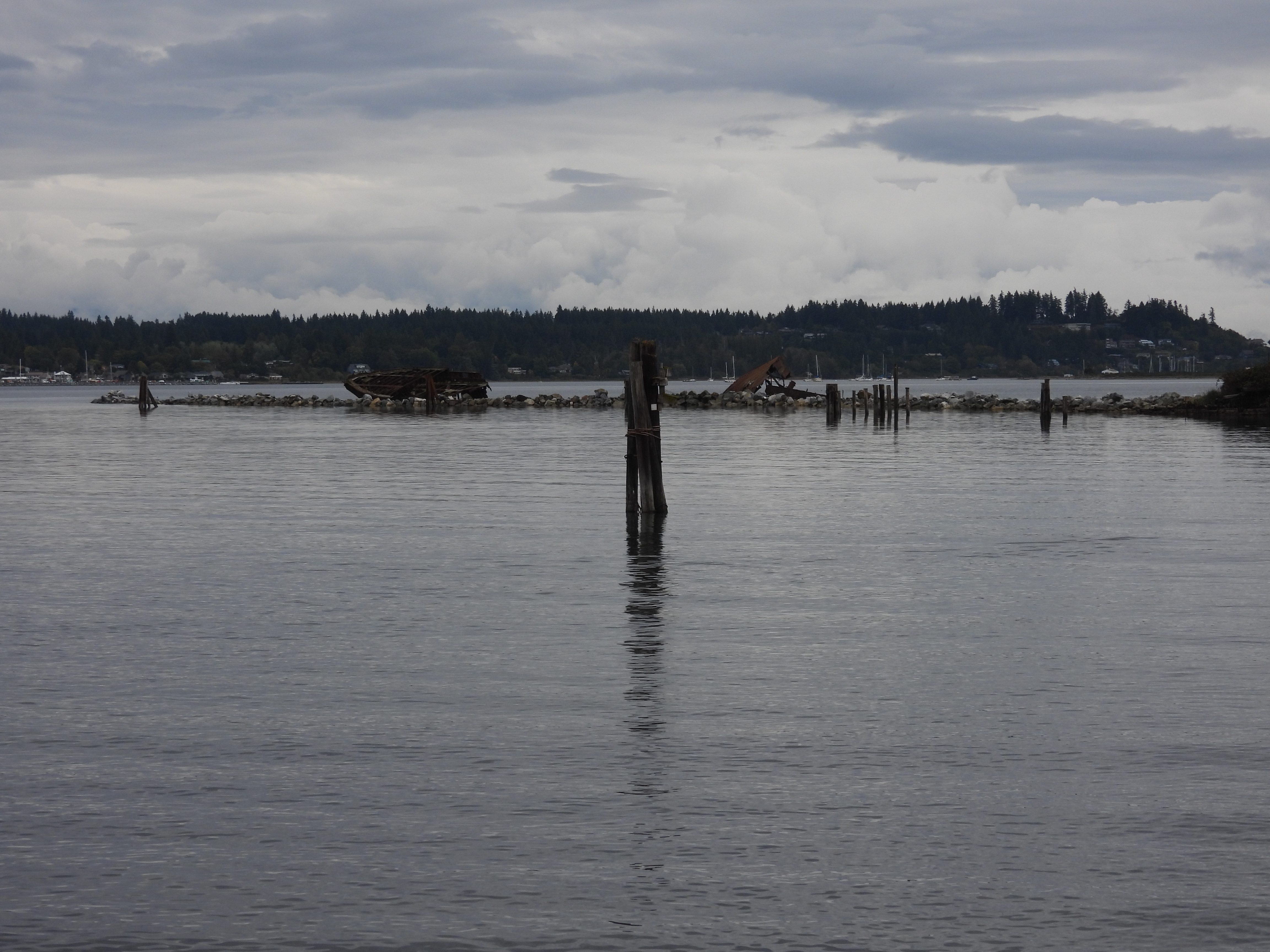
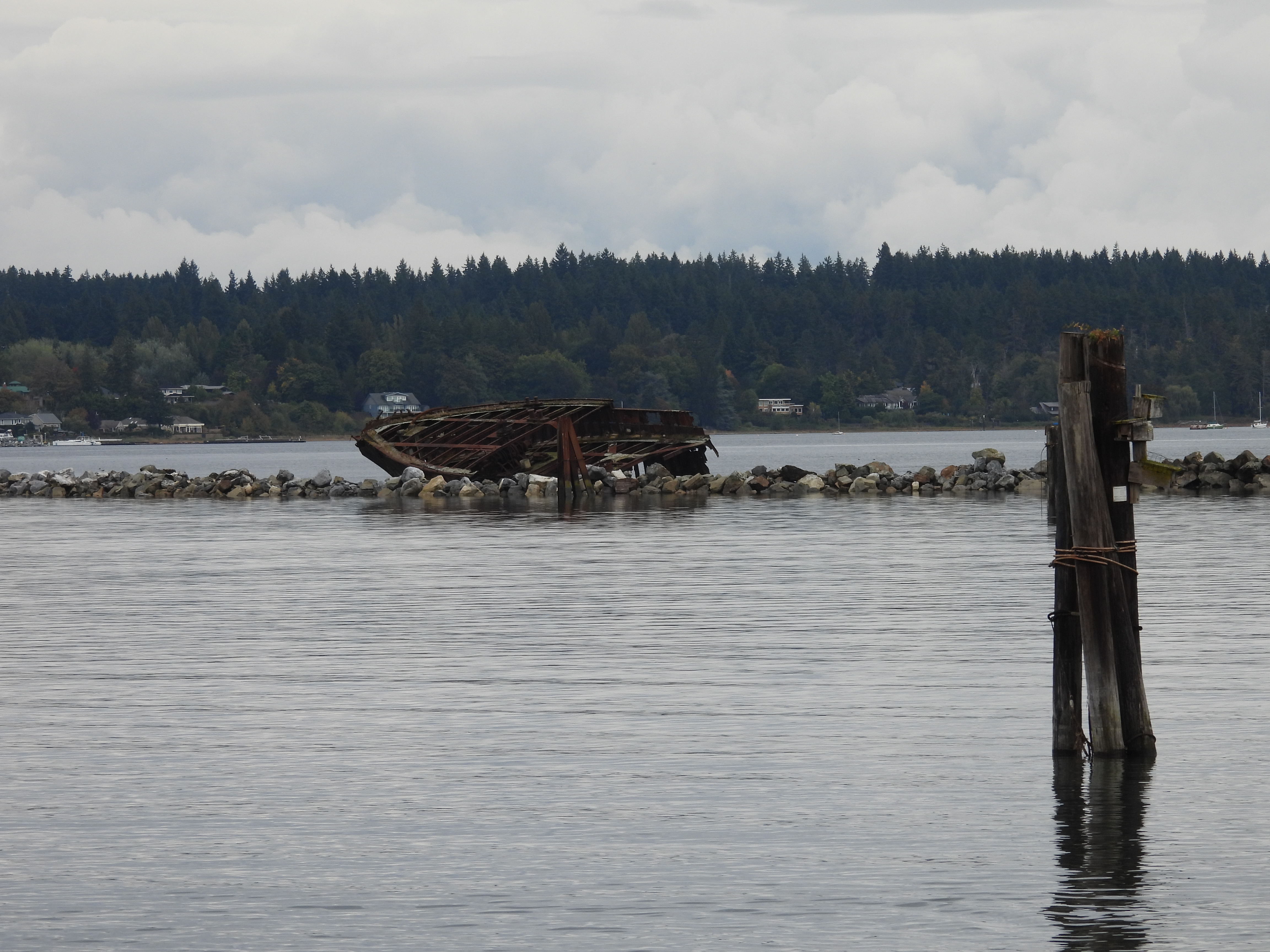
In the late 1930s, in Comox Bay on Vancouver Island, near the town of Royston, it seems that a breakwater was needed to help prevent rough waters from breaking up  log booms before they could be towed to market.


About  fourteen decommissioned boats of various kinds were scuttled in a line to form a breakwater to protect the shoreline from the worst of the sloshing waves.

Now, about 100 years later, pieces of a few of the wrecks still remain.

But it is only a matter of time before the saltwater and southeast winds will rust and break up the last of the wrecks.

Meanwhile, they are a bit of a landmark (or seamark), fondly called:


“The Royston Wrecks”


We were not always carcasses of rust,

But fine in form, yet seaworthy, robust;

Our time had come, our breakup loomed ahead,

They dragged us to the beach to rot instead.

At least our strength allowed us to reclaim

Some semblance of our pride and long-term fame.

Though battered by the sea from time to time,

Our rusting hulls and decks beset by slime,

We rested firmly on the bar to break

The might of stormy waves that tried to shake

Us loose from settling on the rocky floor,

Where we regained our usefulness once more.

A hundred years, we sheltered yonder beach

And proudly kept the onslaught out of reach.


26 Comments

Jabberwocky

Who lives under that log?

With Halloween just days away, I had a thought about dressing up as a Jabberwock with jaws that bite and claws that catch. I’m studying to speak the Jabberwock language for that special night. I can read it, but I can only guess at its meaning. How about you? Does it makes sense to you?

But if you consider the author of this crazy Jabberwocky, you might better understand why it’s a bit loony, and that he may have indulged in something illegal and mind-enhancing. Lewis Carroll, of Alice in Wonderland fame, had a great imagination.


Jabberwocky

by Lewis Carroll


‘Twas brillig, and the slithy toves

Did gyre and gimble in the wabe;

All mimsy were the borogoves,

And the mome raths outgrabe.


“Beware the Jabberwock, my son!

The jaws that bite, the claws that catch!

Beware the Jubjub bird, and shun

The frumious Bandersnatch!”


He took his vorpal sword in hand;

Long time the manxome foe he sought–

So rested he by the Tumtum tree,

And stood awhile in thought.


And, as in uffish thought he stood,

The Jabberwock, with eyes of flame,

Came whiffling through the tulgey wood,

And burbled as it came!


One, two! One, two! And through and through

The vorpal blade went snicker-snack!

He left it dead, and with its head

He went galumphing back.


“And hast though slain the Jabberwock?

Come to my arms, my beamish boy!

O frabjous day! Callooh! Callay!”

He chortled in his joy.


‘Twas brillig and the slithy toves

Did gyre and gimble in the wabe;

All mimsy were the borogoves,

And the mome raths outgrabe.


23 Comments

When You Are Old

I‘ve always liked this poem by William Butler Yeats, but until today, I knew very little about the author. Having now read a summary of his life, it changed the meaning of the poem for me (not my positive feelings about it), and I’ve decided not to offer my opinion here until I hear what you, my readers, think about this poem.

When You Are Old

by William Butler Yeats

When you are old and gray and full of sleep,

And nodding by the fire, take down this book,

And slowly read, and dream of the soft look

Your eyes had once, and of their shadows deep;


How many loved your moments of glad grace,

And loved your beauty with love false or true;

But one man loved the pilgrim soul in you,

And loved the sorrows of your changing face.


And bending down beside the glowing bars

Murmur, a little sadly, how love fled

And paced upon the mountains overhead

And hid his face amid a crowd of stars.


23 Comments

Dwindling

Not so many years ago the Comox Glacier, on Vancouver Island, had ice and snow all year round, especially on the plateau part of the landscape. I think this photo might have been taken about five years ago. It may have been early spring or late fall, but it had a good layer of ice all year.

Every year, there was less snow, even in the winter. I took the blurry photo below from the side of the road just a few days ago, using my cell phone. I didn’t care so much that it wasn’t a sharp photo. My point was made when I saw the lack of snow and ice. This is the least ice I have ever seen on the Comox Glacier. Soon this icon of the Comox Valley could be completely gone. Since I took that picture, a tiny skiff of snow has dropped on the tops of the hills, but that won’t make any difference to the huge loss of the glacier.

Our climate is definitely changing.


Do you see any signs of our changing climate where you live?


30 Comments

Bath Time

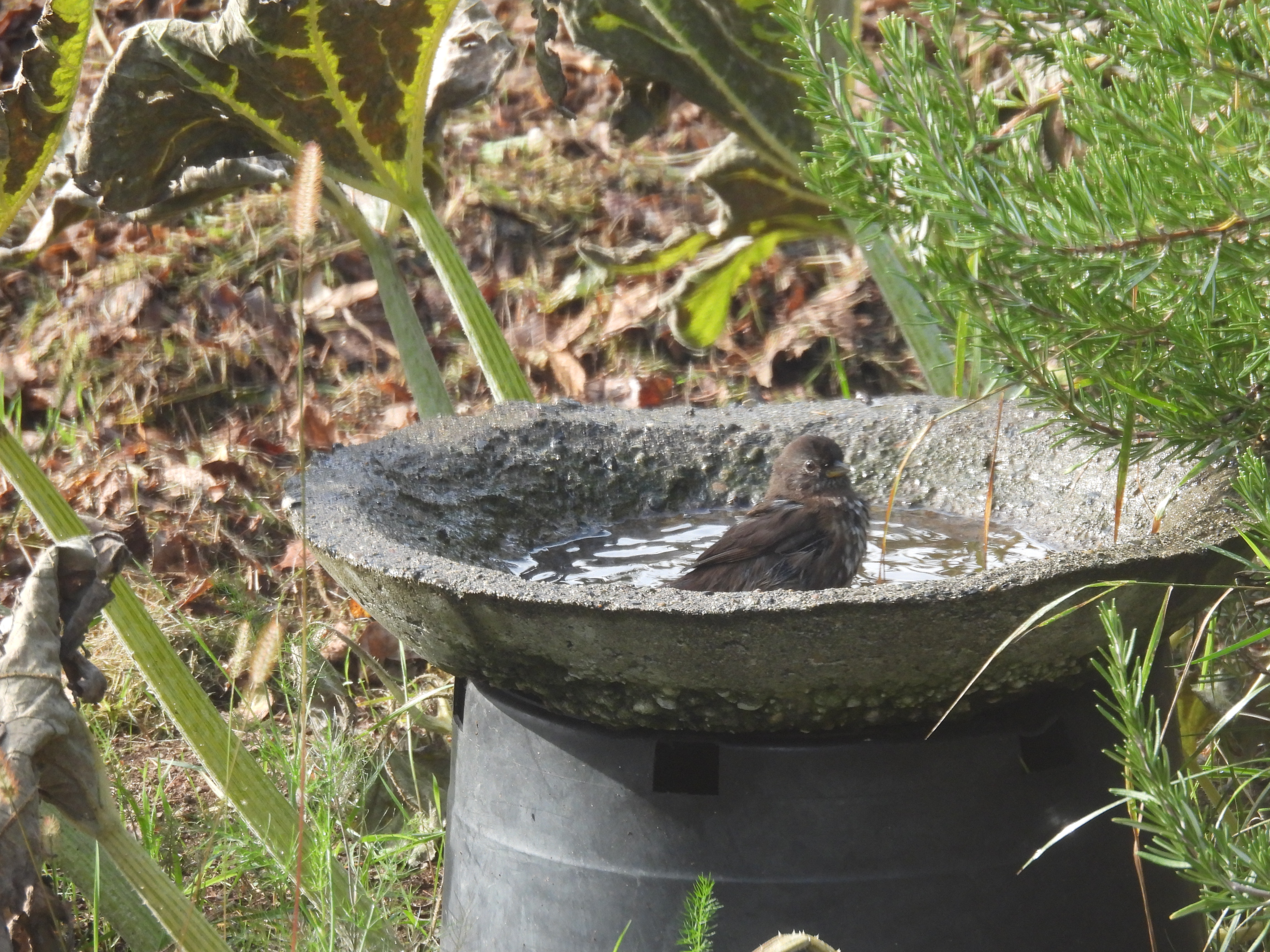
Sooty, the fox sparrow, is overjoyed to find a bathtub, even as the fall weather cools down.

“Feels so good to cool my heels.” 

“Maybe a little splash under the armpits will freshen me up.”

Then he spies something.

“A-a-a-a-k-k-k-k! What dirty birdy pooped in the pool?”

“Oh, deardeardear! I hope I didn’t get any on me!”

“Only one thing to do. Time for a vigorous showery birdbath and hope nothing sticks.”

“What are YOU looking at? Did you have a shower today? Don’t talk to me if you’re not clean.”


25 Comments

Plum (or Apple) Crumble Squares

When I had an overabundance of plums this year, I had a lot of work to do to wash and pit them and freeze them in ziplocs.  But the time has come to start turning them into  plum desserts, a reward for my hard work. I cut the plums open so the two sides are like wings joined in the middle. Then I can open them up to put on the bottom crust of the dessert.

Be warned – this is an “about” recipe.  You’ll figure out what works for you.

This dessert is easy to make, especially if you have a food processor.

  • Put about a cup and a half of flour in the food processor with a quarter cup of white sugar and about 3/4 cup of butter. Pulse the mixture until it is crumbly as you would do if you were making a pie. BUT, we’re not going to add liquid to make a pie dough.
  • At this point I add about half a cup of rolled oats (optional) to the mixture and just stir it in so the food processor doesn’t turn the oats into flour.
  • Then pour about 3/4 of the crumbly mixture into the bottom of a baking dish. I like to use my rectangular one. Spread the crumbly mixture into the dish and press it down with your hand to make a tightly packed “crust.” No need to butter the pan because there is plenty of butter in the crumble mix.
  • Take the thawed (or fresh if you have them) plums and place them skin-side down on the crust, covering it completely with one layer of plums.  By putting the plums skin-side down, the plum juice doesn’t soak into the crust and make it mushy.
  • Once the plums are in place, sprinkle them with cinnamon and a light sprinkle of brown sugar. Then sprinkle the last quarter of the crumble on top of the plums. At this point I like to put some large sprouted oat flakes on top to give them a bit of crunch, but it works fine with regular oat flakes too.
  • I use my mini oven to bake the plum crumble, but it works very well in the big oven too. 350 degrees for about 35 to 40 minutes. You can tell it’s done when the topping is golden brown and the plum juice is bubbling around the edges.

Let it cool a bit and  then cut it into pieces of whatever size you like. If there is any left, you can freeze it and take out pieces any time you want, to thaw in the microwave.
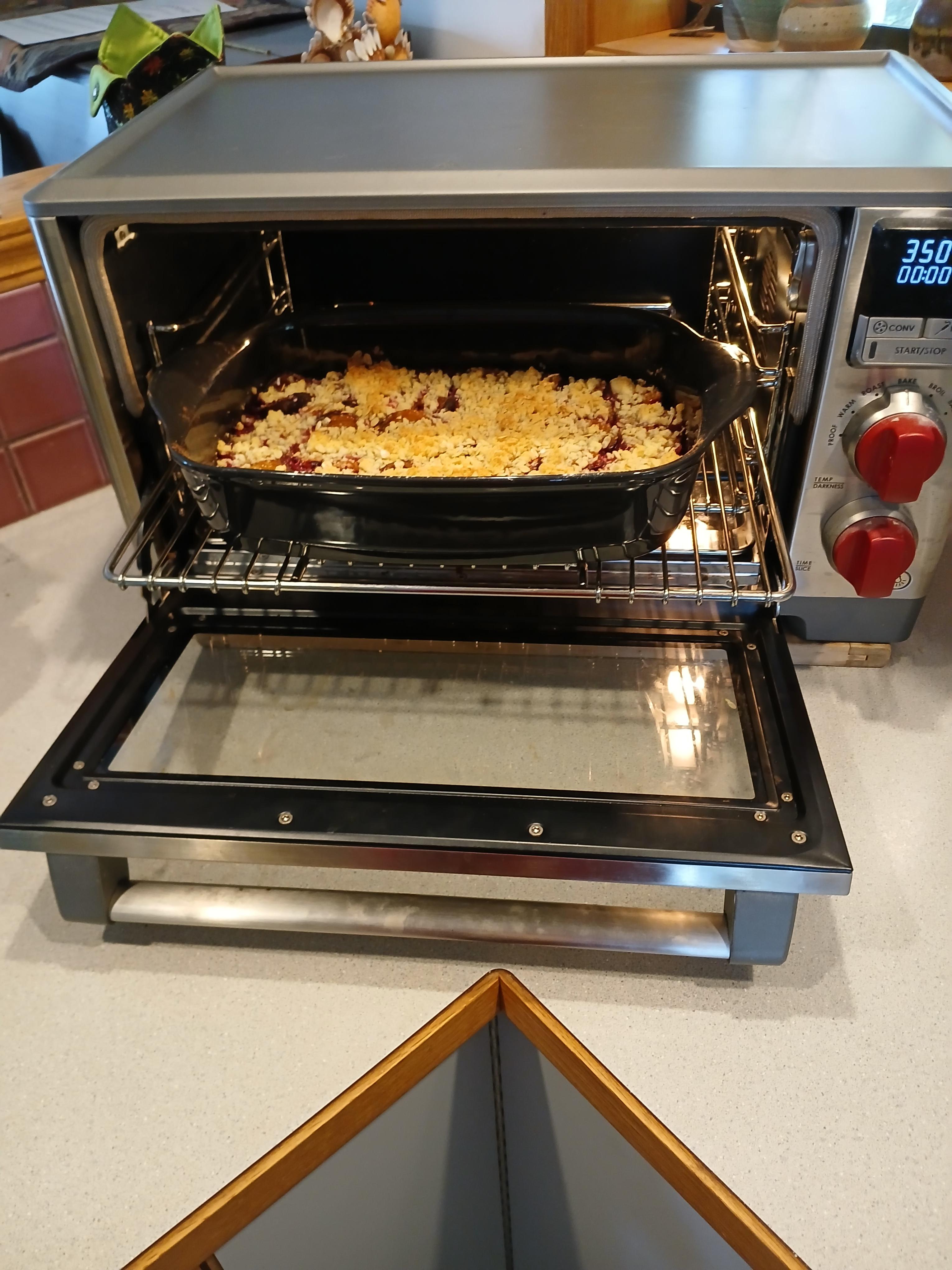
 

The plum crumble is good with or without ice cream or whipping cream, but a cup of tea or coffee is perfect with it.


This crumble also works well with apple cut into slices. I suppose you could try it with all sorts of fruit. That would be interesting to experiment with. Pears would be good, maybe substituting powdered ginger for the cinnamon.

I hope you try it and enjoy it.

37 Comments

Nimble Fingers

If I hadn’t been able to watch squirrels up close in our yard, I might never have learned how dexterous their hands are. They can spin a walnut around to get at all the parts. Their little fingers are more nimble than those of some humans.

Watch how easily Crispin spins the walnut shell around to get at all the parts.

Little fingers work so well,

Flipping ’round the walnut shell, 

Making sure to get the best

Walnut meat, and then digest.


27 Comments

Foraging

Red-shafted flickers, part of the woodpecker family, have long beaks that are great for probing for insects and grubs. They will also eat fruit and seeds. Whatever is on the menu, their beaks come in handy.

Here is a mother flicker teaching junior all about poking holes in trees to find something to eat. As always, mother bird is looking out for danger every few seconds. You can’t let your guard down with hawks and owls around.

They are not picky about which restaurant they dine at. If they think there might be something good in the siding of that house, why not see if there’s an appetizer in there?

They don’t mind picking at seeds when the bugs are hard to find. This suet block was not in the shape of a duck when I first put it out there. We must have an artistic bunch of birds visiting here.

In this short video clip, you can see that flickers don’t mind checking out the ground  for bugs either. Here is where that beak comes in really handy. The dirt is just flying. And again, the flicker checks for danger at the slightest movement. Right near the end of the clip, do you see what got its attention as it flew by? I can’t tell if it’s a tiny bird or an insect, but the flicker was aware of it and on alert before going back to its excavating.


I dug, dug, dug,

For a bug, bug, bug,

Sometimes I’d find a seed.


I pick, pick, pick,

And flick, flick, flick,

The dirt more than I need.


But yum, yum, yum,

I hum, hum, hum,

 I followed up my hunch.


It’s fun, fun, fun,

Bugs run, run, run,

But thanks a bunch for lunch.


28 Comments

Trees

Can you imagine how shocked I was to learn, after many decades of knowing about Joyce Kilmer’s poem “Trees,” that Joyce was a man? Yes, Alfred Joyce Kilmer. He was born in the USA in New Jersey, Dec. 6,  1886. He died from a sniper’s bullet in the Second Battle of the Marne on July 30, 1918. He was only 31 years old. 

Basically he was best known for his poem about trees, which follows here:

Trees

by Joyce Kilmer


I think that I shall never see

A poem lovely as a tree.


A tree whose hungry mouth is pressed

Against the earth’s sweet flowing breast;


A tree that looks at God all day

And lifts her leafy arms to pray;


A tree that may in summer wear

A nest of robins in her hair;


Upon whose bosom snow has lain;

Who ultimately lives with rain.


Poems are made by fools like me,

But only God can make a tree.

Then along came Frederic Ogden Nash, New York writer of many funny poems, with a parody of Kilmer’s poem “Trees.”

Song of the Open Road

by Ogden Nash (1902 – 1971)


I think that I shall never see

A billboard lovely as a tree.

Indeed, unless the billboards fall

I’ll never see a tree at all.


Please visit my inspiration to do this post about trees, “Autumn Ash Trees” by Lynette D’Arty-Cross https://lynettedartycross.com/2025/10/09/autumn-ash-trees/