


I think this is a broad-winged hawk. If anyone knows for sure, I’d be interested in your opinion.


The northern red-shafted flicker is fairly common on Vancouver Island and I’m glad he is. He eats a lot of ants and beetles and even wasps. That suits me just fine.
Here is Mr. Flicker (notice his red cheek slash) trying to get the attention of Ms. Flicker to ask her for a date.
Turn on your sound to hear him drumming on my chimney and then calling to her. His grammar isn’t great but I don’t think it bothers him (or her).
Ms. Flicker (no red cheek slash) misses his call but comes by to announce that she’s a bit late, but she’s here.

Hoo-whee! These fir cones are like a candy cane. So good!

Oh! Sorry. That was rude of me. Would you like to share this one?

These cones come in little wings that you can peel off. I’ll get one for you.

What’s that? Not your kind of food? Oh, too bad. I’ll get back to it then.
Say, if you really want to see me in action, play the video. Be sure to turn up the sound so you can hear the robins singing their spring songs.

Our old trailer has seen better days, but I can’t think of many that were better than this one.

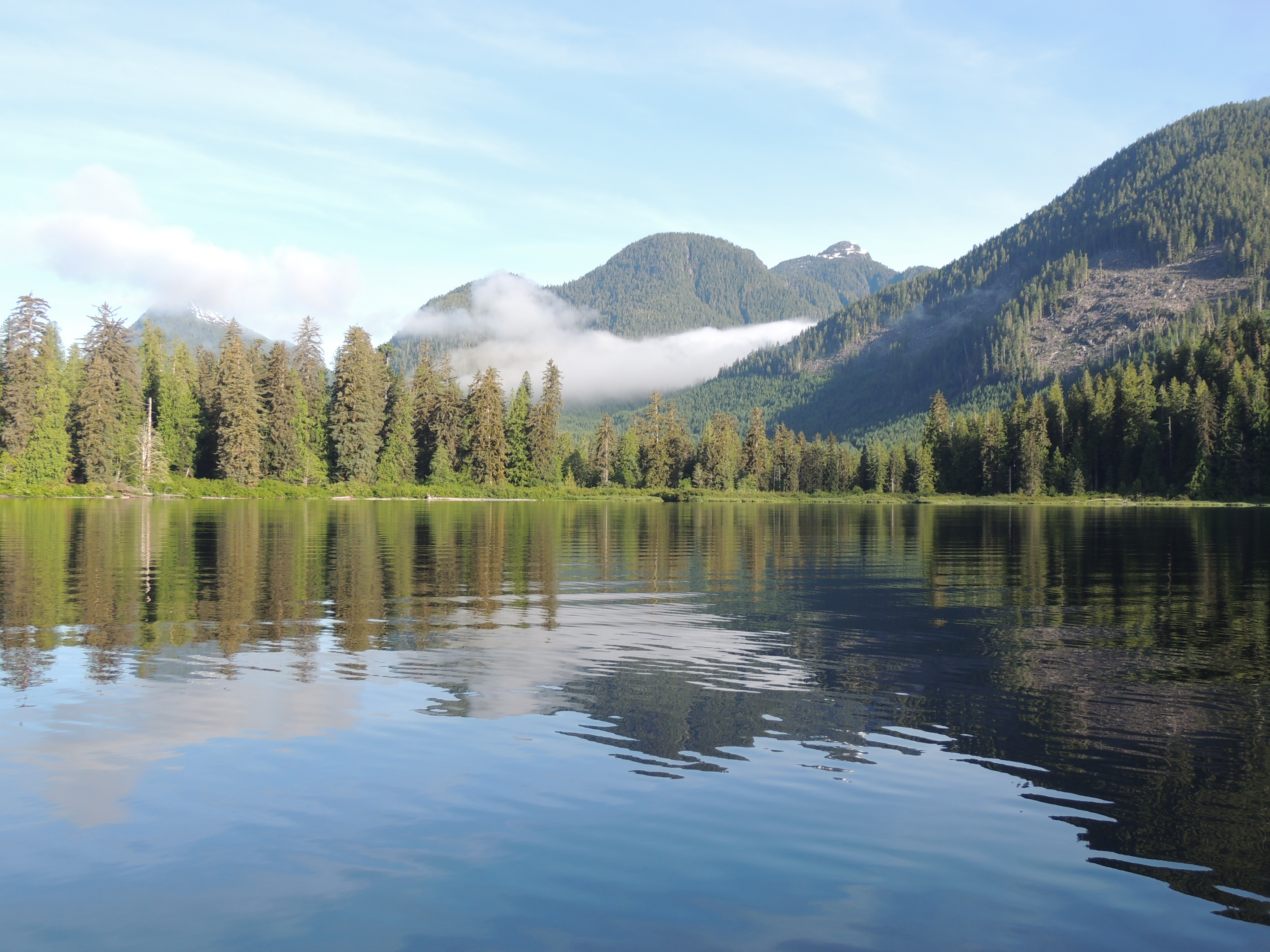
The lake was peaceful, fresh, and beautiful.
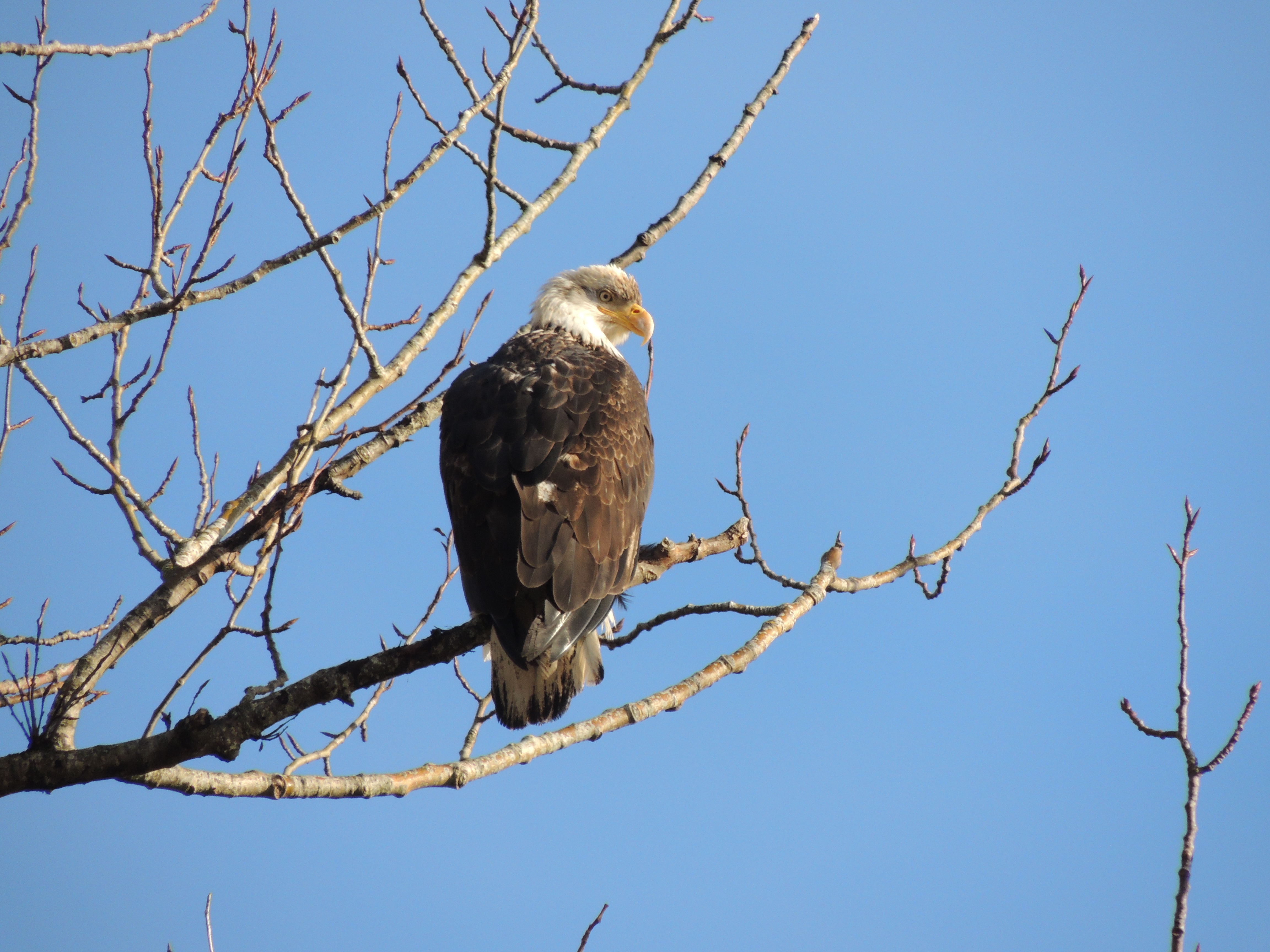
An eagle patiently waited for a trout to be caught. Maybe there would be a little “something” left for him.

But first lick went to Emma. This trout fishing was new to her and she seemed to like it.
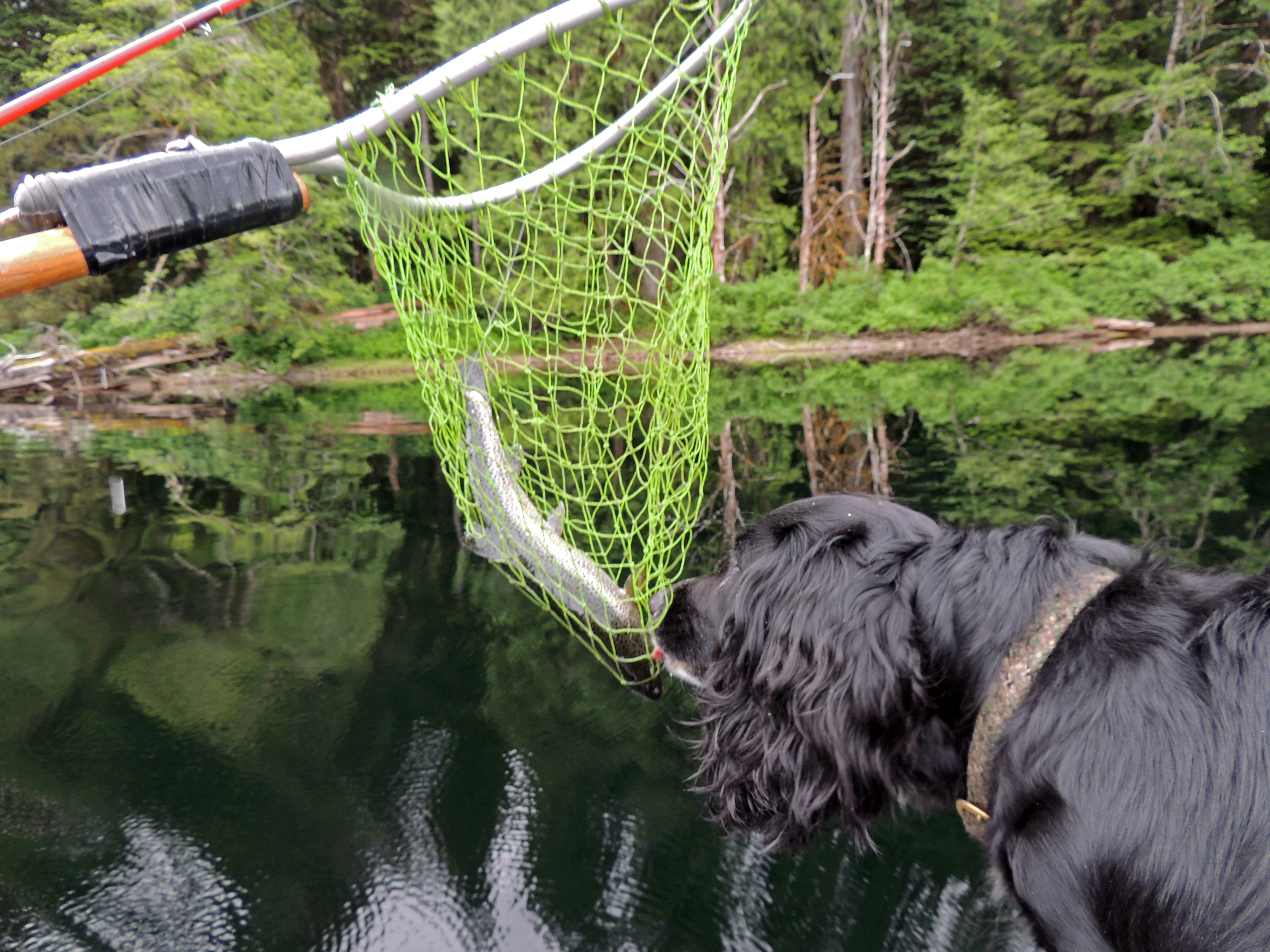
The next trout had Ruby interested. It was her turn.
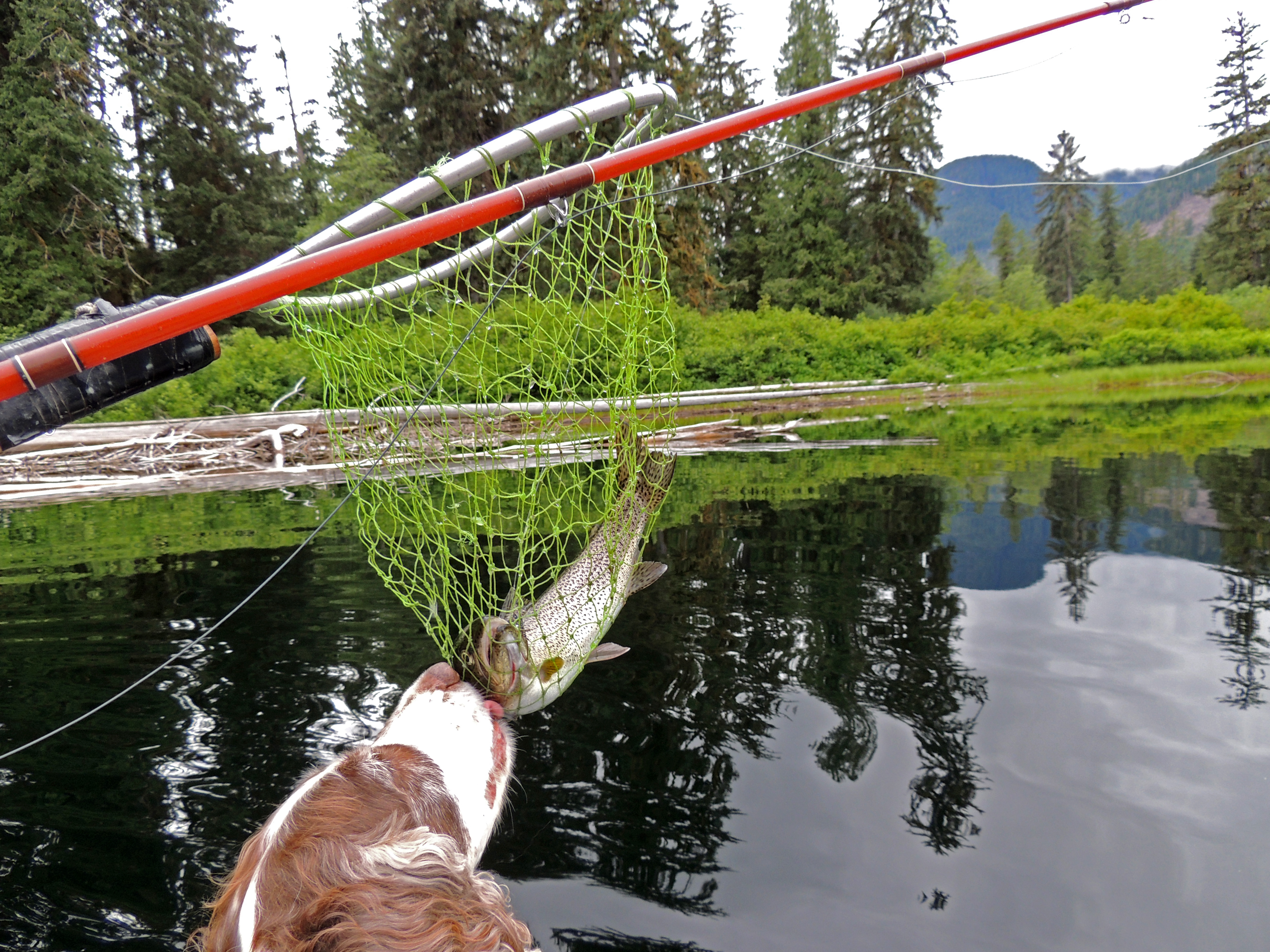
Water lilies at the edges added tranquility to the scene.

Time to go ashore and stretch our legs.

Ruby and Emma found all kinds of wonderful smells there.

But right nearby, where even I could smell the animals that had been there, was the evidence of elk that had visited not long before.
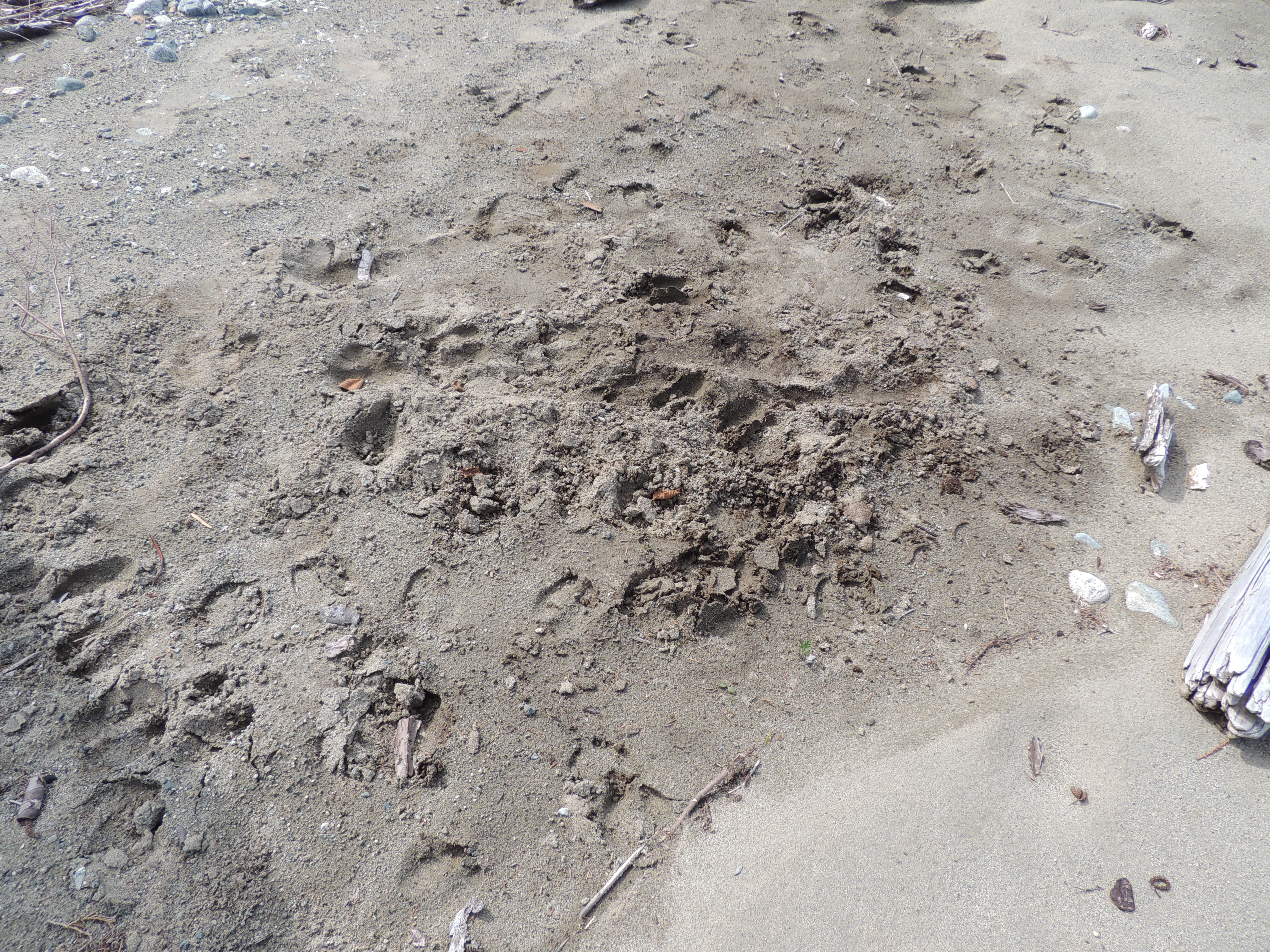
A lot of peaceful moments, but never a dull one.
When Ruby (our springer spaniel) was still alive, she and Emma (our English field cocker spaniel) loved to go to the beach with us. There was always something to see.
“Hey, Ruby! Look at these ducks. We could play with them.”

“Come back! We just want to play tag with you!”

“Aw! C’mon, ducks! See how we can run and play with you? That would be so much fun.
They don’t seem to want to play, Ruby. I tried to get them to come closer, but they just swam away. Not very friendly!”

“Oh, I’ll go talk to them. Maybe they thought you were just a bit too rambunctious.”

“Nope! They don’t want to play with us. They just kept on swimming farther away. Hah!”

“Water’s damn cold too.”

“We were just trying to be friendly and have some fun. Go figure!”

Sure are a lot of seagulls down there. Family day at the beach? Or is it because the sun finally came out?


Hmm…. They seem to be all talking at once, and with their mouths full too. Ill-mannered scavengers.

Ahh … I see. It’s poor man’s caviar time. The herring have spawned near the beach.
I might try a lick or two when those pesky seagulls move along.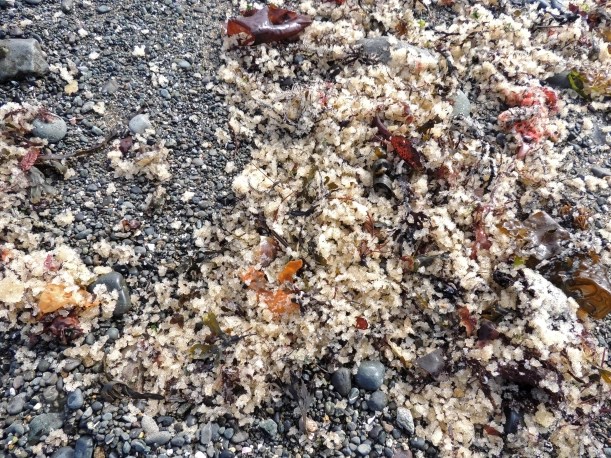
*Herring roe and seagull photos by Paul Knettig.
 wordsfromanneli