
My sister-in-law’s dog, Queen Ellie, asks, “Have you seen Santa yet?”

“I’m waiting to wish him a merry Christmas … and maybe he’ll have treats for me.”
My sister-in-law’s dog, Queen Ellie, asks, “Have you seen Santa yet?”
“I’m waiting to wish him a merry Christmas … and maybe he’ll have treats for me.”
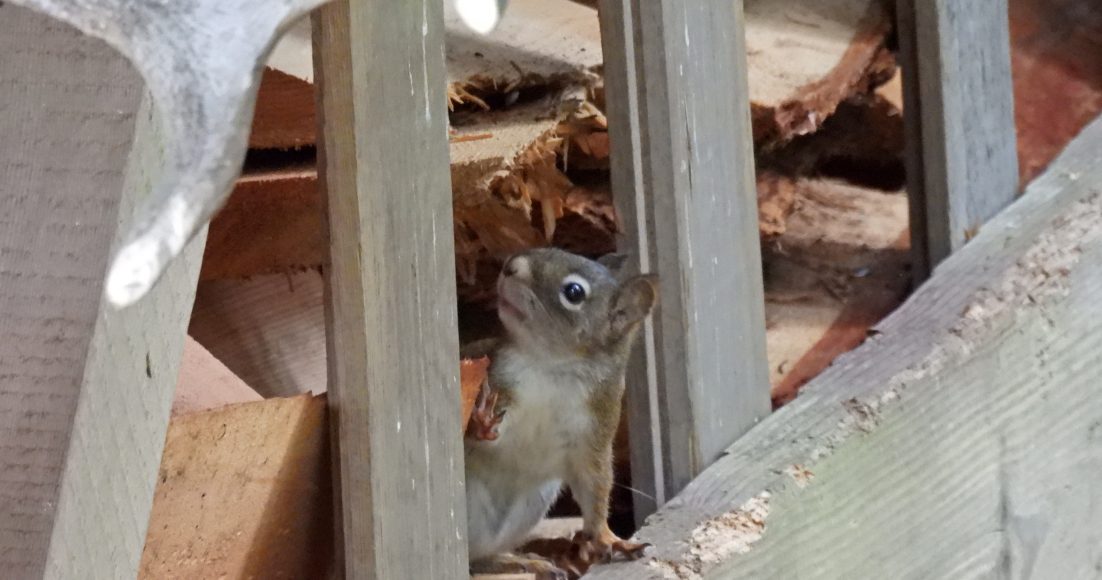
Just to set the record straight before you read and look at the photos – these are the baby squirrels from a couple of years ago. There were no babies this year that I know of.
“Come on, you guys! It’s lonely at the top.”

“Let’s wrestle.”

“We need a referee.”

“You go down and tell him to come up while I find a referee’s chair for him to sit on up high.”

“Aw, come on! Stop playing hard to get.”

“I don’t want to be referee. It’s too boring.”

“Let’s play tag instead.”
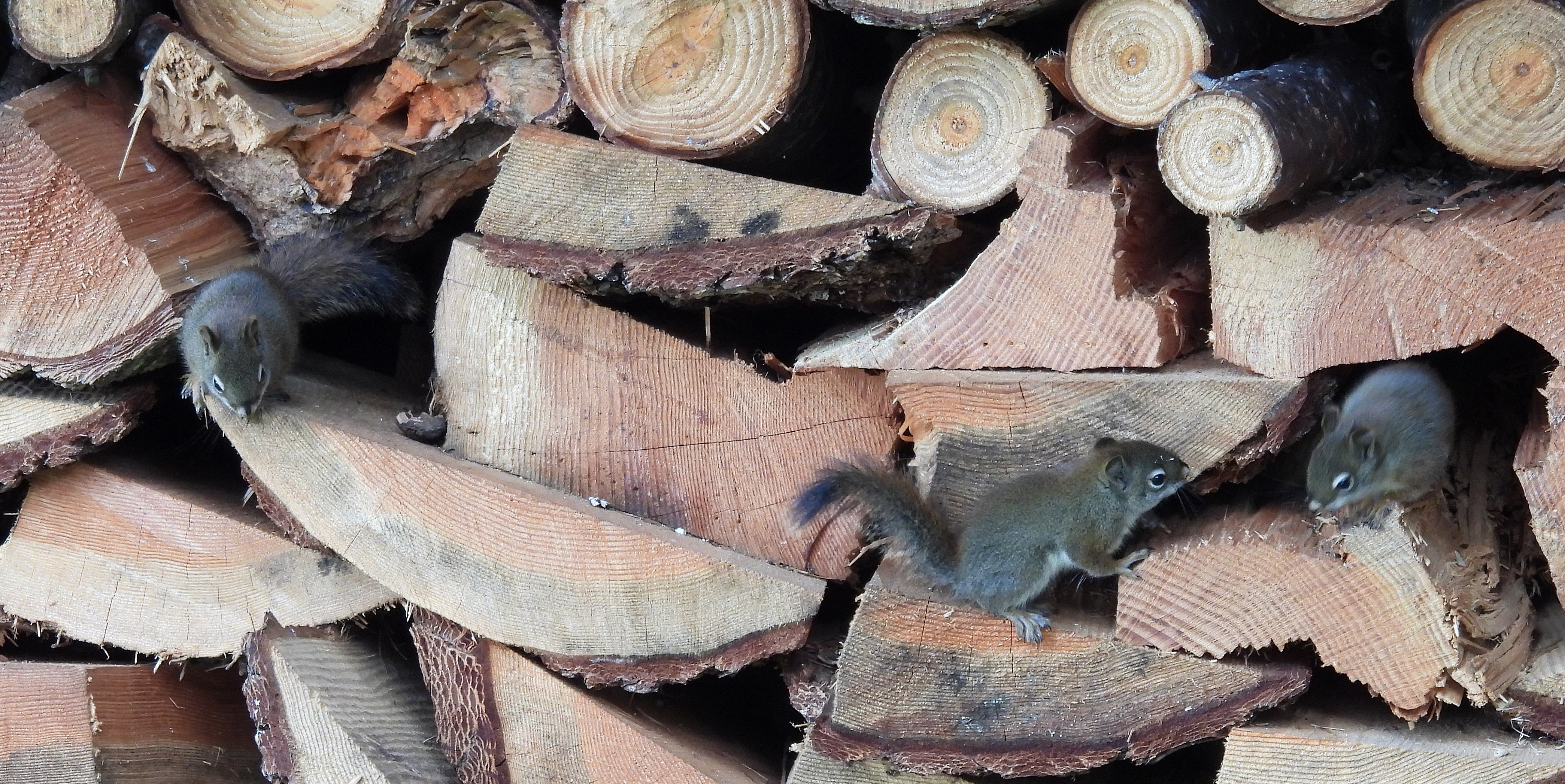
“You’re it.”
S is for squirrel babies.
Reggie Raccoon is honoured to be the selection for the letter R in our countdown.
He’s waiting for that woman with the camera to go away before he’ll come down from the safety of the tree.
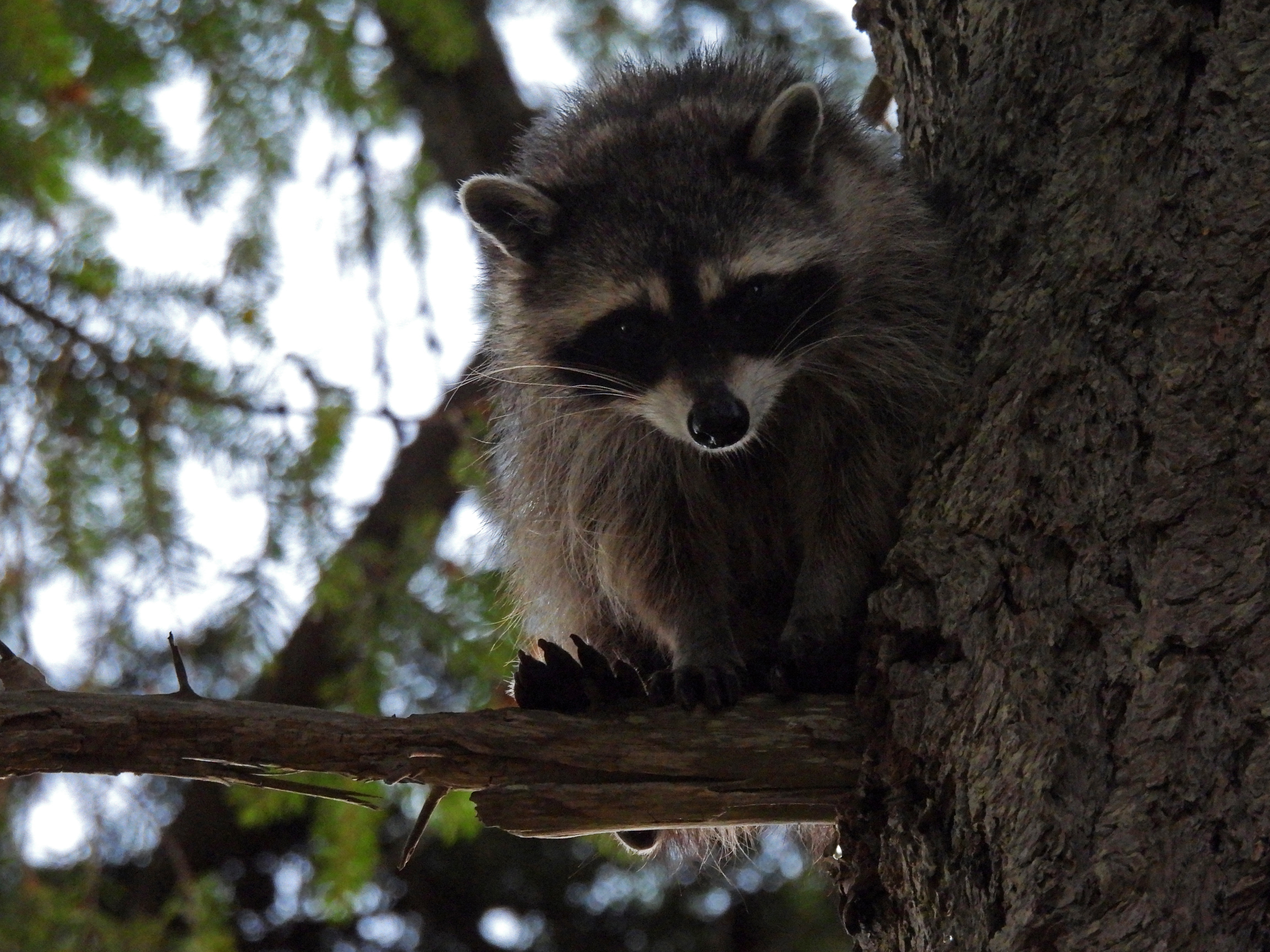
Next time he’ll only visit after dark when there is no danger of getting his photo taken, and when that curious Emma-dog is in the house.
That might be a good time to check out the garbage can by the back door. Last time there was a stick of pepperoni. The wind helped knock the can over, and I had a buffet midnight snack.
R is for Reggie the raccoon.
The quince was beautiful when it was in bloom last summer.
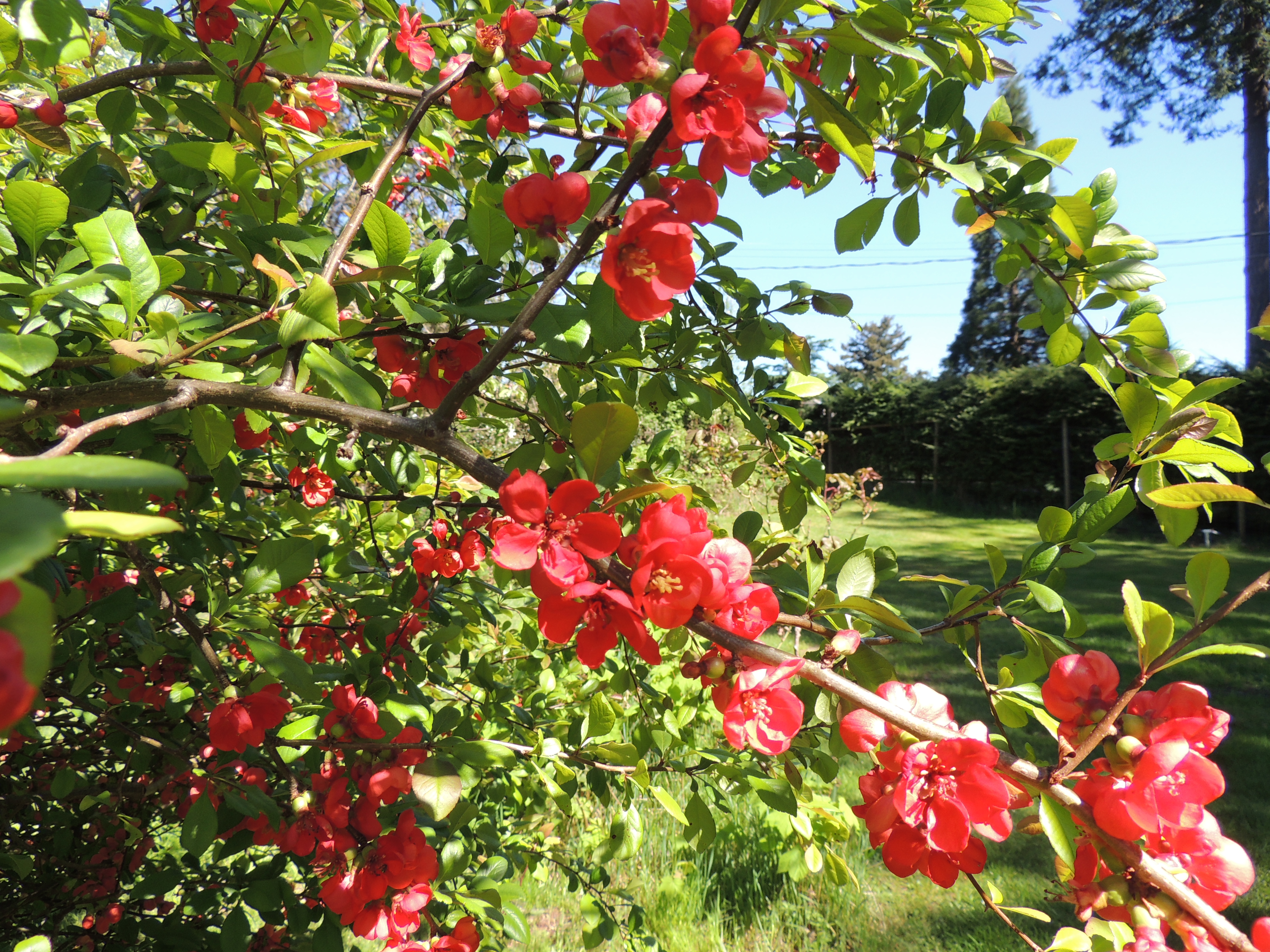
Quentin the quail used to come visit and hang around under it.
You may remember that he was the last of the many quail that used to live around here until our area got built up and turned into a dog walk for the subdivision about half a mile away. Quail and dogs on the loose just don’t mix, and the quail were the losers.
I last saw Quentin about a year ago, and I’m sure he has gone to quail heaven now.
But I loved having him around for visits now and then while he was still alive.
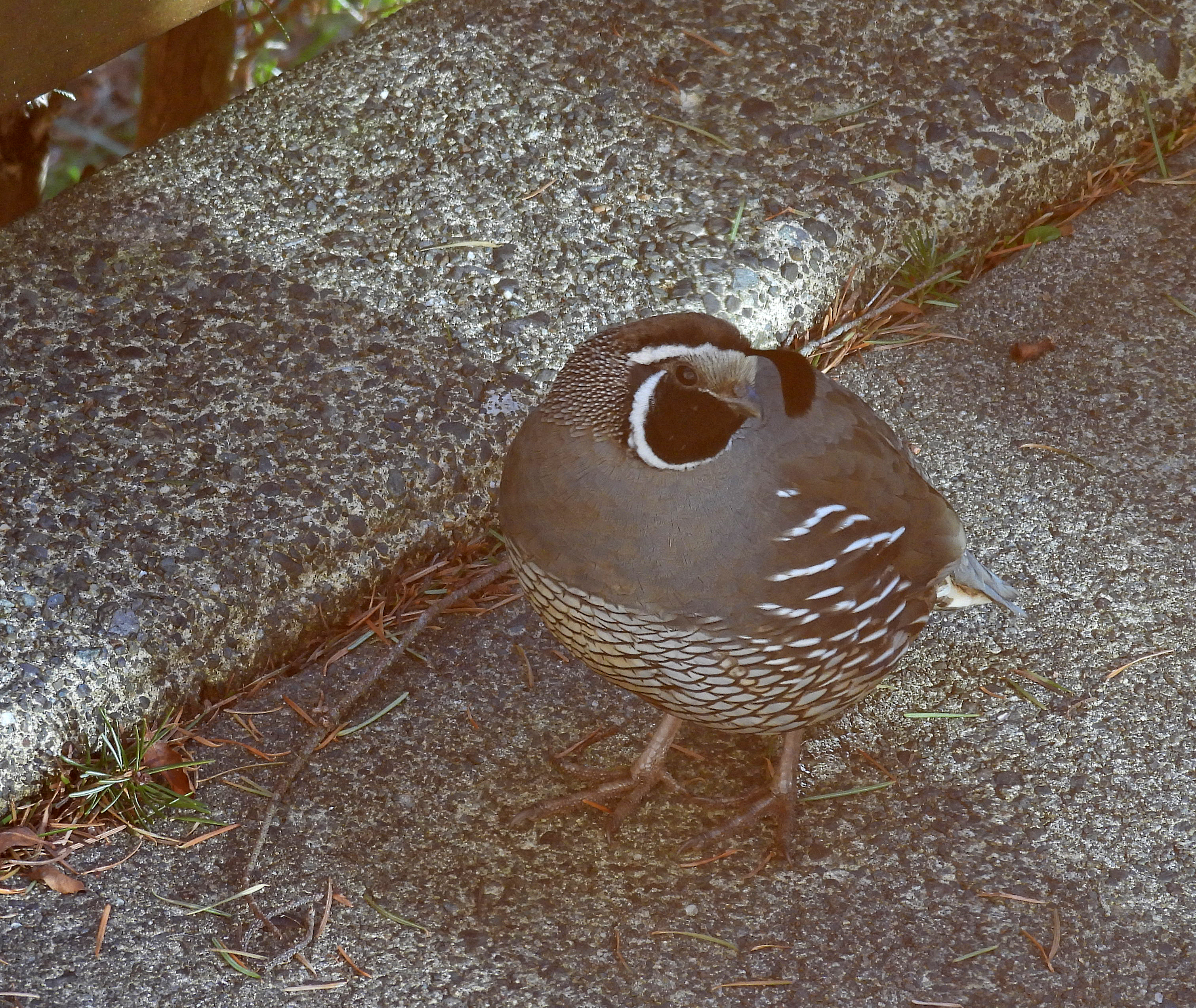
Q is for Quentin Quail in the quince.
“Ooh!” says Pam. “I see that handsome Patrick. See his red cheek slash? So manly!”
“Oh, Patrick! Do you like my little red Christmas hat?”

“Meh – it’s not bad, I guess,” says Patrick. “Wanna come down here and get some bugs out of this stump?”

“Actually, I think I see some at the end of this raised bed,” says Pam.

“Hmm. I guess that wasn’t what he wanted to hear. I’m not very good at this dating stuff.”

“Hmpf! Pam is playing hard-to-get. I’ll show her…as soon as I get that pesky bug off my shoulder…. Maybe she thinks I have dandruff.”

P is for Pam and Patrick the pileated woodpeckers. I’m sure they’ll find each other eventually.
Octo is for the eight arms of Oscar the Octopus. That’s a lot of knitting for Christmas mittens.
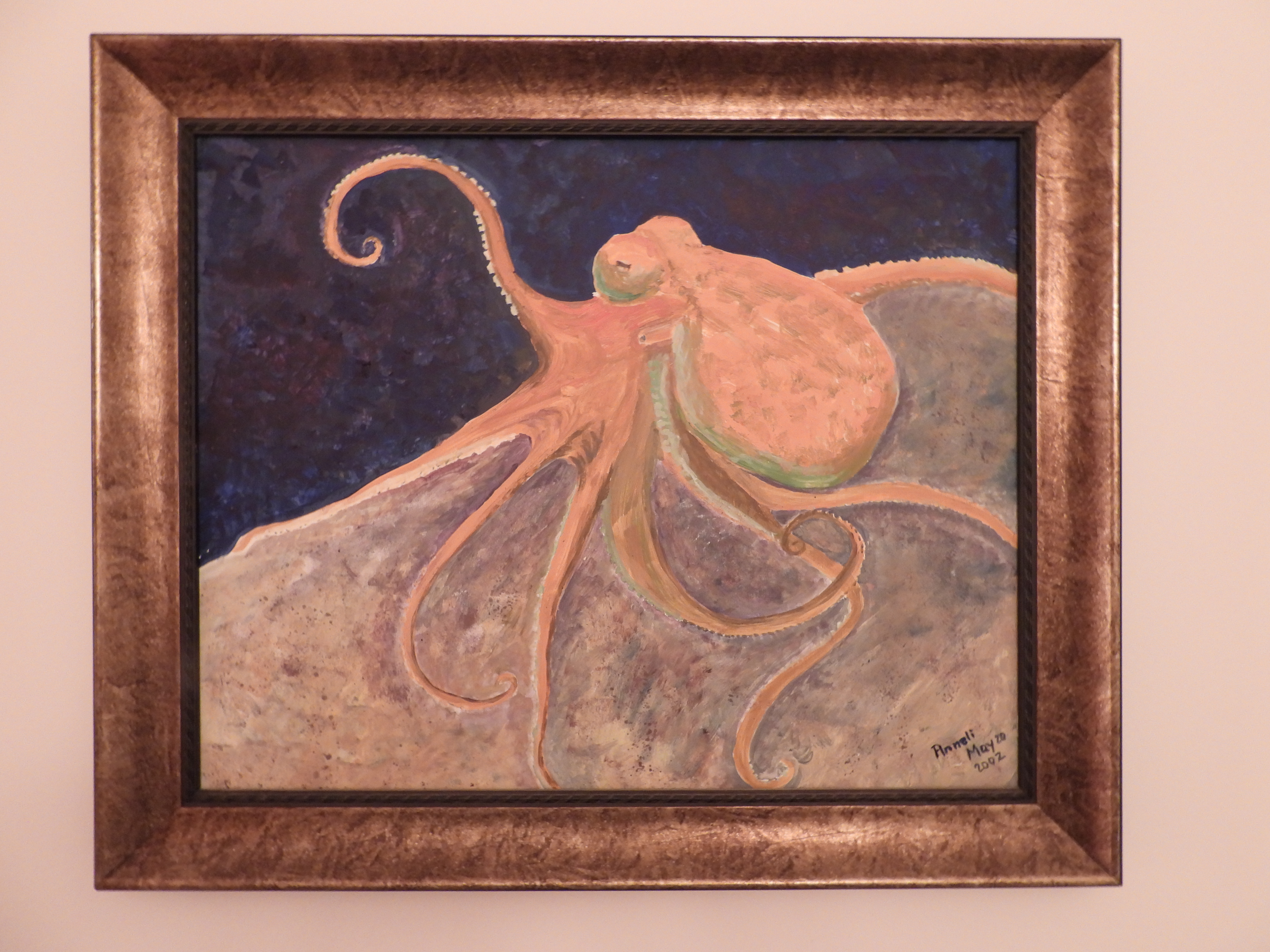
Did you know that the giant Pacific octopus ( Enteroctopus dofleini) usually weighs up to 33 lbs. and has a tentacle (arm) spread of about 14 feet?
But the heaviest and largest scientifically recorded octopus of this species weighed 157 lbs. Claims have been made of even larger octopuses, but these have not been documented.
The smallest octopus (Octopus wolfi) is a tiny little fellow weighing only one gram. (It would take 454 of them to make a pound.) It is only about an inch long.
Most octopuses have a mild venom in them, but are not out to hurt people. However, the four types of blue-ringed octopuses (Hapalochlaena) can inflict a deadly bite, injecting a toxin called tetrodotoxin which can paralyze muscle and prevent breathing. If the victim of a bite from a blue-ringed octopus can get to a hospital immediately, and be kept breathing artificially, he may be able to recover within about 24 hours. Many of these blue-ringed octopuses are found near Australia.
There is so much more to know about octopuses – their relatively short lifespan, their method of defense by squirting ink. They are fascinating creatures (and so tasty to eat – sorry, Oscar).
Now to lighten your mood, here is a poem by Ogden Nash about:
by Ogden Nash
O is for Oscar the Octopus
“It sure is a lot of work to pick a hole in a tree and make it big enough for a nest, but I’ve made a good start,” says Nancy Nuthatch.
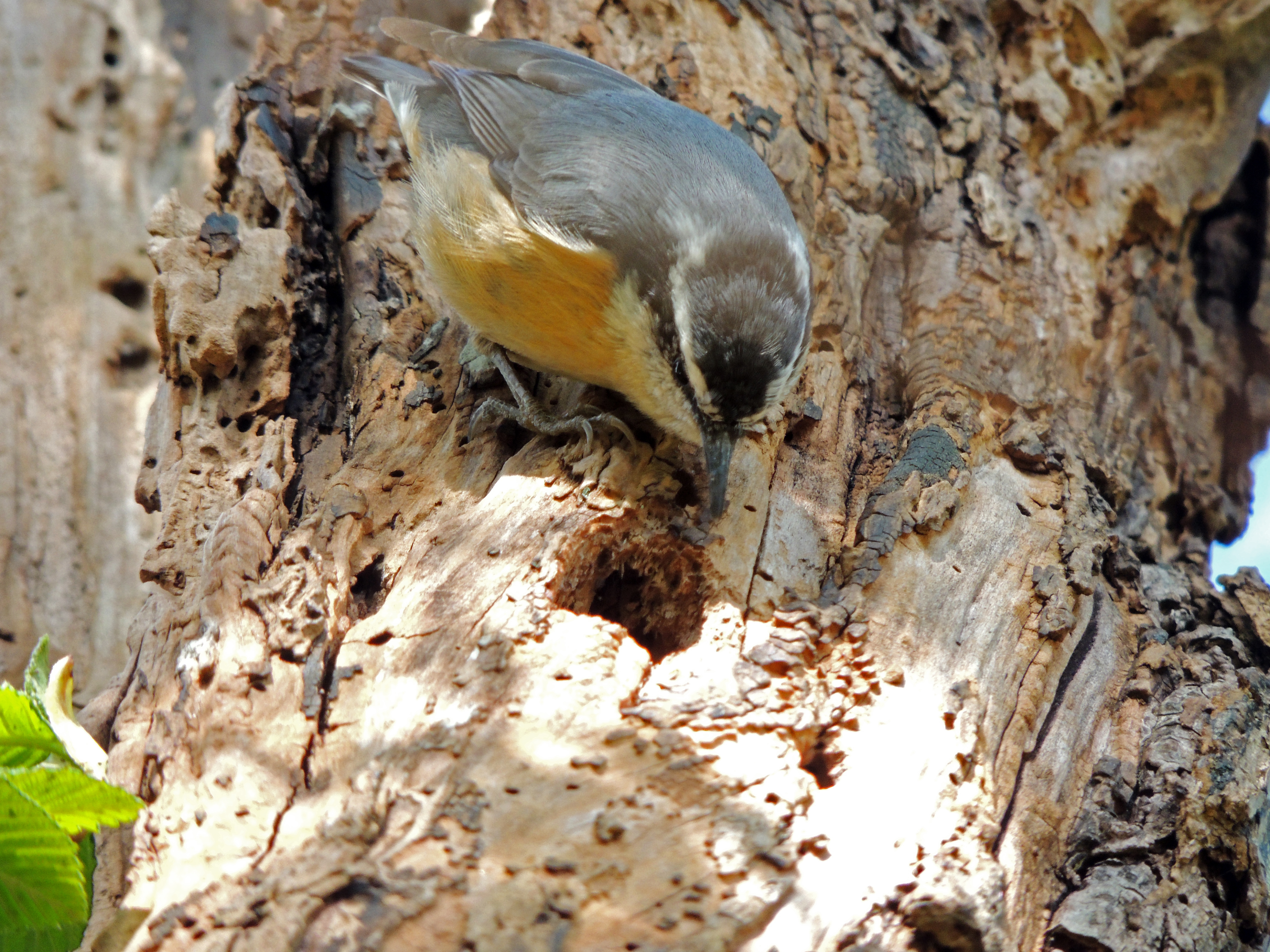
“Hmm…I wonder if I should go deeper. Can’t make the entrance too big though, or those nasty squirrels will come visiting.”

“Ah, there’s a solution. Nora Nuthatch is making a nest on the lower level. We can take turns keeping an eye out for predators and shriek to call out an alarm if the squirrels come looking for trouble.”
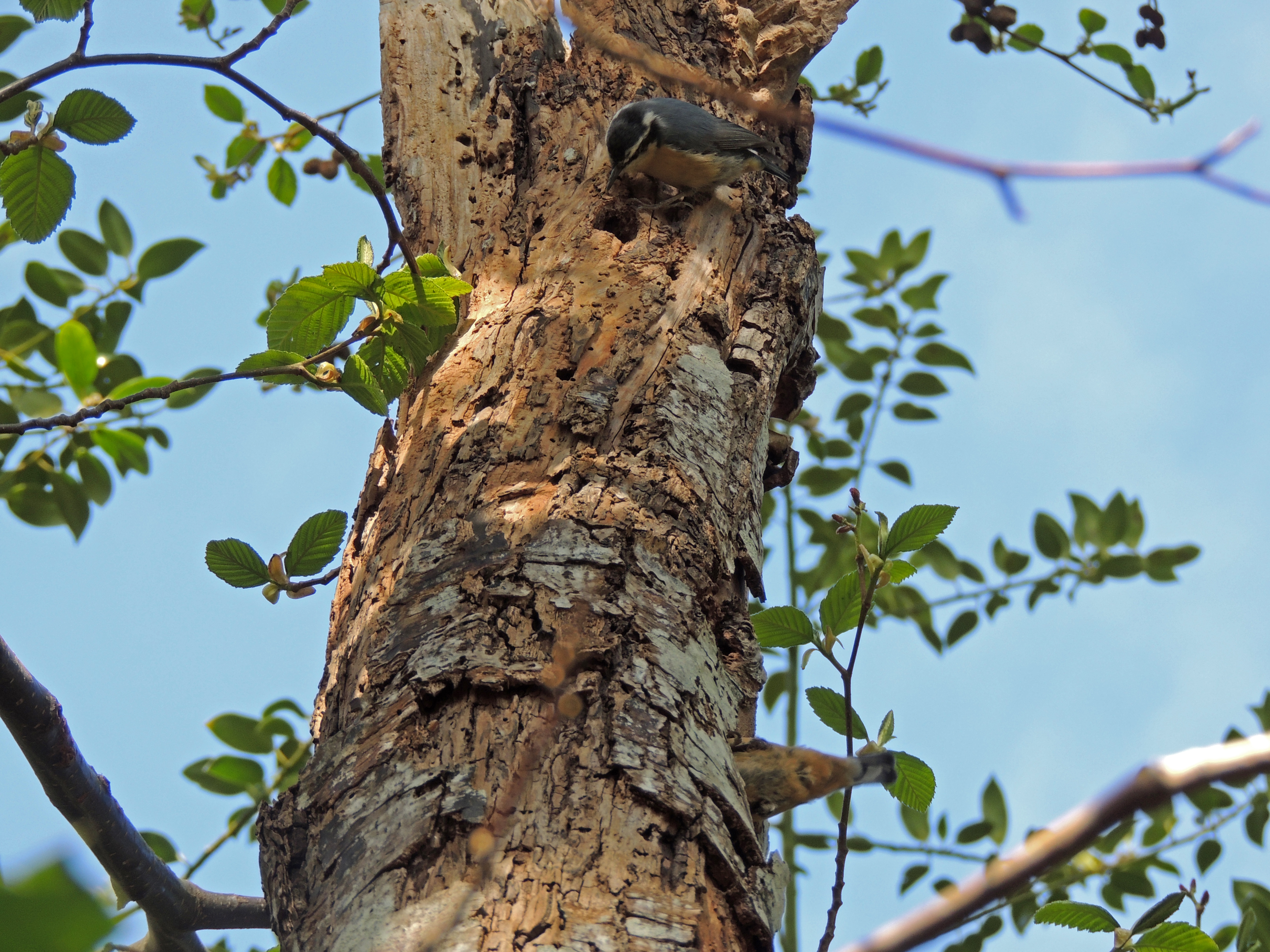
N is for nuthatch, but really we are Nancy and Nora, the Nuthatch Ninjas.
Do you see Nora working on the lower level of the tree?
Where is your mother, little mice?

You’d better get back into your nest.

Mama Mouse was found in an old apple box that, once she had jumped into it, was too high for her to jump out of.
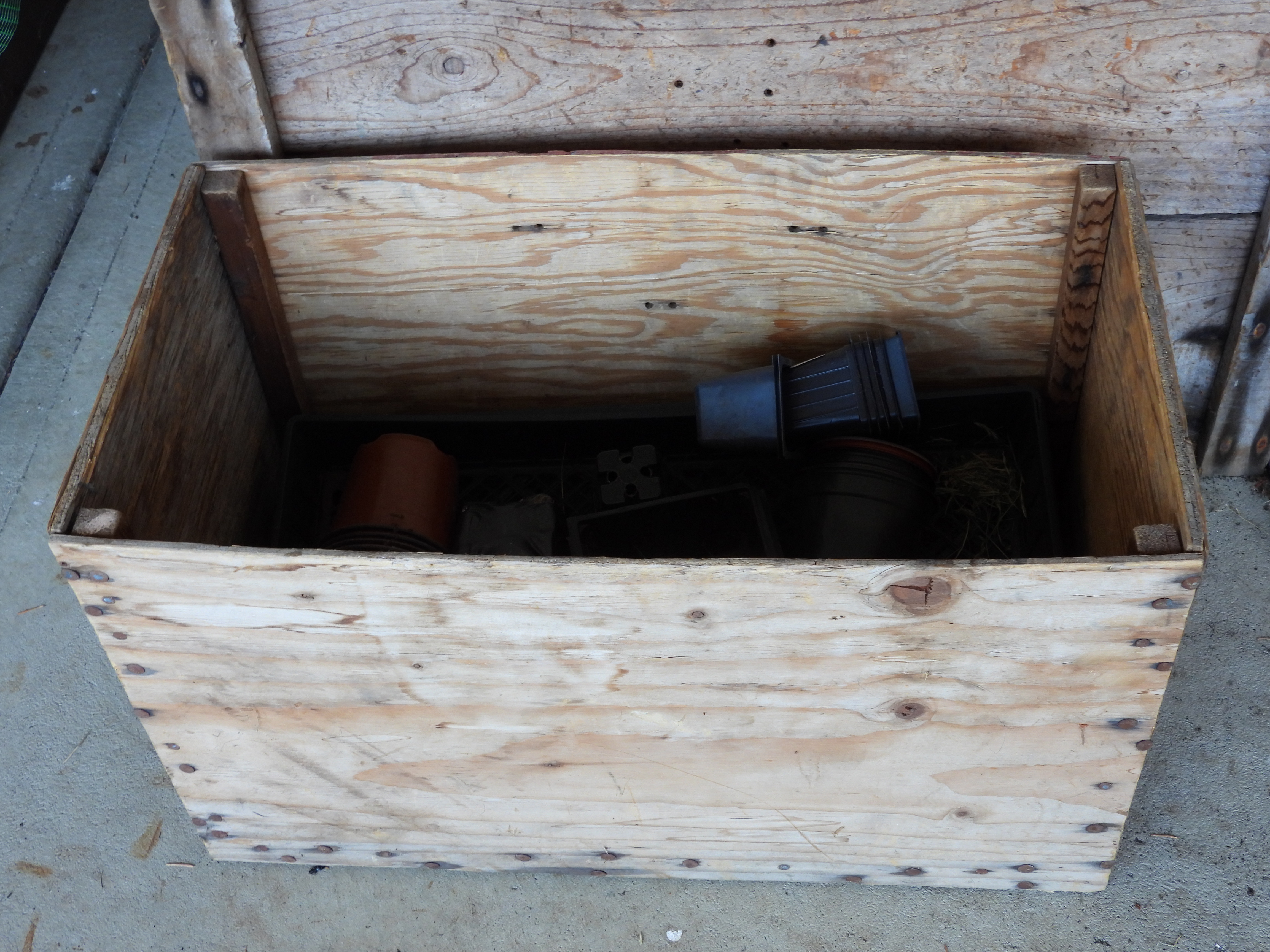
Mama Mouse was exhausted from all the jumping efforts, and lay still after her rescue, soaking up the warmth until she recovered from her ordeal.

In a few moments, she perked up, and remembering her children, rushed to save them.

M is for Mighty Maisie the mama mouse and her three blind mice.
I know that some people are afraid of mice, but how do you think they feel about us?
Here is one of my favourite poems by Rose Fyleman:
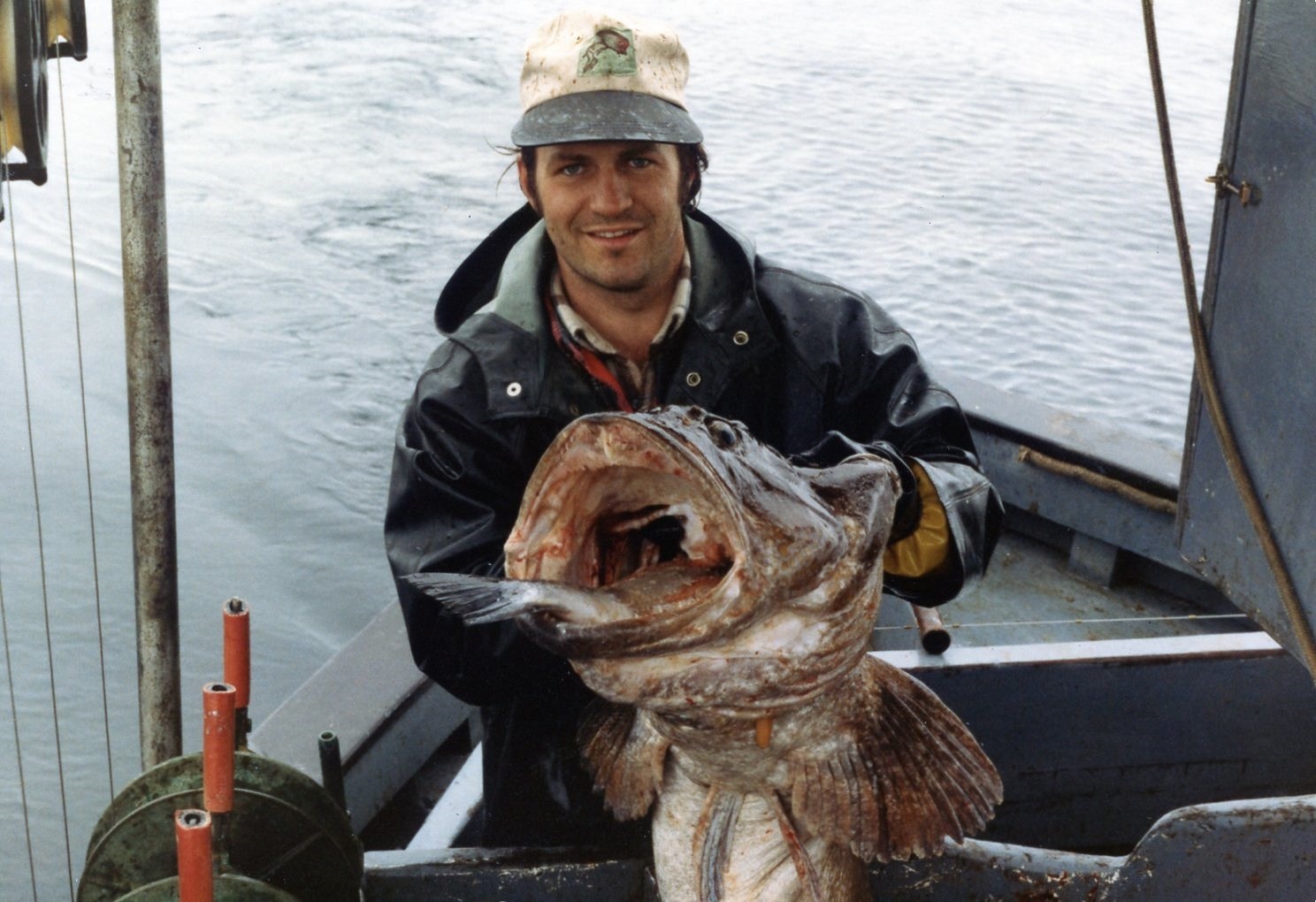
I used this photo in a post early this summer, about catching two fish in place of one, but it also works for a picture of a ling having lunch.
The Captain wasn’t wanting to catch a ling. It was salmon he was after. But here is how it happened, many, many years ago.
These sea salps are tiny jelly-like creatures (but they are not jellyfish) that glom together to make a bigger mass. They are a nuisance to commercial salmon fishermen when the fishing lines pass through areas where the sea salps are floating.
Some years, warmer southern currents come farther north and the salps float along with the currents into colder waters where they are not usually common.
When they coat the gear, the fish can’t find the lures (and the hooks), so the salps have to be cleaned off the gear constantly or no salmon will be caught.

They are harmless otherwise. Unlike some jellyfish they don’t have any sting when they are touched.
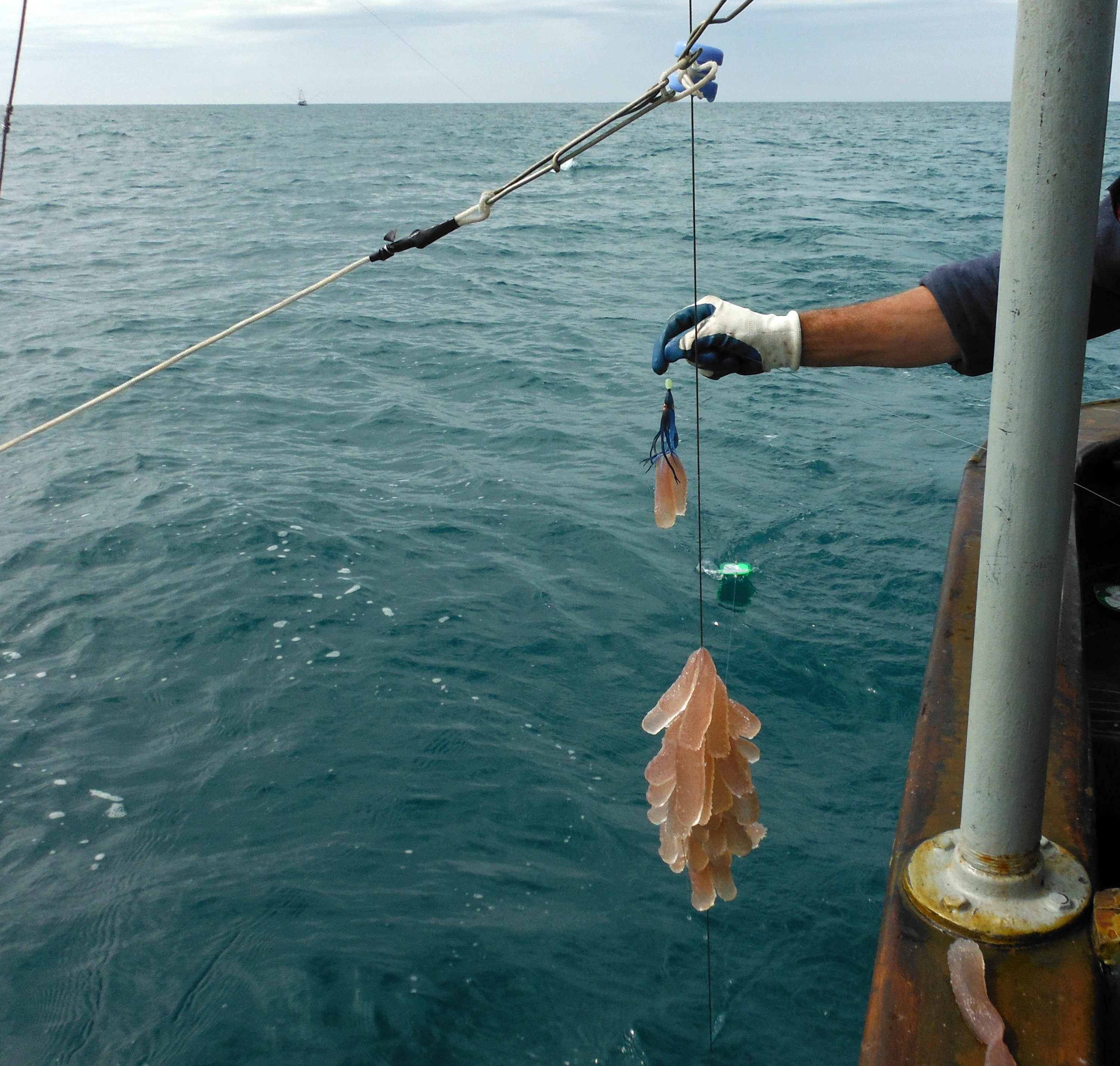
J is for “just a jellyfish lookalike.”
 wordsfromanneli