wordsfromanneli

Thoughts, ideas, photos, and stories.


27 Comments

M is for Mice

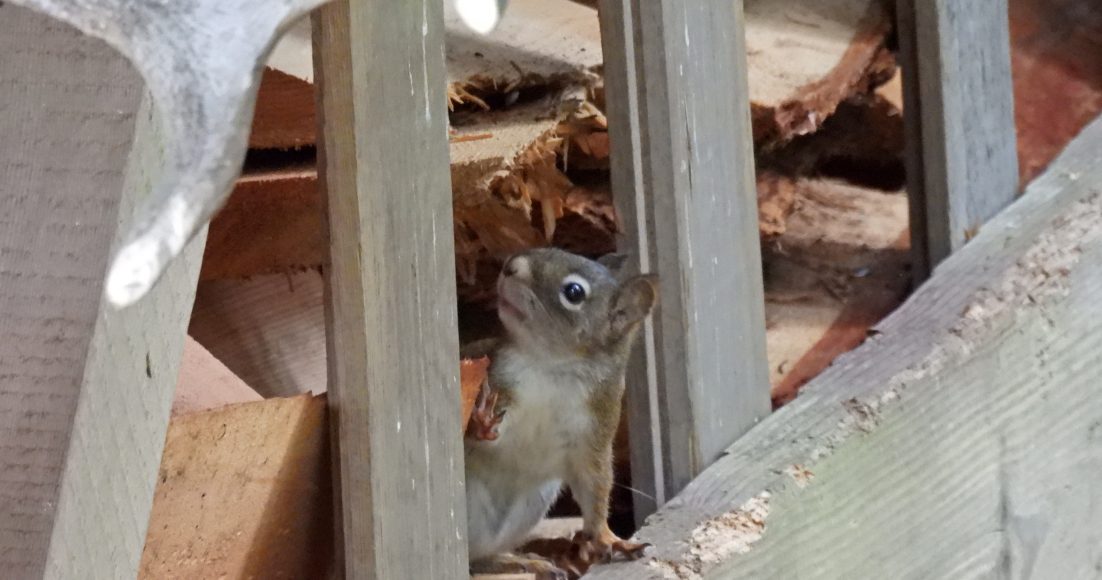
Where is your mother, little mice?

You’d better get back into your nest.

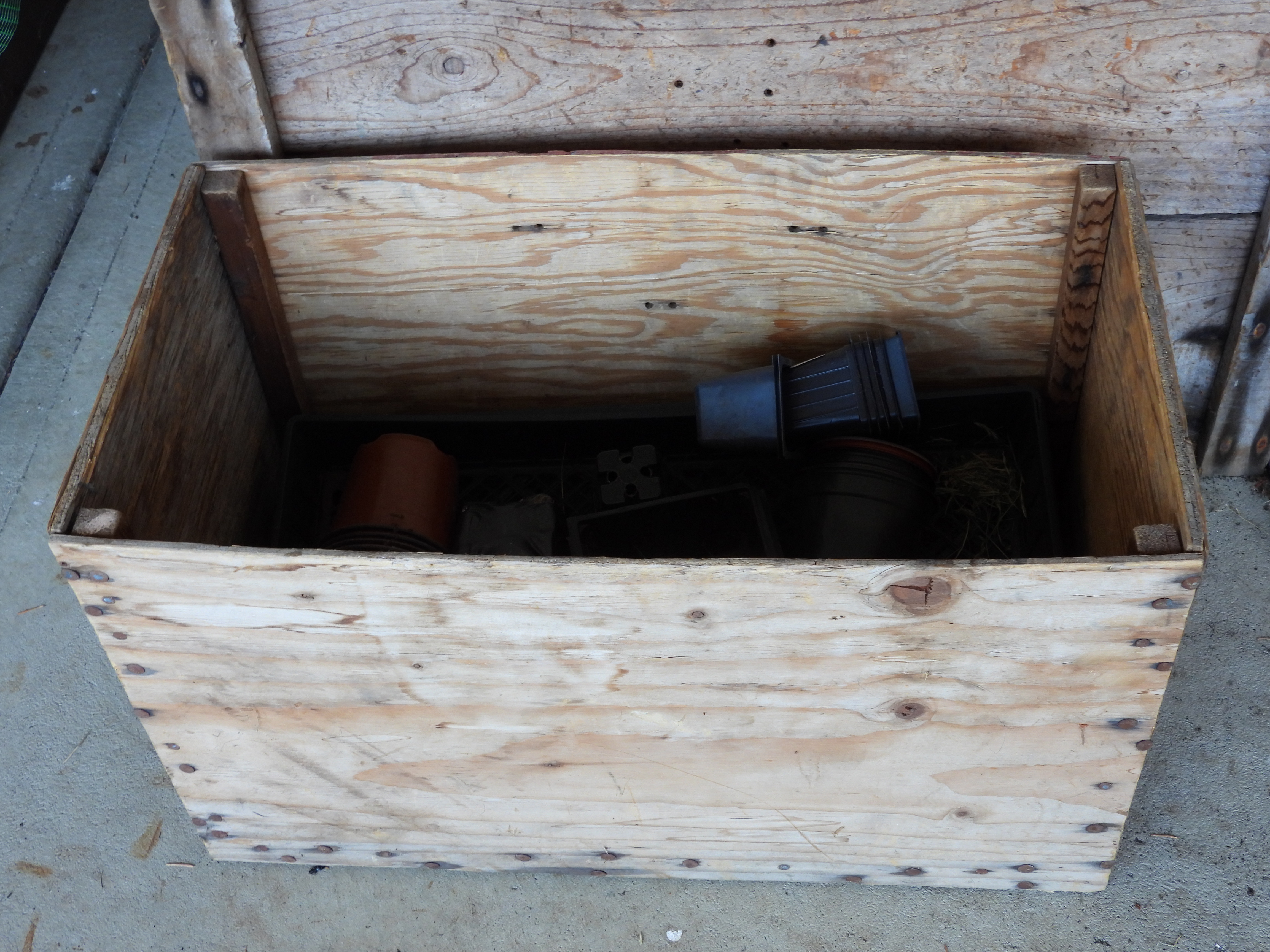
Mama Mouse was found in an old apple box that, once she had jumped into it, was too high for her to jump out of.
Mama Mouse was exhausted from all the jumping efforts, and lay still after her rescue, soaking up the warmth until she recovered from her ordeal.

In a few moments, she perked up, and remembering her children, rushed to save them.

M is for Mighty Maisie the mama mouse and her three blind mice.


I know that some people are afraid of mice, but how do you think they feel about us?

Here is one of my favourite poems by Rose Fyleman:

Mice

I think mice
Are rather nice.
Their tails are long,
Their faces small.
They haven’t any chins at all.
Their ears are pink,
Their teeth are white.
They run about
The house at night.
They nibble things
They shouldn’t touch
And no one seems
To like them much.
But I think mice
Are nice.


33 Comments

Polly the Bore

This fungus is called phaeolus schweinitzii, or more commonly, Dyer’s polybore. It is also called velvet-top fungus, or pine dye polybore, or Polly, as I call it.

In my yard, it seems to come back every year in this same location, near the roots of a large fir tree that was felled several decades ago, and usually Polly has a “baby” nearby. It’s not a good fungus to have near your trees, as it will rot the roots and do a lot of damage to the tree.

The redeeming quality about Polly is that this fungus was used for making a dye to colour wool or other materials, hence the name Dyer’s polybore.

But definitely, do not try to eat it. Polly will make you very sick.
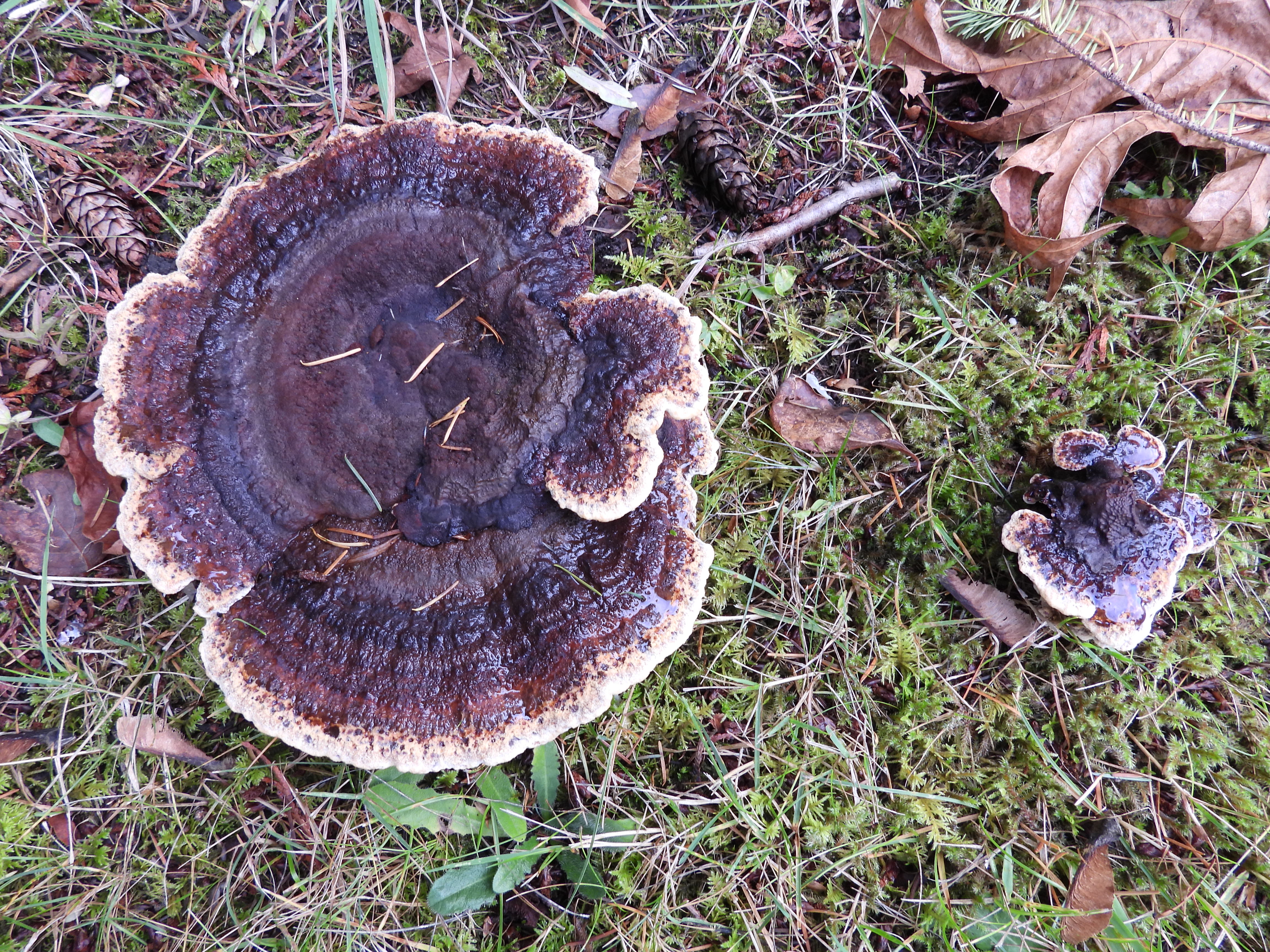
 

You can see the size of the fungus by comparing it to the fir cones nearby.


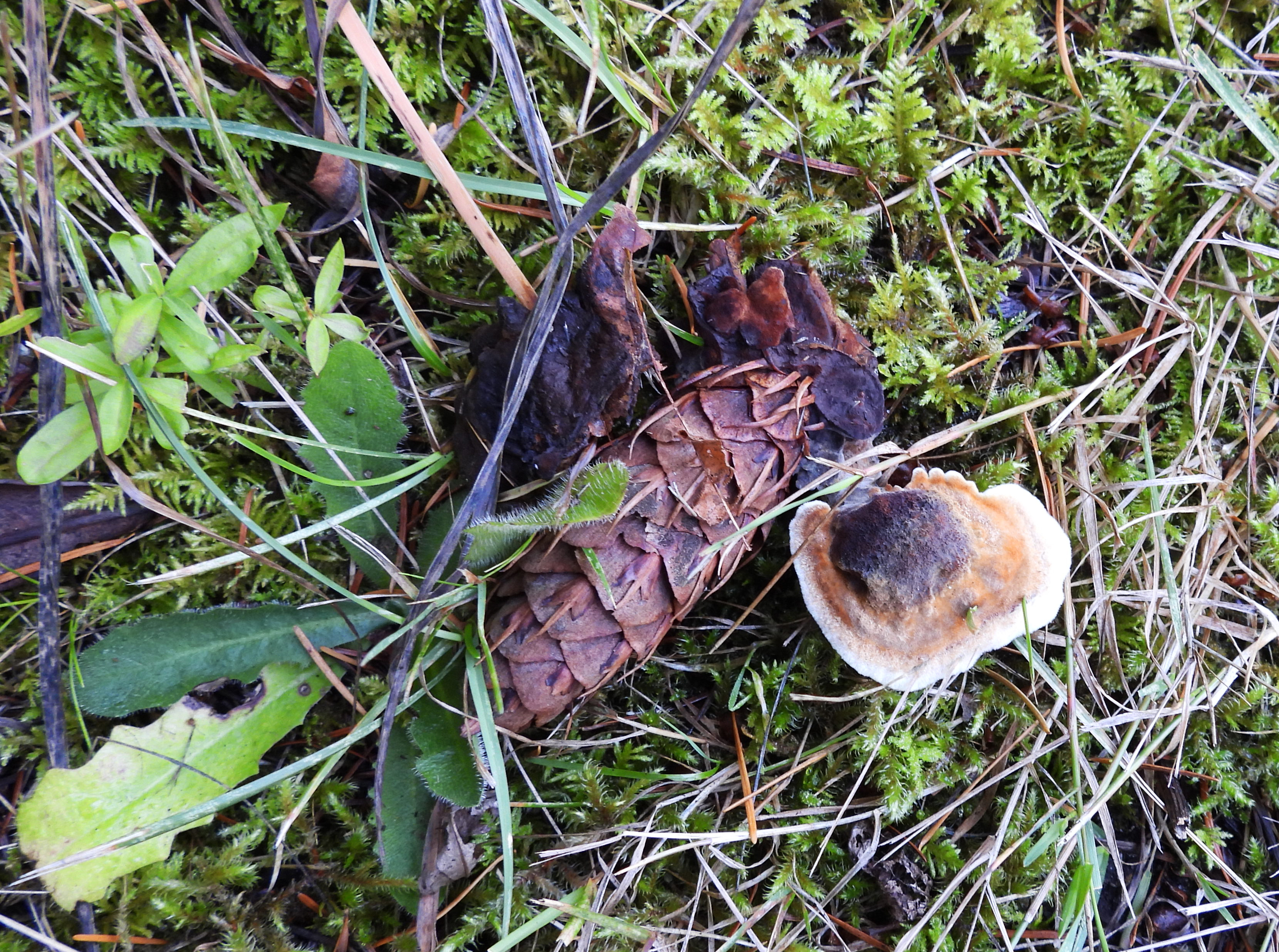
The photo above was taken a few days ago, but the ones below were taken last year in the same location. I thought it was interesting that it grew around blades of grass – or maybe the grass grew through the fungus. I’m not sure what the process was.
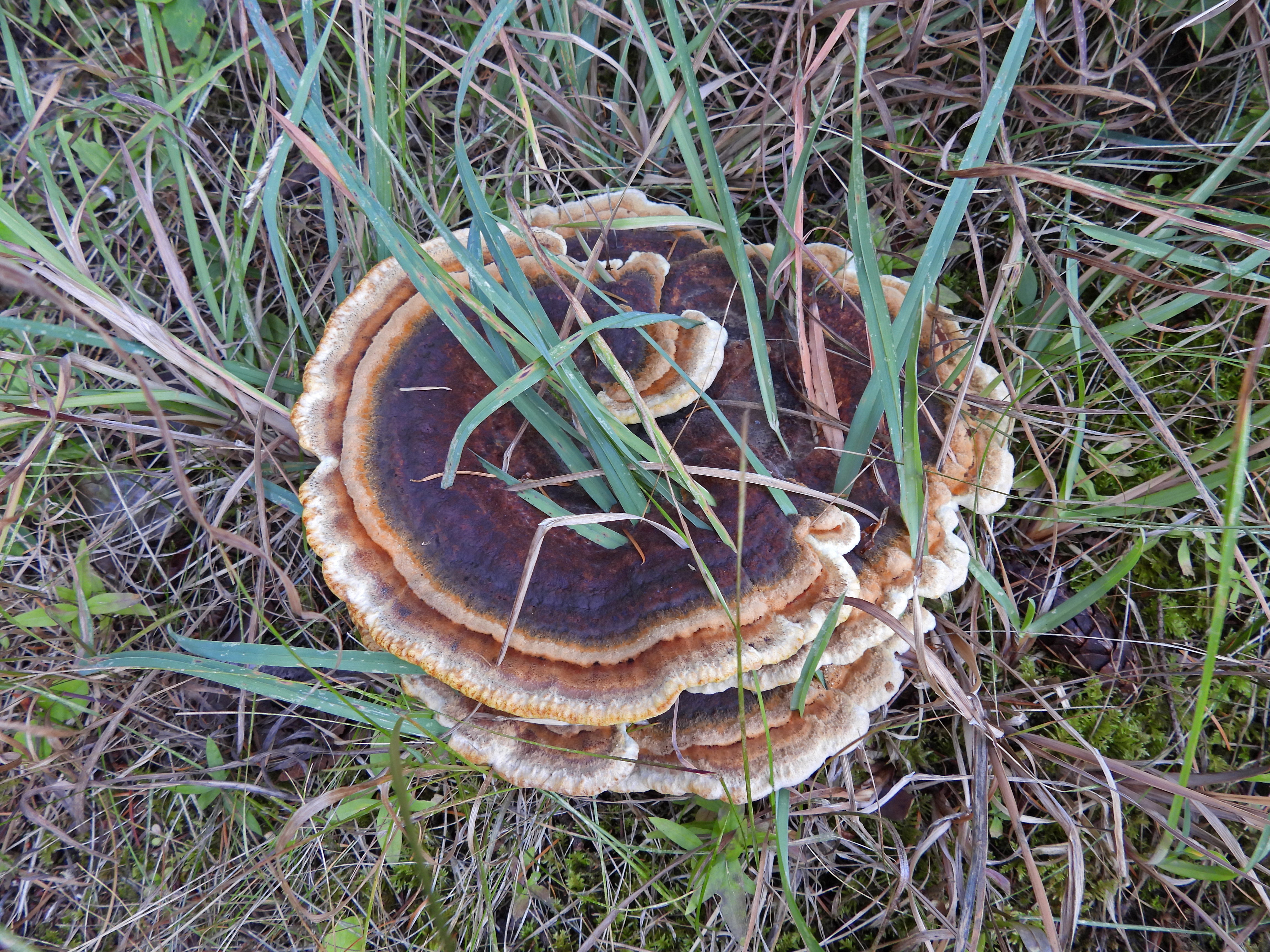
Last year, just like this year, a baby polybore was growing nearby.

Notice that the baby Polly in each case looks like its mother.
I wonder if Polly will show up again next fall.


32 Comments

Squish, Squash

Why would a vegetable that has such a hard skin be called a squash?

These are only a few of the squashes ripening in my garden. I have no idea what they are called, but I know they all taste good.

About four years ago, a friend gave me an assortment of squashes just like these because he had so many in his garden and gladly shared them. I happily made meals with them and enjoyed them so much, I decided to save some of the seeds to plant in my own garden the next year.

I got a few of them planted and was happy to see them sprout at last, but in the time it took for them to sprout, many squash plants sprang up in my freshly rototilled garden patch. How did that happen? I had spread the contents of my compost barrel over the ground before rototilling, and in the compost were many seeds from the squash I had cleaned and eaten that previous winter.

For the third year in a row now, I have had volunteer squash plants growing in my garden. I didn’t have the heart to pull them out, except to thin them a bit.

Now there are so many squashes of all the types my friend gave me, that the plants are “squashing” each other.

… Guess what I’ll be eating all winter …

Nothing squishy, nothing squashy,

Simply bring them in to  washy,

Cut in half and scoop the seeds,

Feed the compost what it needs.


Place them on a baking sheet,

Spread with butter smooth and neat,

Salt and pepper if you like,

Gives the taste a little spike.


Easy peasy supper treat,

Hot and filling, can’t be beat,

If you want a next year’s crop,

Fill your compost to the top.


When the springtime songbirds sound,

Toss that compost on the ground,

Mix it in and water well,

And the squash will grow like heck.


30 Comments

Discretion and Valor

If you love fishing and camping in solitary places, you might want to scout out your surroundings, before you go too far afield.

This mama grizzly and her two cubs (probably last year’s) like fishing and hanging out in solitary places too.

The fact that she still has both cubs could possibly mean that the fishing has been good and that mother and cubs are healthy and doing fine. However, people and grizzlies in close proximity to each other are usually not a good combination. I hope, for the grizzlies’ sake, that there is no interaction that will cause them to be trapped and “dispatched.”

These bears are on Vancouver Island where grizzlies are making an appearance in the last few years. They swim over from the mainland, island hopping to shorten the distance they need to swim. It’s possible that in this case the mother is trying to keep her cubs safe from male grizzlies who would be a threat to them. In some species, the male would kill the young to gain access to the mother and “have some fun with her.” The big cats are another example of this.

This photo was taken by a friend of the Captain near a favourite fishing spot. Sometimes, discretion is the better part of valor, hence the blurry quality of the photo. If the photographer had gone closer, the picture might have been clearer, but he might not have been around long enough to send it.

I think the friend probably decided to take a raincheck on fishing that day.


36 Comments

City Mouse or Country Mouse


My father liked to look distinguished, work in his office, and not get his hands dirty in the garden. He grew up in the city and was happy to buy his fruit and vegetables ready for the kitchen, without having to pull weeds, or have insects crawling on him.


My mother grew up in a small rural community where everyone had a garden in their yard. She loved growing vegetables and couldn’t bear to see a bit of land wasted on lawn when you could grow a potato on it and eat it later on.

When we moved to a city house that had a big back yard, my mother wanted to put in a garden. My father put his foot down and said we would have a “nice lawn” instead.

So when my father was at work, my mother went to work too — in the back yard. Yes, she mowed the lawn, but two feet from the back fence, she found a small strip of bare dirt (that grew into a wider strip of soil) and she sneaked a few potatoes into the ground.

When the potatoes grew, my father didn’t notice — he had no interest in gardening or yardwork — but when it was time to eat the potatoes, mother and children were happy. My father grumbled when he saw all our happy faces, but grudgingly accepted that there was no changing my mother’s gardening instinct.

He just said, he preferred noodles. “Potatoes belong in the cellar.”

*****


So, the point of this little story is to say that I’m a hopeless gardener and I’m not a landscaper either.

Anything that wants to grow in my garden (except really bad weeds) is allowed to grow there.

My squash patch is now totally overgrown with too many squash plants and all sorts of things in between.

Three little squashes all in a row, holding onto my flimsy fencing for support.

What big and beautiful flowers they have.

And speaking of flowers, these poppies are volunteers. I didn’t plant them there but they’re allowed to live because they make me smile.

By the way, there are a few volunteer potatoes growing in there too.

So whom, do you think, do I take after — the city mouse, or the country mouse?


39 Comments

This Place is for the Birds

This spotted towhee has been living here for quite a while.

His wife is somewhere nearby but she’s more camera shy.

She looks much like her flashy husband, but her colours are slightly muted.

They have been nesting on the ground inside my fenced garden, usually under the thick rosemary bush. But this year I cut the rosemary back quite a bit, not thinking I was making the usual nesting area less inviting.

So the towhees chose the messiest corner of the garden where I had not weeded, and put a nest in the mess. I let the poppies grow up in the raised bed, thinking it would hide the weeds until I could get to them. Little did I know I was also helping hide a towhee nest.

I sneaked in there with my camera and got a picture of one towhee baby still in the nest. Mother had flown out when I came close but she went right back after I left. Now I’m hoping the baby will make it through the next critical days and weeks.

There’s no question of catching up with my weeding in this part of the jungle now.


Please click on the links below if you would like to take advantage of smashwords’ e-book sale. My e-books are 50% off during July.

The Wind Weeps  

Reckoning Tide

Marlie

Julia’s Violinist

Orion’s Gift


32 Comments

We Do It All the Time

Photo by Ken Thorne

Photo by Ken Thorne

A True Horror Story as told by “The Captain”


What a day for fly fishing! Coho jumping and finning in front of us. A beach fisherman’s dream. But how quickly things can change. Here I was, loading my fly rod back into the truck to return to town without even wetting a line.

I had set up my friend, Brad, for fly fishing; even giving him one of my hot, specially tied blue-green streamer flies to guarantee his success. But I hadn’t counted on his lack of technique. With beginner’s luck, he was into a finning coho right away, but within seconds, the lightning fish spit the hook. In his eagerness to hook another fish, Brad’s backcast became an errant sidecast. The fly whipped by my head and on its return stung me on the nose like a mad hornet.

And there it stayed.

I tried to work the hook out of my nose, thinking of the coho slime now embedded in my face. It wouldn’t budge.

“You won’t get it out without help,” Brad said. “It’s stuck right in the cartilage.”

On the way back to town, Brad stole frequent glances at my nose and sporadic snorts of laughter escaped him. “Sorry,” he wheezed.

I glared at him, but moments later his shoulders bounced again.

It was a relief to drop off Brad at home. I continued on to the hospital with the truck’s sun visor down in case I passed anyone I knew. I parked close to the Emergency entrance. Head down and hand cupped over my nose, I strode up to the reception desk. A bubbly young nurse looked up at me. “Can I help you, sir?”

Uncovering my nose for her eyes only, I said, “Can you get this off me?”

“Ooh! Oh, my goodness,” she blurted out. “We’ll put you behind this curtain. I’ll get the doctor right away.”

Quick, light footsteps approached. A short, slight woman stood by my bed. “Been fishing, have we? I’m Doctor Payne.”

“Hi. Can you get this thing off my nose? Have you ever dealt with this kind of thing before?”

“Don’t worry. We do it a-a-all the time,” she assured me. She brought a needle up to my nose. “This may sting a little, but it will freeze the tissue so we can pull the hook out.”

“I don’t think so,” I hurried to inform her. “There’s a barb on the end. I crimped it, but apparently not enough. Believe me, I tried to pull it out and it won’t budge. Hurt like hell, too.”

“In that case I’ll push it through to the other side and cut the barb off. Then I can pull it back out.” I was thankful for the freezing as she pushed the hook through.

Dr. Payne left to find a tool. I was puzzled and disappointed when she came back with a pair of worn, old wire cutters. I had envisioned something more sterile and surgical. With much squeezing of wire cutters and accidental twisting of my nose, the tiny woman worried the tempered steel of the fly hook, all to no avail. At this point, I offered to go find my gear pliers and do the job myself, but she insisted, “We do it a-a-all the time.”

When she left the cubicle, I touched my nose gingerly. It was swollen and probably bright red. Add the decoration of blue-green feathers and I was thankful for the curtain surrounding the bed.

The intercom paged Dr. Birley and momentarily he and Dr. Payne appeared at my bedside. The man dwarfed the little woman. He took the wire cutters and, with an outward flip of his elbows, and a shuffling of his feet to find the most comfortable stance, he prodded the hook to find a good grip.

Dr. Payne’s face was almost as close to mine as Dr. Birley’s. “NO, Doctor, NO!” she exclaimed. “You’ve got tissue. Doctor Birley! You’ve got tissue!”

Dr. Birley straightened up, raised his head, and looked down his long nose at Dr. Payne. He tossed the wire cutters onto the tray by my bed. The last I saw of him was his wide back passing between the cubicle curtains.

Dr. Payne hurried after him. A moment later, the intercom announced, “Maintenance … call Emergency. Maintenance … call Emergency.”

All was quiet and I was drifting off to sleep, but my eyes flashed open when I heard the receptionist’s shrill voice. “Oh, my goodness! I wouldn’t let anyone go near my face with those things.”

Alarm bells clanged in my mind. My eyes must have been huge when Dr. Payne walked in carrying a pair of red-handled bolt cutters that were almost half as big as she was. I wondered what grungy task Maintenance had last used them for. The tool’s great iron beak settled on my nose like a turkey vulture, but seconds later, the hook was out.

I thanked the doctor and as I left the hospital, free of my feathery affliction at last, Dr. Payne’s words still echoed in my ears. “We do it a-a-all the time.”


47 Comments

Paragliding


Flying free and weightlessly,

O’er the motion in the sea,

Breezes briskly cut a pace,

Tears of wonder streak my face.

The electric wires in the bottom of this picture are enough to make me think twice about ever trying paragliding. This paraglider is much farther from the wires than it looks on the photo, but still, it makes me wonder about the many obstacles a paraglider might come into contact with.

This fellow was just over my neighbour’s house so I tried to get a picture. It’s still too far for a good photo, but enough for you to get the idea.

In the video  below, he continued on his gliding trip just beyond the houses and over and along the beach below. From my house, I couldn’t see what the paraglider could see, but it must have been a wonderful trip for him, flying above the ocean. Just at the end, a faraway eagle flies into the frame, perhaps to join him on his trip or to check him out.

Full screen is best.


50 Comments

Red-breasted Sapsucker

Air is cold, I’m shivering,

Legs so skinny, quivering,

Ants or beetles, if you’re near,

Eating you would bring me cheer.


Not much sap is dripping down,

Though I’ve drilled holes all around,

Maybe though,  an ant will scurry,

Running off in such a hurry.


I’ve no chocolate to coat it,

Nature simply won’t promote it,

But the crunchy flavour’s good,

With a hint of fir tree wood.

Watch me skipping round the tree,

Eating ants and bugs with glee,

Little holes, the bark endures,

Graciously, my meal ensures.


I apologize for the background noise of dogs barking and garbage trucks backing up somewhere in the world outside my own little world.


45 Comments

A Cool Change

A thin layer of snow covers the usual feeding grounds of ducks, geese, and swans. While the nearby preferred agricultural fields are frozen over with snow and ice, the birds find food and shelter on the edges of the salt water.

The estuary of the Courtenay River holds a lot of bird life. Depending on the wind direction, waterfowl can find  sheltered indentations in the shoreline where they can forage for food in the shallows. Rather than feeding on seeds and bits of plant roots when cold weather freezes their usual fields, they make the switch to marine vegetation and bits of animal matter (shrimp, crustaceans) that they find in the tidal areas of the shore. Once in a while, a faint ray of sunshine warms their backs on this southern exposure in spite of the cold day.


Looking upriver at Comox Bay

Looking outwards to the spit


Mainly widgeons and dunlins.

In these very short video clips you can see a swarm of what I think are dunlins flying in to land near the beach. Although it is a very small flock, it reminds me of those murmurations of birds, when they fly so close together in an incomprehensible formation without crashing into each other. If you make the videos full screen you might be able to see the fine snowflakes blowing around as well


These mallards are close to shore for several reasons.  They have slightly more cover in case of predators (better than being “a sitting duck” in the open water), and there is probably more food available in the shallows where they can probe the sand with their bills and find small beach creatures to eat. At high tide there is also marine vegetation that is available only at this level, lifted up by the rising water.

They are in survival mode for now, waiting for a good low pressure southeast system that will bring wind, rain, and warmer temperatures, thawing out the farm fields that offer their preferred diet. I hope they are all lucky ducks.