wordsfromanneli

Thoughts, ideas, photos, and stories.


26 Comments

Epidaurus or Love on the Rocks

This ancient Greek theater of Epidaurus was built in the 4th century, BC, right into the west side of Cynortion Mountain in eastern Greece, about 70 km south of the Corinth Canal.

It can seat up to about 14,000 people and has been used for plays and concerts over many hundreds of years.

This photo was taken with a small point and click camera in 1977. The resolution is not great, but what I have noticed in more modern photos of the theater, is that some of the rocks  where the stage entrance used to be in 1977, are not there anymore. In fact, much of that area, sadly, has been dismantled. Possibly it is being reconstructed, but it will never be as precious as the original rockwork.  In the first photo, I am standing on the far side of that stage entrance. You can see the whole stage entrance area, from a different perspective, in the second photo.

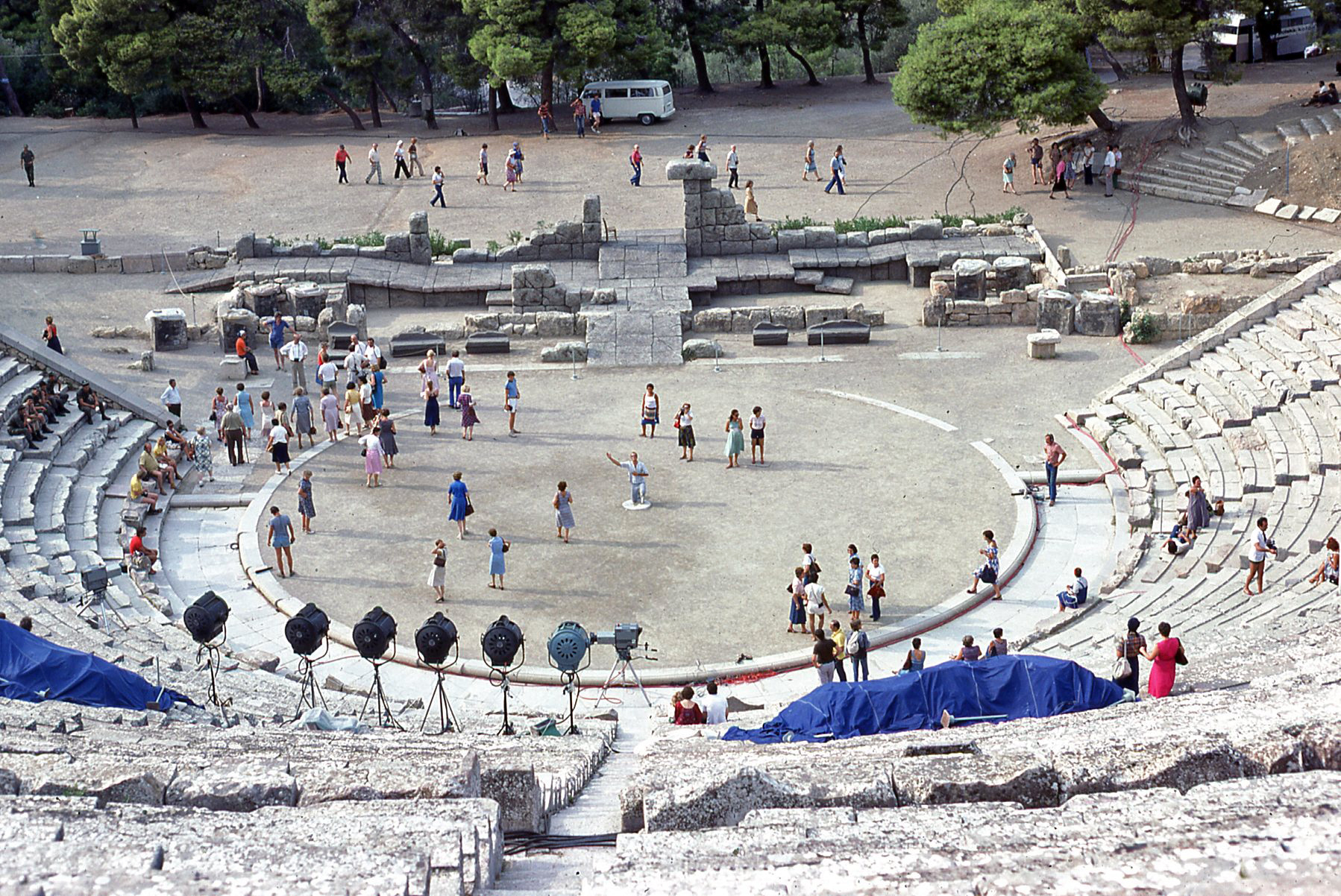


The claim is that the acoustics of the theater are so good that even if you are sitting at the very top of the stadium you can hear a penny dropped in the center of the stage. Of course I had to find out, climbing up to the very top of the seating area.  By the way, I had been thinking that it would be uncomfortable to sit through a performance seated on those rocks, but they were incredibly smooth, worn to a perfect polish from centuries of bums.

As a tour bus load of people arrived, I decided to listen in on the tour guide’s lecture. As she did her tourist guide “spiel,” she talked about the perfect acoustics and proceeded to demonstrate them. I could clearly hear the sound when a penny she dropped hit the concrete in the center of the performance area. Then she struck a match, and I heard the scratch of the match on the striking part of the matchbook, and the sizzle of the match as it flamed up.

But, not to be outdone, once the tourist show was over, the Captain took center stage and declared his love for me, calling out in his best Al Jolson imitation, “MAMMY, how I love ya, how I love ya, my dear old mammy.” Not that I was his mother, but I’ll accept the rest of the message. And it was loud and clear, without him having to shout at all.

What a brave guy!


36 Comments

Mont St Michel

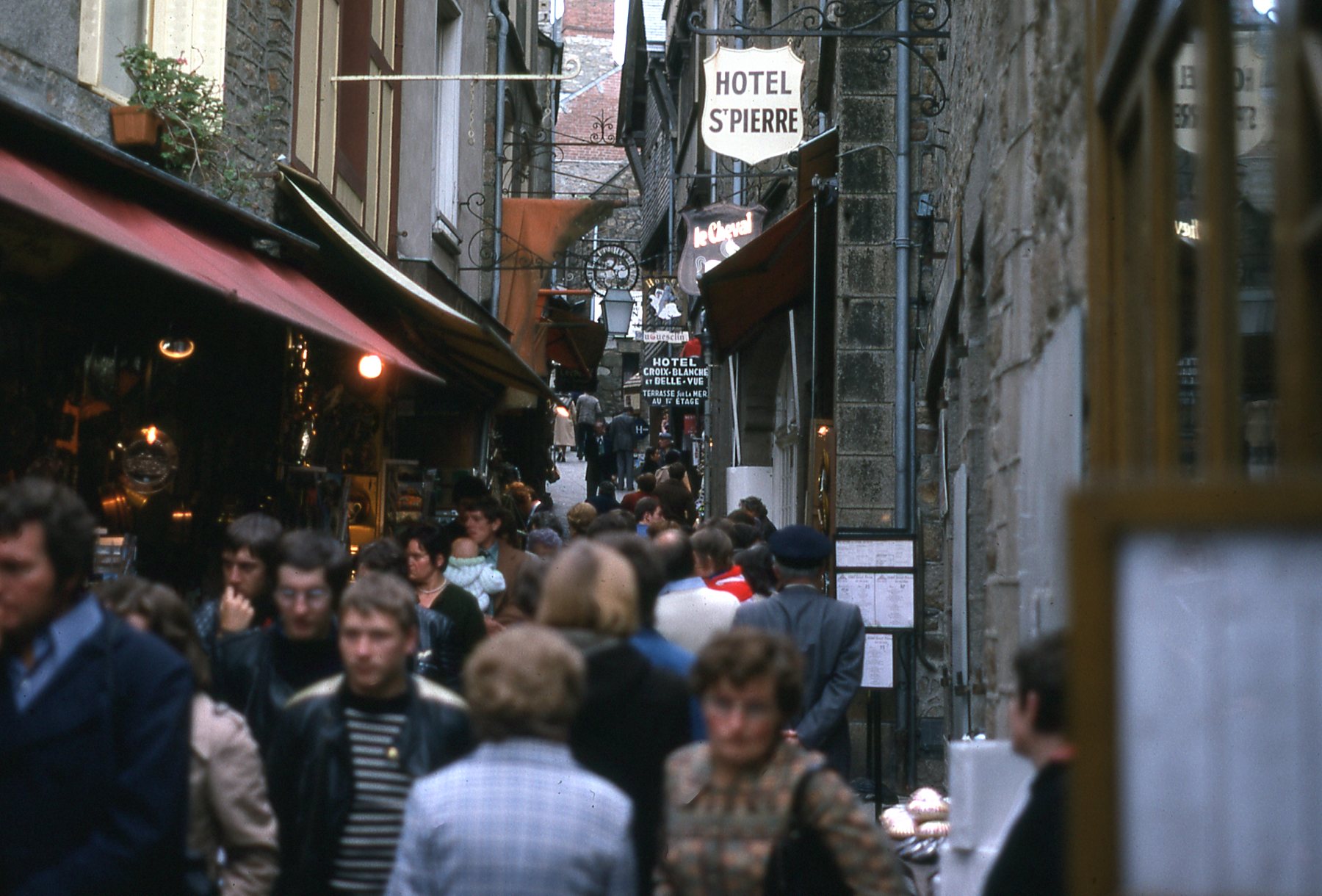
Located on the northwestern coast of France, near the mouth of the Couesnon River where it empties into the English Channel, Mont St Michel is a tidal island on which an ancient abbey was built about the year 709 A.D.  The last part of the Couesnon River, near the mouth, marks the border between the provinces of Normandy and Brittany. Normandy came out the winner in having the island on its side of the river.

It has been a place of refuge for villagers escaping Viking raids, and a place of worship named after the archangel St. Michael. It is now a tourist attraction, visited by about 2.5 million people each year.

.

The narrow streets of the buildings on this granite island are packed with tourists, especially in the summer, but there are about 30 residents living on the island permanently. While there are many tourist shops on the island, there are not shops that supply the locals with food and supplies. For that, they must travel about 10 kms (so you don’t want to suddenly run out of half and half for your coffee).


In the old days when it was still used as a monastery type of setting, the monks didn’t leave the abbey.  The abbey was built on the top of the cone-shaped granite island, in a combination of Romanesque and Gothic styles. Because of its relatively difficult accessibility, the materials for building the abbey were brought in on barges when the tide was right.  The statue of St. Michael on the top has worked as a lightning rod and has spared the island much damage.

In the photo below, you can see a notched track where supplies were pulled up or lowered down with the help of a winch at the top. This was for the benefit of those monks who never left the monastery. About a dozen monks and nuns still live in part of the abbey now.

After the French Revolution, and until 1863, some tiny rooms were used as a prison. These dark stone rooms must have been terrible places to be kept, like in a dungeon, but above ground.

The history of the abbey of Mont St Michel is long and diverse; too much write about here.

It is a fascinating World Heritage Site, worth visiting if you are ever in the north of France.


10 Comments

Annie and the Honeydew Man

I posted this about five years ago and came across it again. I thought it was a sweet picture and couldn’t resist reposting it.

When my sisters and brother and I were little, we lived in a newly built, but unfinished house on the edge of town. The streets weren’t even put in place yet. Our road was just a track through a field of yellow grass. But it was perfect for us to play cowboys and gallop our pretend horses around the trails and up and down the hills of dirt that were not yet backfilled to the new house. We pretended to be characters from the western movies of the day — Annie Oakley, Gene Autry, Roy Rogers, and Dale Evans.  But Annie was my favourite.  My sister, maybe almost three years old, was really too little to keep up with us as we tore around on the hills of dirt, so she played Annie Oakley with a toy shotgun and guarded the house while the rest of us were out on the range.

I don’t know what is wrapped around her right hand, and I just noticed for the first time in decades that there is a doll peeking out from behind her left shoulder.

Fast forward to more modern times. When the Captain and I were on one of our trips to Baja California, we stopped to do some shopping in Ensenada. I found a puppet-style doll that I couldn’t live without. She was the Mexican version of Annie Oakley.

What made me even happier, was buying the doll that had to be her partner.  He is pictured here.

The store proprietor told me that this doll represents the hen-pecked husband, the Honeydew man (Honey, do this and Honey, do that), but in Spanish they called this fellow a “mandilon,”  because he is ordered about, and, in the original version of the word, probably wore an apron (a mandil). What woman would not want a mandilon to do things for her? I had to have this doll!

*****

In my novel Orion’s Gift,  Sylvia is all alone in the world. It seems that her life has taken a sudden turn and everything has been going wrong for her. Her husband is all about himself, and would not understand the news she just received in a letter.

She is trying to outrun her problems by escaping what she once thought was a perfect life near San Diego. She leaves everything behind to “run away” to Baja California where she plans to live in her VW van.

Baja seems to be a place for runaways. She meets Kevin at one of the campsites, and although there is an immediate attraction, Kevin has problems of his own.

Sylvia really needs moral support, so I gave her a mascot to lend her strength. Below is a short excerpt from Orion’s Gift, telling about how Sylvia came to adopt Annie.

Excerpt:

In one shop, handmade puppets on strings hung from the ceiling. Each doll had a unique character and, like orphans hoping to be adopted, seemed to call, “Take me with you.” I fell in love with a Mexican Annie Oakley. She held a mini six-gun in each hand and radiated confidence and self-reliance. I paid for her and happily carried her home to my van. I rigged up a spot on the curtain rod behind the seat for Annie to watch over me at night. She’d be my mascot, a reminder that I was strong and could take care of myself.

You can read Sylvia’s story in my novel “Orion’s Gift.”  She’s going to need Annie’s strength to face some of the challenges of being a woman travelling alone in Baja.

The e-book version is marked down to only 99 cents on amazon.com for the next few weeks. 


30 Comments

Snowy Hills

Way up high on the hills, the rain turned into snow.

Why is it that white snow comes out of black clouds?

How did that sunshine get through to the hills when the whole valley is in shade?

Can you guess where the deer are that used to live up in the hills? Where are the birds? Bears? Cougars? Squirrels?

I can only hope that those who didn’t wander down to lower elevations are hibernating in some cozy den. Probably even those who might hibernate would have come down from the highest parts of the hills, if they were able.


Meanwhile, I’m in my cozy den at home, not hibernating, but also waiting for winter to pass.

A new year is coming. That gives me hope that spring won’t be too far away.

Have a happy year ahead, everyone.

All the best in 2025.


22 Comments

K is for Kalamata

The Greek city of Kalamata could quite rightfully be called Calamity that day.

When the bus gets a flat tire in the main intersection of town, everyone needs to find an alternate method of transportation. Even the bus driver is gone, leaving his tools on the ground as he most likely is looking for help. That would be quite a heavy tire to change, assuming he had a spare to put on there.

The coffee store roasts the coffee  right there in the front of the store, but I don’t think they serve coffee. They just sell the beans. Next to the yellow Pepsi crate, is the container of coffee beans that looks like the top part of an old-fashioned washtub. That tub full of beans is heated from underneath to roast the beans while some mechanical arms constantly turn and stir them so they don’t burn. The smell is delicious.

I wonder if the bus driver will get a cup of coffee nearby while he waits for help with his flat tire.

K is for Kalamity. Oops! No, I mean Kalamata where the olives for your Greek salad are grown.


22 Comments

Seafood by the Seaside

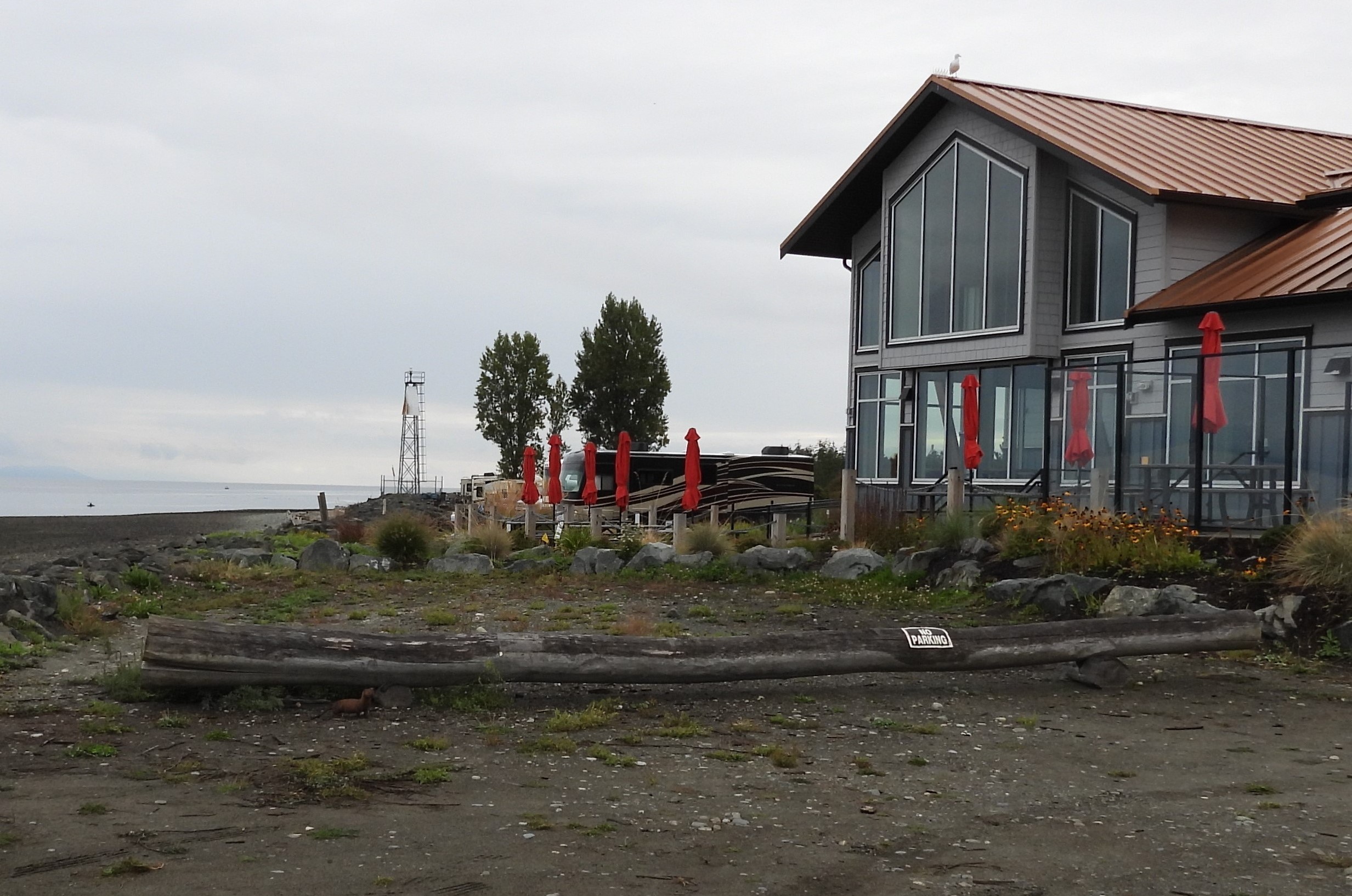
The critter in this post has beachfront property – as much as he wants.

Monty the Mink has his own wading pools which sometimes do double duty as dining areas.

He prefers to sit above the high tide line when he’s eating at his own High Tide Restaurant. He’s very tidy about his dishes, leaving them all in one place for the next tide to rinse. The seagulls sometimes help out with the leftovers.

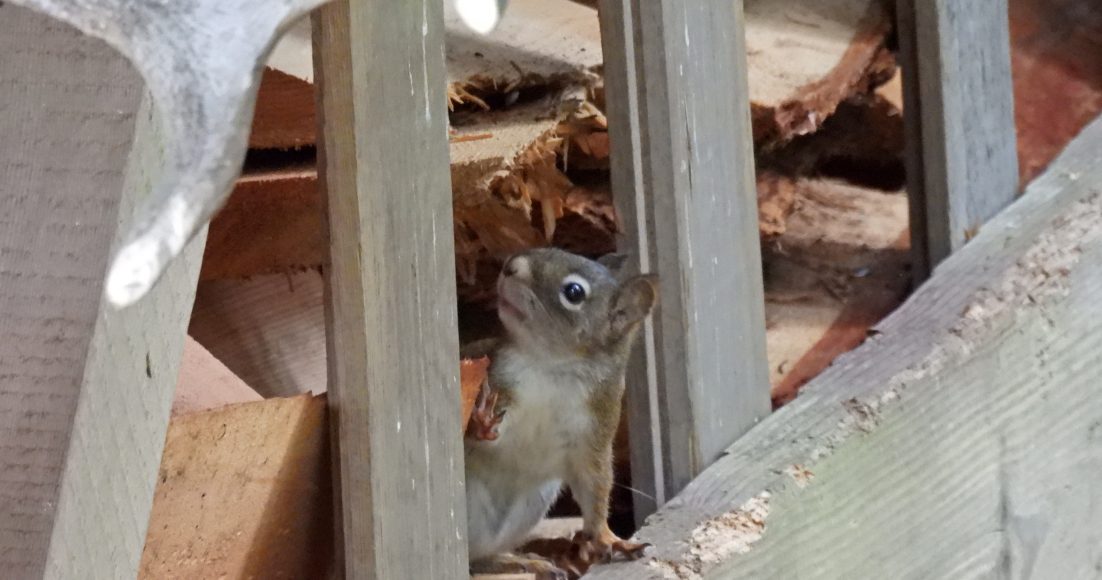
So who is this rich guy who dines on seafood by the seaside? No, this building is not his restaurant, although he has the free run of the property. He’s a very small guy, smaller than many cats. See him in front of the log that has the “No Parking” sign on it? He is just about five feet from the left end of the log, a tiny fellow who can move very quickly, especially when he knows someone is trying to take his picture. He’d rather be blurry and incognito.

Thinking he’s safe, he sneaks up to the rock garden of the people’s restaurant (bottom left). I’m sorry he was feeling so shy and elusive today. He moved very fast and I had little chance of focusing. Maybe another day we will get a better picture of Monty Mink, a Pacific Northwest coast mink.

My weaselly cousin,

Prefers the dry land,

But I like variety,

Found near the sand.


Frogs, fish, and crayfish,

Or turtles, and clams,

As long as it’s meaty,

Hold back on the yams.


I’m tough for my size,

Taking on bigger meals,

A wandering rabbit,

Tastes good when it squeals.


I’m really not mean,

But I have to be tough,

A mink’s got to eat,

And it’s never enough.


45 Comments

It’s Dogwood Time

It’s time for the dogwoods to bloom. There are many bigger dogwood trees around, but ours is still quite small.

The robin is enjoying the spring morning sunshine while he wonders about the petal count of these flowers.

Most flowers have a number of petals that fall into the Fibonacci sequence, a mathematical sequence in which each number is the sum of the two preceding ones. So it goes like this: 0, 1, 1, 2, 3, 5, 8, 13, 21, 34, 55, 89, 144 … and it goes on forever.

Our Pacific dogwood usually has between four and six petals, so it’s different from most flowers which tend to follow the Fibonacci sequence.

Next time you’re in a flower garden, see which flowers you can find that have either  3, 5, 8, 13, or 21 petals. You’ll be surprised at what you find.

*Fibonacci sequence was used and further explored by an Italian mathematician, Leonardo Bonacci, who was called Fibonacci, possibly as a name made up from “filius Bonacci” (son of Bonacci). He was born about 1170. Yes, about 850+ years ago.

I bet he loved doing puzzles or writing code.

So what’s the next number after 144? The first nine commenters got it easily, so how about the next three numbers?