wordsfromanneli

Thoughts, ideas, photos, and stories.


26 Comments

Wallaby


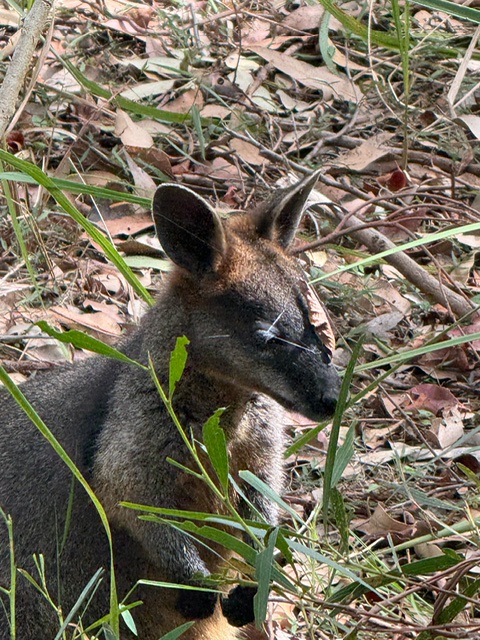
Willoughby Woo was a wallaby

Whose kangaroo friends called him “Wannabe,”

He’d pretend to be cool,

But they called him a fool.

It’s not what a wallaby oughtta be.


“Now listen, my friend, Joey Roo,

I’m certain we’re cousins, we two,

Though different in name,

We are clearly the same, 

And you see that I’m handsome like you.”


Still, Willoughby Wallaby Woo

Wished he were a fine kangaroo,

His friend Joey Roo,

Said, “I know what to do.

Just say, ‘Bibbity Bobbity, Boo!'”


13 Comments

Great Reading with a Small Price Tag


The 9th annual Smashwords End of Year Sale is on now and runs through the end-of-day January 1st.

All five of my novels are on for half price in all e-reader formats. You can see the cover images of my books in the sidebar of my blog as well as below, in this post.

If you go to smashwords.com

you can type in the title of my books in the Search window at the top right-hand corner of the page.

Or, you can take the easy way, and  type in my name (Anneli Purchase) in the Search window at the top right of the Smashwords page, and all of my books will come up.

All of them are marked down by 50% to only $1.49 US.

This is a really inexpensive way to get all my books for your e-reader.

The three books that are West Coast dramas are best read in order, but are also enjoyable as standalones:

  1. The Wind Weeps
  2. Reckoning Tide
  3. Marlie


All of my books have a bit of love and a lot of adventure in them, and you’ll come away having learned something about the area that is the setting for the books.


If you are looking for love and drama in Baja California, you may be interested in reading Orion’s Gift.


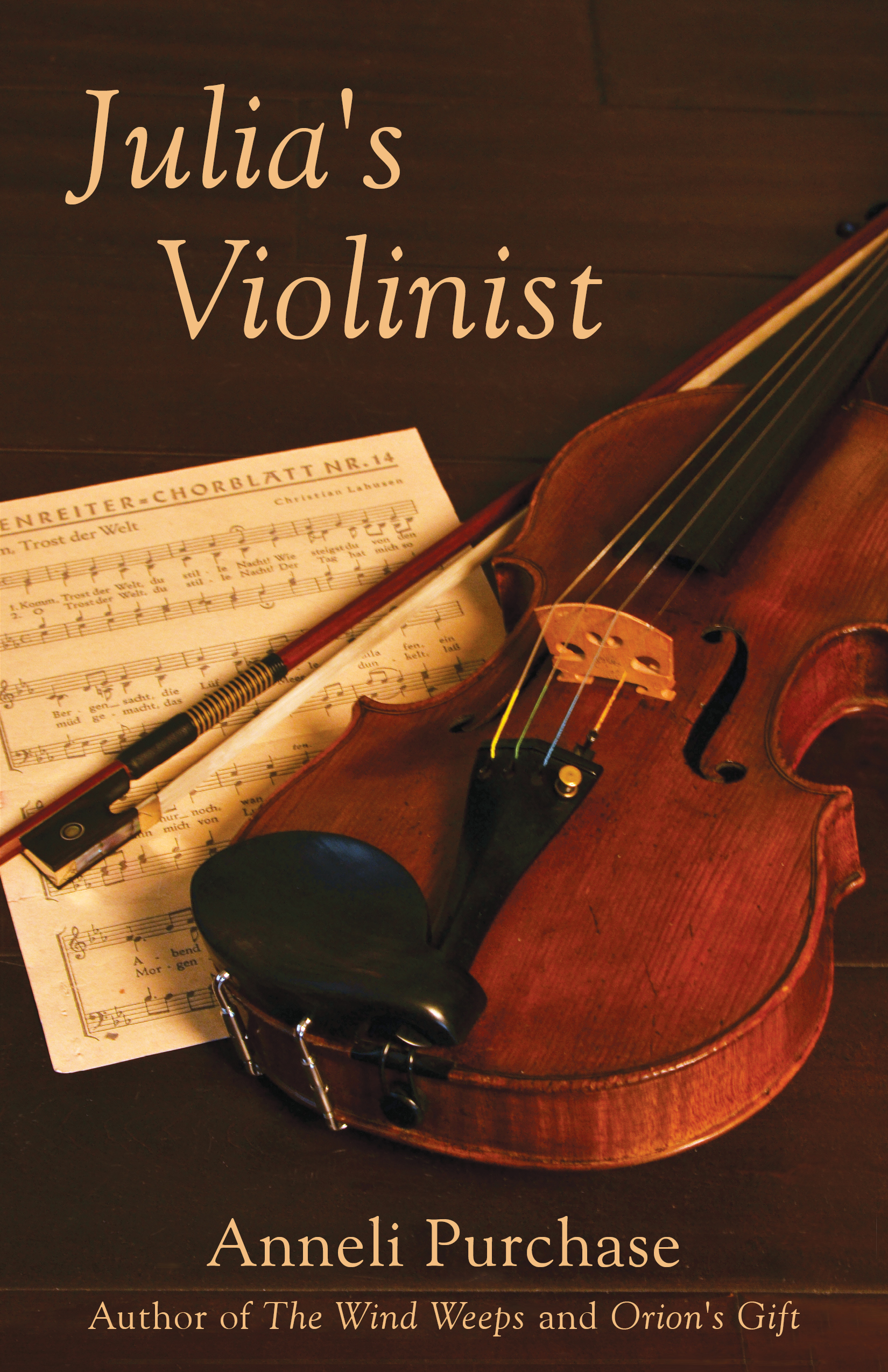
For a love triangle in post-war Europe, Julia’s Violinist is a must-read.

All my books maybe be found on Amazon for the same price of $1.49 until January 1, 2026.

Why not give them a try? It won’t break the bank.


26 Comments

Jabberwocky

Who lives under that log?

With Halloween just days away, I had a thought about dressing up as a Jabberwock with jaws that bite and claws that catch. I’m studying to speak the Jabberwock language for that special night. I can read it, but I can only guess at its meaning. How about you? Does it makes sense to you?

But if you consider the author of this crazy Jabberwocky, you might better understand why it’s a bit loony, and that he may have indulged in something illegal and mind-enhancing. Lewis Carroll, of Alice in Wonderland fame, had a great imagination.


Jabberwocky

by Lewis Carroll


‘Twas brillig, and the slithy toves

Did gyre and gimble in the wabe;

All mimsy were the borogoves,

And the mome raths outgrabe.


“Beware the Jabberwock, my son!

The jaws that bite, the claws that catch!

Beware the Jubjub bird, and shun

The frumious Bandersnatch!”


He took his vorpal sword in hand;

Long time the manxome foe he sought–

So rested he by the Tumtum tree,

And stood awhile in thought.


And, as in uffish thought he stood,

The Jabberwock, with eyes of flame,

Came whiffling through the tulgey wood,

And burbled as it came!


One, two! One, two! And through and through

The vorpal blade went snicker-snack!

He left it dead, and with its head

He went galumphing back.


“And hast though slain the Jabberwock?

Come to my arms, my beamish boy!

O frabjous day! Callooh! Callay!”

He chortled in his joy.


‘Twas brillig and the slithy toves

Did gyre and gimble in the wabe;

All mimsy were the borogoves,

And the mome raths outgrabe.


23 Comments

When You Are Old

I‘ve always liked this poem by William Butler Yeats, but until today, I knew very little about the author. Having now read a summary of his life, it changed the meaning of the poem for me (not my positive feelings about it), and I’ve decided not to offer my opinion here until I hear what you, my readers, think about this poem.

When You Are Old

by William Butler Yeats

When you are old and gray and full of sleep,

And nodding by the fire, take down this book,

And slowly read, and dream of the soft look

Your eyes had once, and of their shadows deep;


How many loved your moments of glad grace,

And loved your beauty with love false or true;

But one man loved the pilgrim soul in you,

And loved the sorrows of your changing face.


And bending down beside the glowing bars

Murmur, a little sadly, how love fled

And paced upon the mountains overhead

And hid his face amid a crowd of stars.


34 Comments

Another Great Poem

This is a copy of Brueghel’s Fall of Icarus, a painting by Pieter Brueghel the Elder.

Icarus and his father Daedalus, the architect of the labyrinth of Crete, were trying to escape imprisonment. King Minos thought Daedelus had given away the secret of how to escape the labyrinth thus allowing King Theseus of Athens to escape it.  So King Minos imprisoned Daedalus and Icarus.

In an attempt to escape by flying, they put feathers on their arms and stuck them together with wax, but apparently Icarus, in spite of his father’s warning, flew too close to the sun, which melted the wax, and without wings he tumbled back to Earth. You can see him falling into the water just below the ship.


So in the 1500s, Pieter Brueghel included this event in one of his paintings. About 400 years later, W.H. Auden was inspired by  this painting to write a poem about human indifference to suffering.  Watch for examples of this as you read his famous poem.

Musée des Beaux Arts

By W. H. Auden

December 1938

About suffering they were never wrong,
The Old Masters: how well they understood
Its human position; how it takes place
While someone else is eating or opening a window or just walking dully along
How, when the aged are reverently, passionately waiting
For the miraculous birth, there always must be
Children who did not specially want it to happen, skating
On a pond at the edge of the wood:
They never forgot
That even the dreadful martyrdom must run its course
Anyhow in a corner, some untidy spot
Where the dogs go on with their doggy life and the torturer’s horse
Scratches its innocent behind on a tree.
In Brueghel’s Icarus, for instance: how everything turns away
Quite leisurely from the disaster; the ploughman may
Have heard the splash, the forsaken cry,
But for him it was not an important failure; the sun shone
As it had to on the white legs disappearing into the green
Water; and the expensive delicate ship that must have seen
Something amazing, a boy falling out of the sky,
Had somewhere to get to and sailed calmly on.
*****
Do you ever wonder what is going on in other parts of the world, while you’re doing something routine at home? Are there people being tortured or mistreated elsewhere in the world at that very moment? Or simply suffering while we are enjoying a good time? Or the other way around, perhaps? Someone having a good time while we suffer?


29 Comments

Irony at its Best

I had a dream about my friend Percy who told me about a guy he met who had just come back from a trip to Egypt.  This traveller went on a desert tour with a group and saw some cool remnants of large monuments.  Rulers of the ancient lands liked to leave their mark with colossal statues of themselves to remind the people who is the boss, and to intimidate any would-be conquerors of his land.

One monument, in particular, left a big impression on him. It must have been spectacular in its day, but you can imagine how a couple of thousand years of weather and blowing sand would erode even the imposing 57 -foot statue of Ramses II who ruled Egypt from 1279 – 1213 BCE.

The tour guide pointed out how, even though only the legs were left standing, you could tell from the broken pieces of the king’s face that the sculptor had a real talent for showing emotion on the statue’s face. It showed the lips wrinkled up, sneering and dominating, as he frowned at any potential intruders.

Even though the whole, humongous monument was broken up (except for the legs left standing), there still remained an inscription on the pedestal that was laughable in view of the condition of the statue of this mighty king.

The whole scene told an ironic story, so Percy thought it would make a good poem.

Here is the poem Percy wrote:

Ozymandias

I met a traveller from an antique land

Who said: Two vast and trunkless legs of stone

Stand in the desert. Near them, on the sand,

Half sunk, a shattered visage lies, whose frown,

And wrinkled lip, and sneer of cold command,

Tell that its sculptor well those passions read

Which yet survive, stamped on these lifeless things,

The hand that mocked them, and the heart that fed;

And on the pedestal these words appear:

“My name is Ozymandias, king of kings:

Look upon my works, ye Mighty, and despair!”

Nothing beside remains. Round the decay

Of that colossal wreck, boundless and bare

The lone and level sands stretch far away.

Percy Bysshe Shelley


*** Did you know that Percy Bysshe Shelley drowned in a sailing mishap in 1822 just before his 30th birthday? Apparently, the boat was not seaworthy and the three people aboard were inexperienced when it was caught in bad weather off the west coast of Italy.


27 Comments

October – Goldengrove Unleaving


Spring and Fall – by Gerard Manley Hopkins (1844 -1889)

to a young child

This poem is very famous and is taught in all the English classes in high school. Unfortunately, when we were in high school, we were too ignorant to really appreciate it.

Okay, not all of us were ignorant in high school, but I think it’s safe to say that many of us found this old poetry hard to understand with its twisted and jumbled sentence structure.

Here’s an example from Hopkins’ poem:

Leaves like the things of man, you
With your fresh thoughts care for, can you?

Why couldn’t the poets of that time, especially the English, just “speak English”? In those high school days, I remember thinking, what’s the good of a poem if I need someone to translate it to me (from English to English)? I still feel that way a little bit, but now, decades later, I can appreciate the language of poetry better.

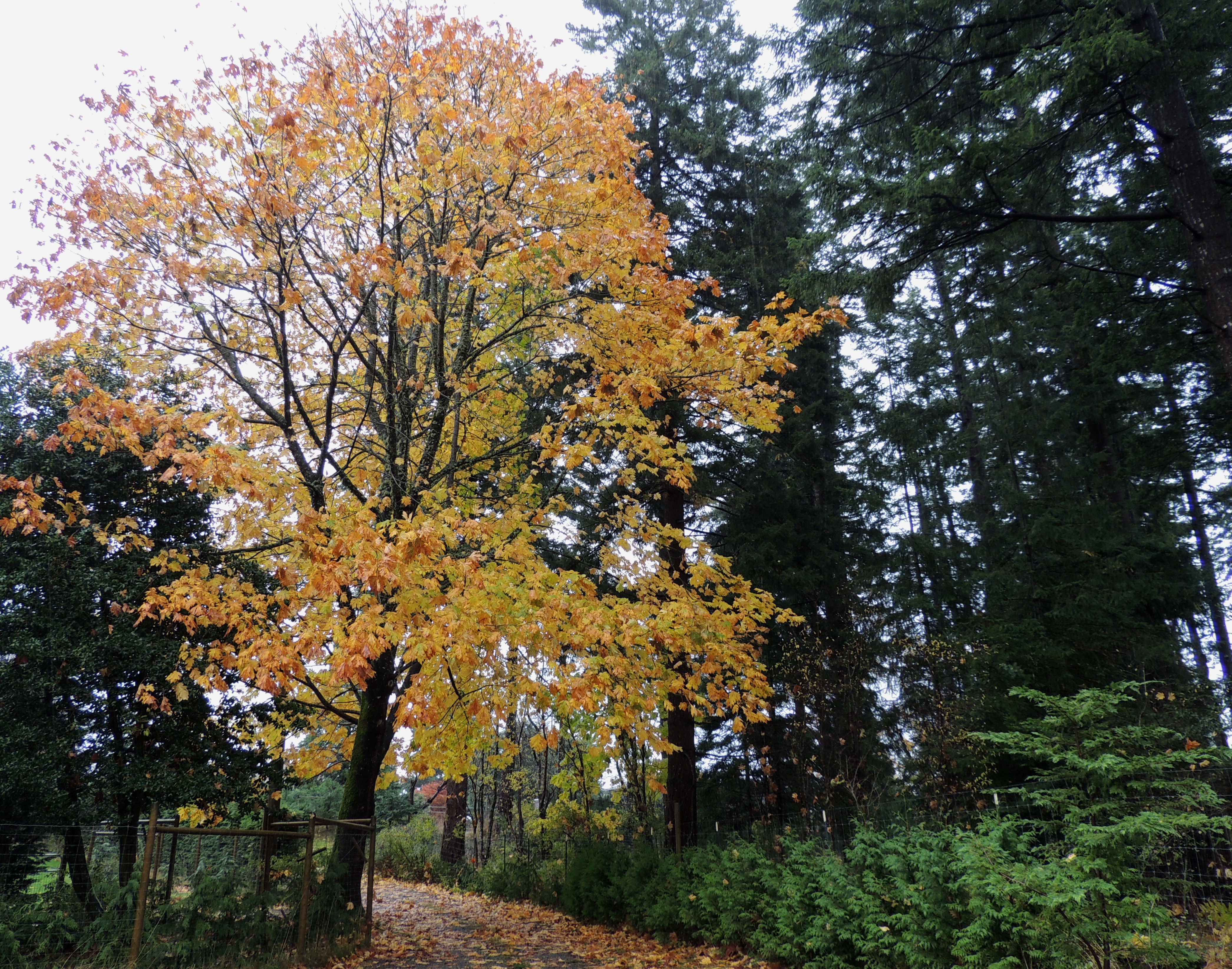
BUT, having suffered through trying to understand this poem as a young adult, I now think of it every year at this time. As soon as our maple tree starts to lose its leaves, I find myself thinking (and my name is not Margaret),

“Margaret, are you grieving,

Over Goldengrove unleaving?”

And I always end up thinking, how incredibly sad it is to see those first leaves fluttering down, and I realize,

“It is Margaret that you mourn for.”

Here is Hopkins’ poem:

Spring and Fall

To a Young Child

Margaret, are you grieving
Over Goldengrove unleaving?
Leaves like the things of man, you
With your fresh thoughts care for, can you?
Ah! as the heart grows older
It will come to such sights colder
By and by, nor spare a sigh
Though worlds of wanwood leafmeal lie;
And yet you will weep and know why.
Now no matter, child, the name:
Sorrow’s springs are the same.
Nor mouth had, no nor mind, expressed
What heart heard of, ghost guessed:
It is the blight man was born for,
It is Margaret you mourn for.

***** 

I have learned to appreciate good poetry, but I tend to like the kind that is more fun and less serious. Limericks, funny ditties, rhyming fun.

Still, I have my favourite serious poems too, which I hope to share with you sometime soon.

How do you feel about poetry?


107 Comments

Come with me to the Badlands

Let me tell you a little bit about Jacqui Murray and her latest book.

Jacqui Murray is an amazing woman. She is constantly researching the history and facts about how man lived on this earth from hundreds of thousands of years ago to several thousands of years ago. She has read dozens and dozens of books and articles about the evolution of the earth and how man survived in the harsh environment of nature as it was back then.

She has drawn on this research to write many novels, but if you think research has made her books dry or boring, think again. They are page turners!

Jacqui Murray has done all the work. The only thing we need to do is read and enjoy the wonderful novels she writes about the people of those times. She gives the characters personalities that we can identify with. Some are wise, some foolish, some good and caring, others vain or selfish, hardworking or lazy, skilled or unskilled.  Not much different from people today. Humans had emotions and basic needs throughout history. The emotions haven’t changed. But how they reacted to those emotions and needs was sometimes very different from what we would do today.

Most of us love nature. But imagine having nothing but nature around you, and having to survive without most of the conveniences  of food, shelter, and security that we take for granted nowadays. How hard would life be if the world was still in upheaval from extreme weather conditions, earthquakes,  and volcanic eruptions, as landmasses were still forming and changing?

You can’t go to the store to buy a coat if you’re cold; there are no stores. You have little protection against wild animals, and no modern medicine for illnesses. You need to learn which animals are dangerous to your health and which plants will kill you if you eat them. There is no book to consult about these mysteries. You are basically on your own. Most of us would not survive.

The survival instinct is one of the main reasons that early man learned to work together with others of their kind, and formed groups or tribes. They knew that there is strength in numbers.

In Jacqui Murray’s books, you will love getting to know the people and you will feel their joy and their pain. Best of all, you will find yourself in a world you’ve probably never imagined. It’s as if you went back in time … WAY back in time.

Don’t miss Jacqui’s latest exciting page turner, “Badlands,” the second book of the trilogy, “Savage Land.” If you haven’t read Book One in the series, please check out “Endangered Species.” You can find both books if you click on the link below the cover image of “Badlands.”

*****

Author bio:

Jacqui Murray is the author of the popular prehistoric fiction saga, Man vs. Nature which explores seminal events in man’s evolution one trilogy at a time. She is also author of the Rowe-Delamagente thrillers and Building a Midshipman , the story of her daughter’s journey from high school to United States Naval Academy. Her non-fiction includes 100+ books on tech into education, reviews as an Amazon Vine Voice and a freelance journalist on tech ed topics.


Social Media contacts: 

Amazon Author Page:         https://www.amazon.com/Jacqui-Murray/e/B002E78CQQ/

Blog:                                        https://worddreams.wordpress.com

Pinterest:                                http://pinterest.com/askatechteacher

X:                                             http://twitter.com/worddreams

Website:                                 https://jacquimurray.net


Book information:

Print, digital, audio available: http://a-fwd.com/asin=B0DFCV5YFT

 Genre: Prehistoric fiction

Editor: Anneli Purchase 

*****

Here is a sample – just a small part of Chapter One.

Chapter 1  

75,000 years ago

Modern day Altai Mountains, Siberia 

Yu’ung’s legs churned, arms pumped, throat straining to draw in air. Her red hair hung in damp sweaty ropes on her neck and shoulders. After narrowly escaping the cave-in and then Hyaena’s attack, time had run out. B’o was supposed to leave with or without her when Sun reached a particular spot overhead. That point had passed and now, the maelstrom was upon them. She must get to her tribe.

Running never tired her, no matter how long or far. Today was different. Driven by desperation and worry for those who relied on her, she ran too hard and slammed up against her limit.

She stumbled to a stop and bent forward, chest heaving, sucking in one mouthful of air after another. The blue-eyed Canis–the massive Ump with his dark coat, the smaller White Streak with the light colored stripe cutting her black fur from one side of her forehead to the other, and the older Ragged Ear–circled back to her, huffing and prancing. Somehow, they knew time was short. Shanadar, who seemed to be their pack leader, wasn’t even winded. He waited, patient but anxious.

She muttered, “The smoke–it’s much worse.”

Yu’ung had departed her homebase before Sun woke. She had gone there to tell the Tall One Fierce that the People would join him. The air tasted of ash then, but lightly. By the time she reached where Fierce and his Tall One band should have been, the small flakes had grown chokingly large. The Tall Ones–wisely–were gone, but her mother, Kriina, now Fierce’s pairmate, left a message in the tunnel telling Yu’ung their destination and of a possible new homebase for the People.

It was there Yu’ung would lead the People.

“I’m ready, Shanadar,” and she took off again.

She expected the Angry Mountain’s destruction to clear closer to her homebase, but instead, cinders and smoke thickened and the air dimmed to a dingy gray. Uprooted trees blocked the usual passages forcing her to divert onto new, untried trails. Pockets of flames burned without pause on all sides. The grassland and forests that fed the People were almost wiped out.

*****