wordsfromanneli

Thoughts, ideas, photos, and stories.


33 Comments

Black Walnuts

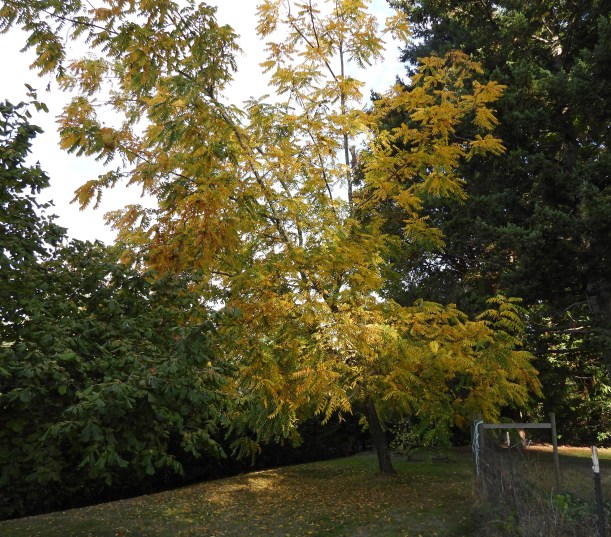
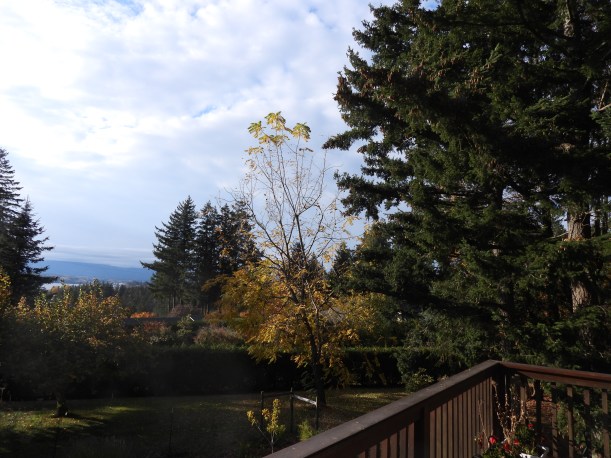
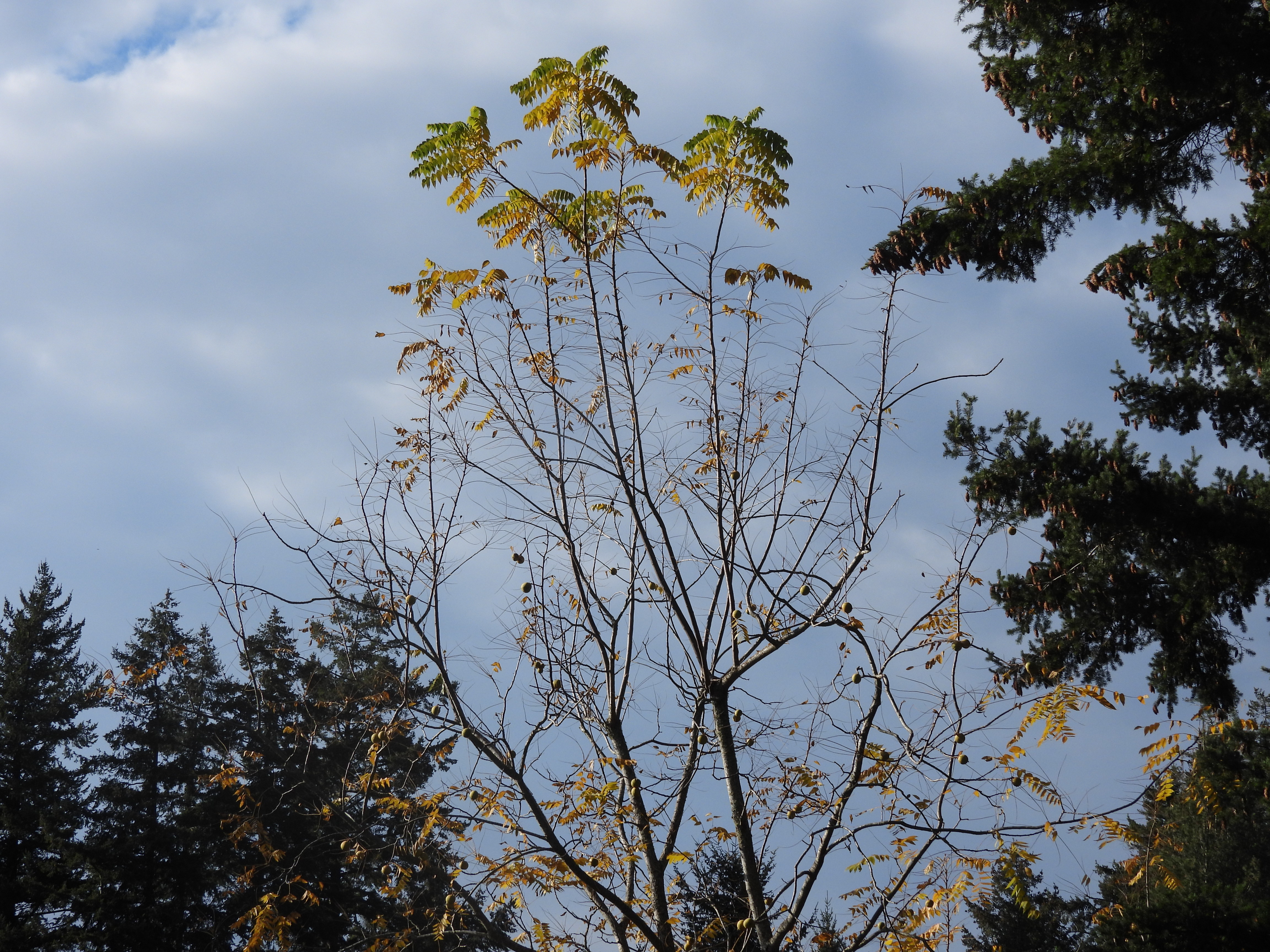
The tree with the golden leaves in the center of the photo below is a black walnut. You can tell where the coldest wind comes into our yard, over the hedges where the tree faces the open gap between the taller firs. The leaves in that area, except for a few near the  top of the tree, are hit the hardest by the cold weather that is moving in, so those are the first to go.

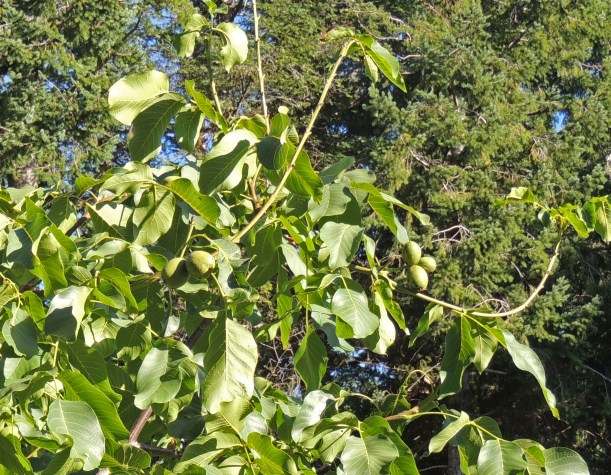
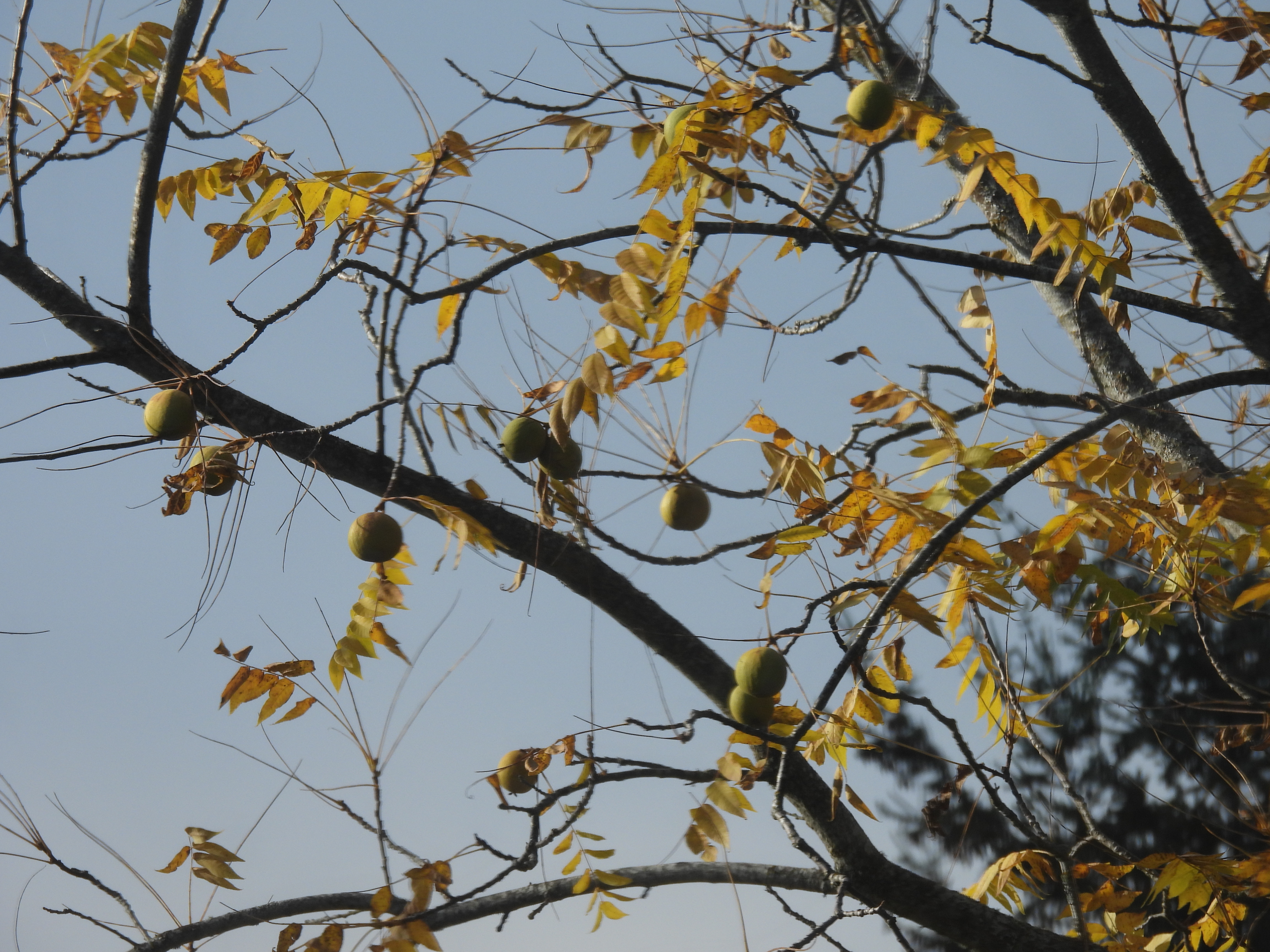
Below, you can see some walnuts still hanging onto the branches, waiting for another big gust of wind to knock them down.
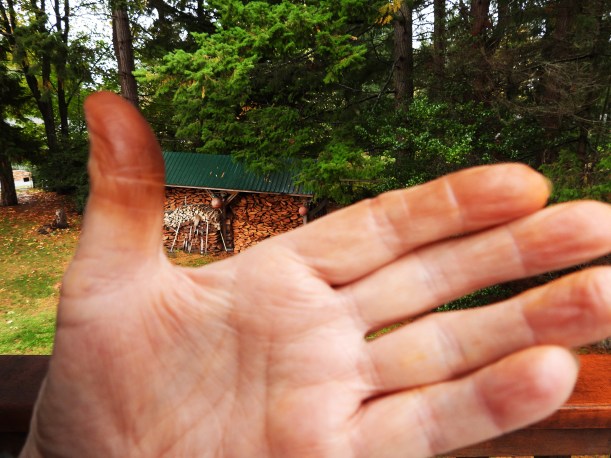
The walnuts are inside a thick husk that comes off easily enough if you step on the walnuts once they have fallen to the ground. Wear gloves!!! You can peel that husk off after stepping on the nuts, and take off that outer coating. Even with gloves, you may find your fingers and fingernails stained from the walnut juice and you will be mistaken for a two-pack-a-day smoker.
These walnuts are different from the English walnut that we are most familiar with. Black walnuts have shells that are much thicker and harder than the English walnuts. It’s no exaggeration to say that you may need a hammer to crack the black walnuts. A simple nutcracker won’t work. The nuts are also more bitter, possibly because the trees produce a toxin called juglone that will eventually kill some kinds of small plants trying to grow near the walnut tree.

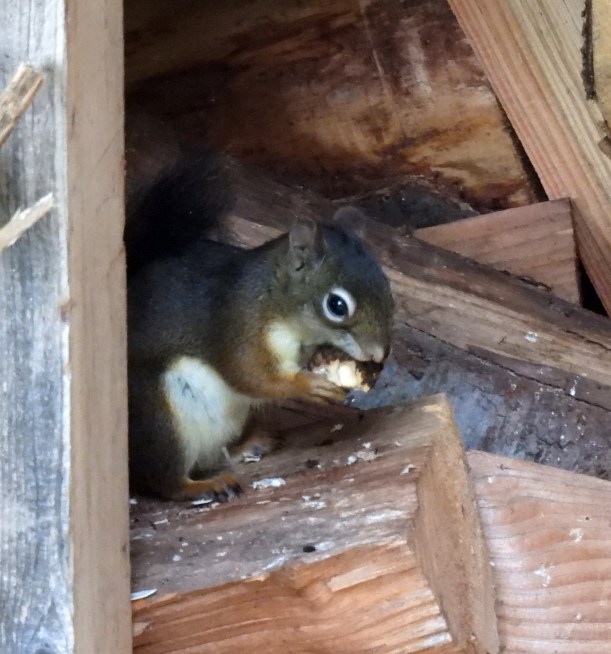
Even though the husks are bitter, squirrels don’t seem to mind the strong taste of the nut meat. The only problem is that the walnut shells are SO thick and hard and tough that  the squirrels would have quite a challenge to open them. It is really helpful to give the nuts a good crack with a hammer to open them up before giving them to the squirrels.

I’ve collected several pailfuls of these walnuts. The squirrels are happy to have a snack of five or six walnuts every day.


For ME? You don’t say!


55 Comments

Black Walnut

In a couple of weeks, this black walnut tree will get a good pruning, as it is getting quite leggy. But first I wanted to harvest this year’s walnuts. The tree was loaded this year. Unfortunately, these “black” walnuts are not the same as the ones we find in the stores near Christmastime.  Those would be from the English walnut tree – different leaves and different nuts.

The black walnuts are very thick shelled and hard to crack, and even then, quite bitter to eat. But the squirrels like them.

In order to save the squirrels from breaking their teeth, I collect the walnuts, take the husks off them, and crack them a few at a time to put in their food dishes in the woodshed.

This is what they look like on the tree, encased in a thick green covering.


Below is a picture of the English walnut tree which has the kind of walnuts we are used to eating. Notice that the leaves are quite different from those of the black walnut tree.

But this day I was dealing with black walnuts. I wore gardening gloves to handle the nuts as I hit them lightly with a short-handled axe to split the husk and stockpile the walnuts in a separate box. Then, I took the axe and whacked each nut harder – much harder – to crack them open so the squirrels could get at the inside and I put some of the cracked nuts in a couple of shallow jars for the squirrels to find in the woodshed. A nutcracker would not open these nutshells. They are so thick and tough!

The squirrels really like them and these nuts are free food for them, so everyone is happy.

The birds have found out about them and wait for the supply to be freshened up daily too.

But what a surprise I had when I went into the house to get cleaned up. I mentioned that I wore gardening gloves. Still the stain from the walnut husks went right through the gloves and now I have hands that look like those of a heavy smoker. And it doesn’t wash off!


So if you want to dye some furniture, just grow some black walnuts and you can do your own furniture restoration.