In a couple of weeks, this black walnut tree will get a good pruning, as it is getting quite leggy. But first I wanted to harvest this year’s walnuts. The tree was loaded this year. Unfortunately, these “black” walnuts are not the same as the ones we find in the stores near Christmastime. Those would be from the English walnut tree – different leaves and different nuts.
The black walnuts are very thick shelled and hard to crack, and even then, quite bitter to eat. But the squirrels like them.
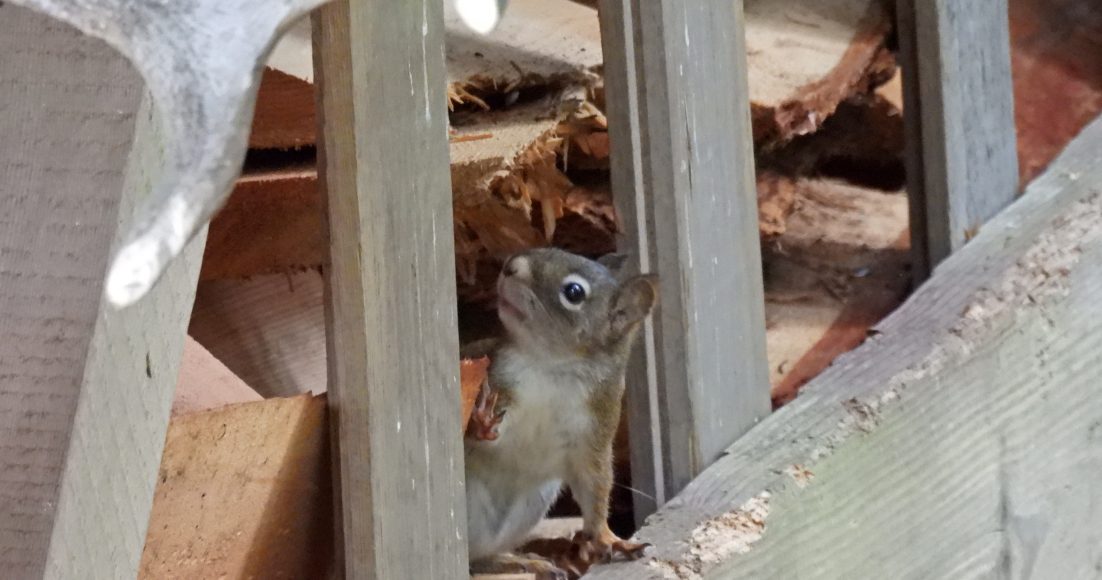
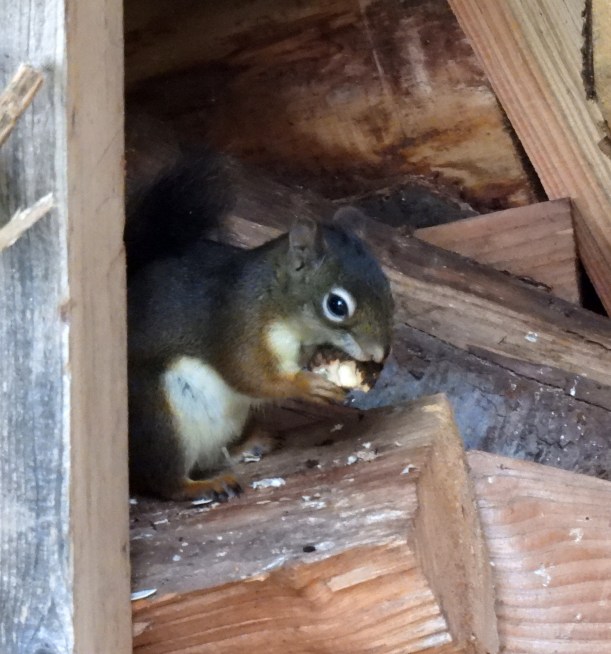
In order to save the squirrels from breaking their teeth, I collect the walnuts, take the husks off them, and crack them a few at a time to put in their food dishes in the woodshed.
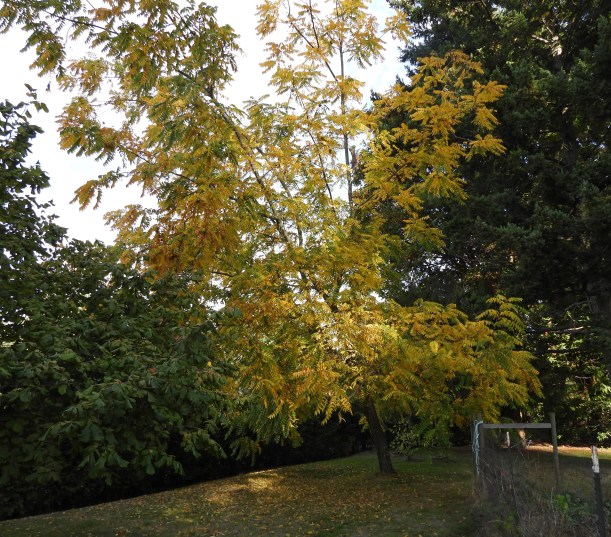
This is what they look like on the tree, encased in a thick green covering.

Below is a picture of the English walnut tree which has the kind of walnuts we are used to eating. Notice that the leaves are quite different from those of the black walnut tree.
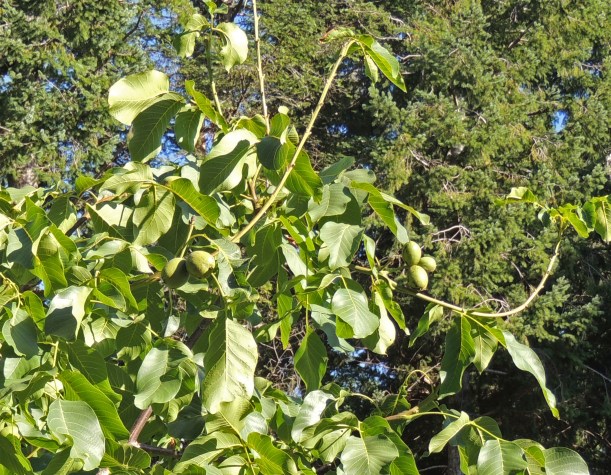
But this day I was dealing with black walnuts. I wore gardening gloves to handle the nuts as I hit them lightly with a short-handled axe to split the husk and stockpile the walnuts in a separate box. Then, I took the axe and whacked each nut harder – much harder – to crack them open so the squirrels could get at the inside and I put some of the cracked nuts in a couple of shallow jars for the squirrels to find in the woodshed. A nutcracker would not open these nutshells. They are so thick and tough!
The squirrels really like them and these nuts are free food for them, so everyone is happy.
The birds have found out about them and wait for the supply to be freshened up daily too.

But what a surprise I had when I went into the house to get cleaned up. I mentioned that I wore gardening gloves. Still the stain from the walnut husks went right through the gloves and now I have hands that look like those of a heavy smoker. And it doesn’t wash off!
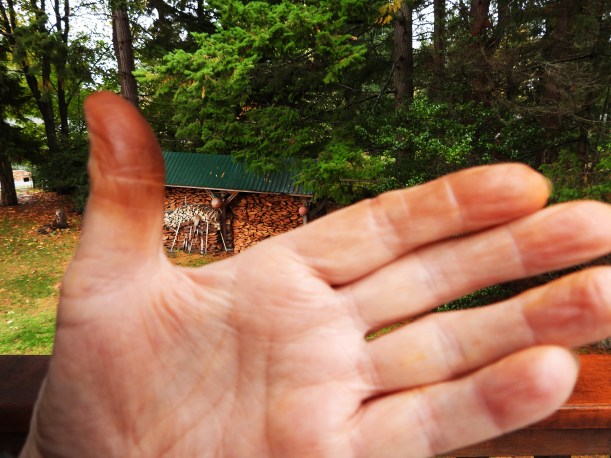
So if you want to dye some furniture, just grow some black walnuts and you can do your own furniture restoration.


 wordsfromanneli