wordsfromanneli

Thoughts, ideas, photos, and stories.


26 Comments

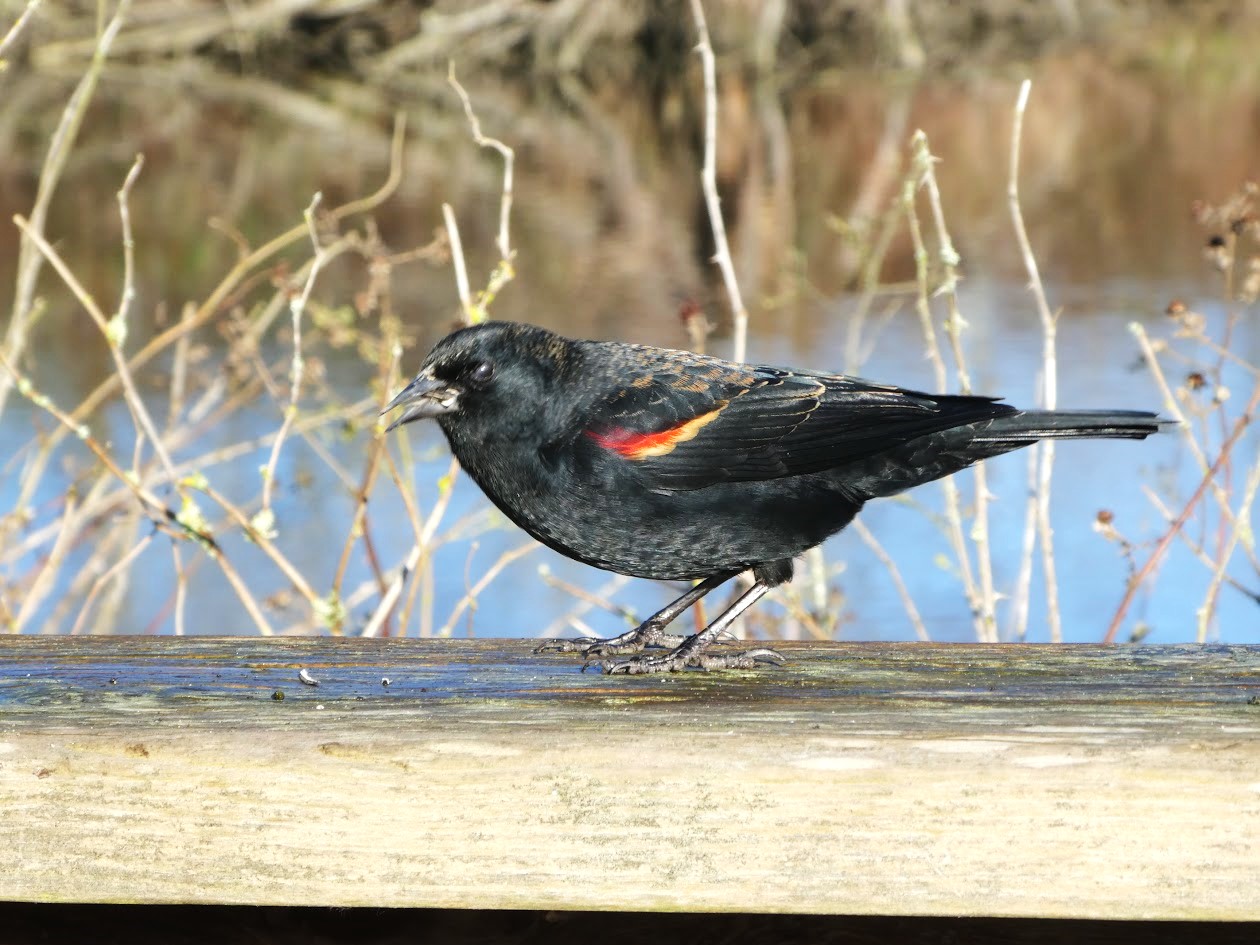
Red-winged Blackbird


Such a simple and obvious name! Why couldn’t I have a more exotic name … maybe like “red slasher” or “the marsh king”?

Oh well. I show them how smart I am whenever a trout fisherman comes to my lake.  I hide in the cat tails and tell them what gear to use. For example, I think it would be a great idea to use a purple leader at the end of the flyline to blend in better with the water. So I call to them, “PurpleLEEEEEEADer. PurpleLEEEEEEADer.”

Nobody seems to listen though, so I just carry on with my own business of picking at the grass seeds. Mostly, I like plants, especially their seeds, but I do like a bit of meat with my granola. I’m not a picky eater. I like dragonflies, damselflies, butterflies, moths, spiders, snails, worms, frogs, eggs, and mollusks. Told you I wasn’t fussy.

So if you ever think I would be tasty in that proverbial pie, with three and twenty of my other blackbird friends, just remember what I’ve been eating and I’m sure you’ll have another think about it.

BTW, it was Sonia who took my picture at the Reifel Migratory Bird Sanctuary.


This print is on Anneli’s wall because she loves me so much. Too bad she doesn’t know how to take a photos without all those reflections. But it’s the thought that counts.


16 Comments

Shoveler

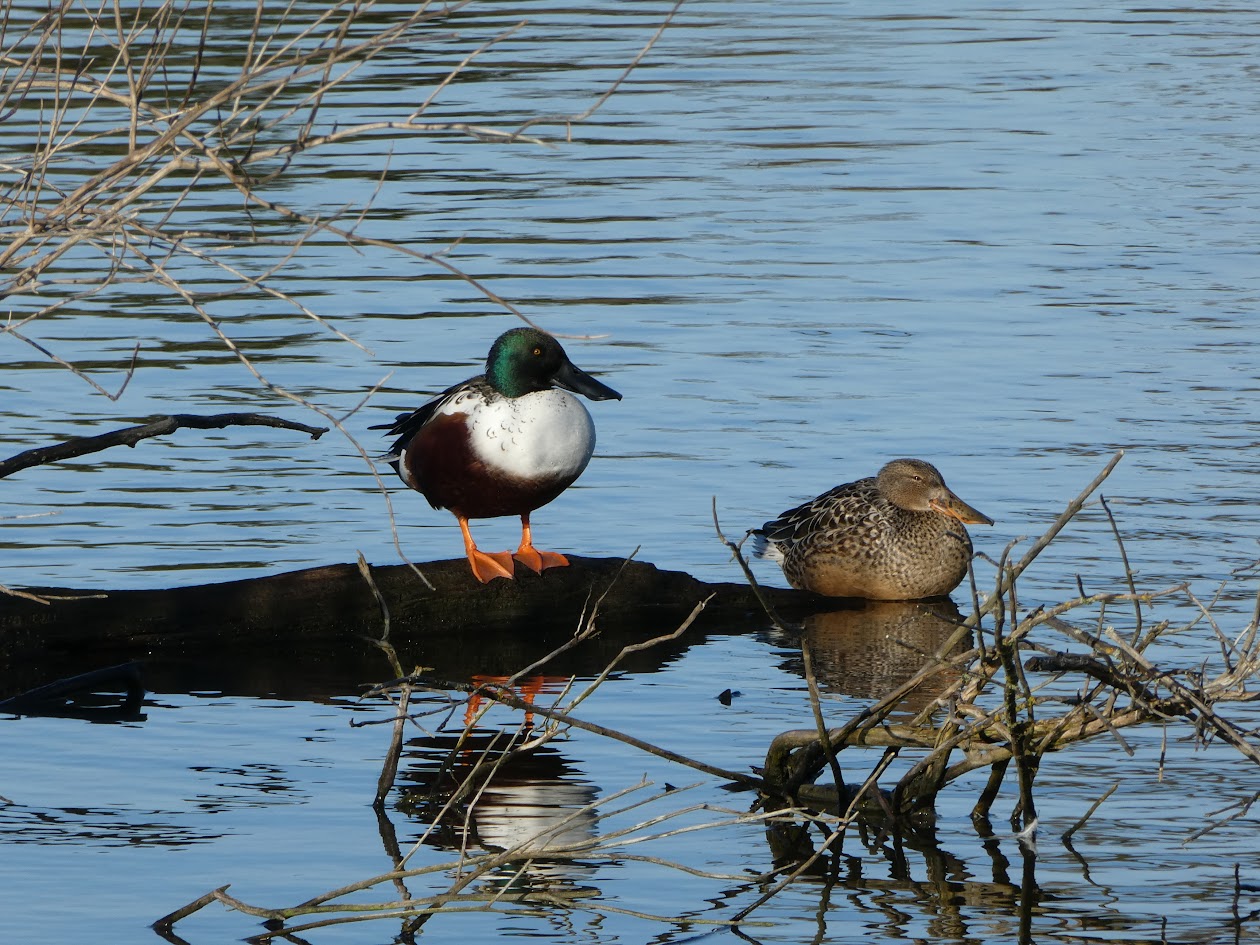
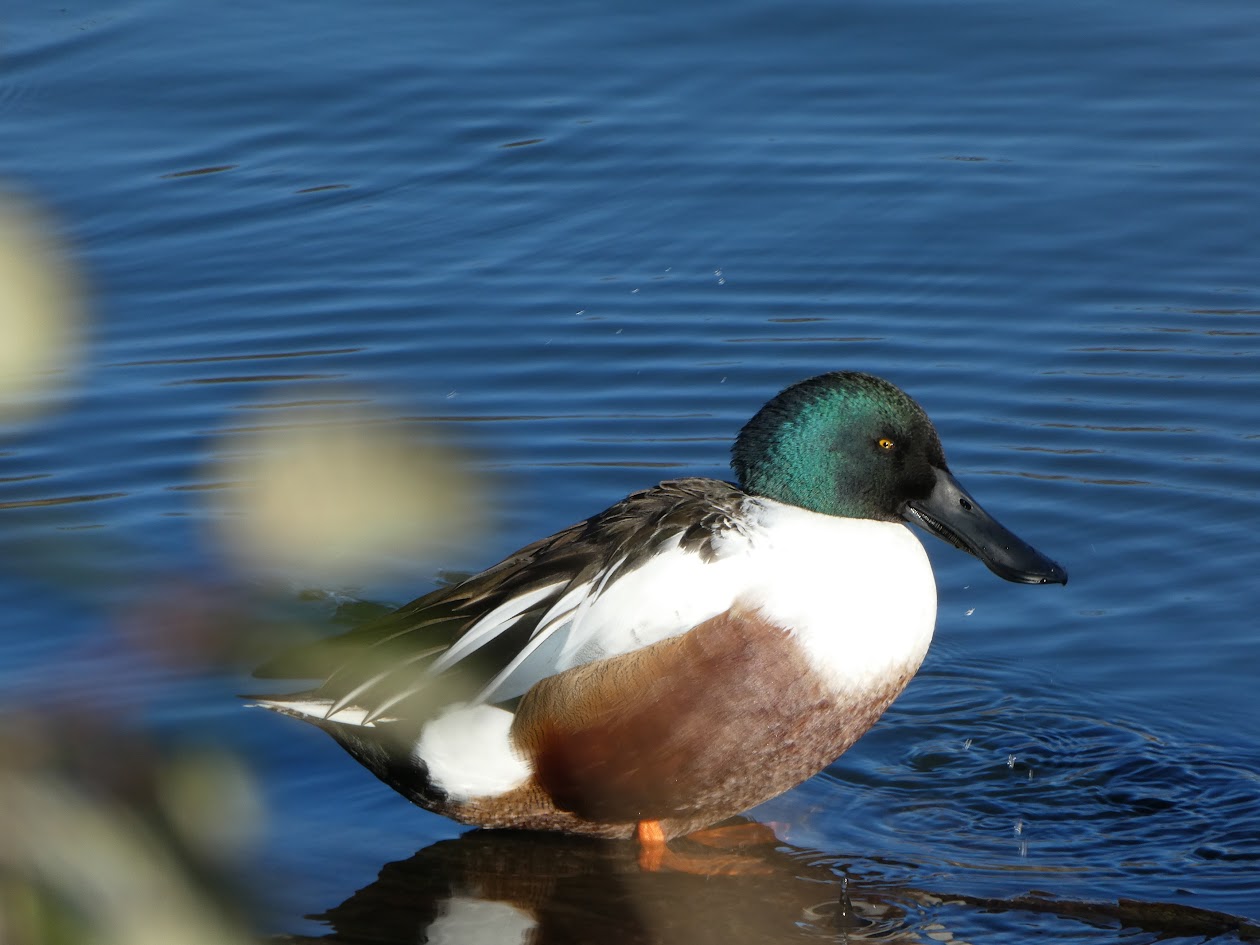
Northern shovelers (Spatula clypeata), named for their shovel-shaped bills, like to find food in the shallow waters and soft, muddy bottoms of marshes.  Swishing their wide shovel-like bills back and forth, these ducks slurp up seeds, crustaceans, and aquatic invertebrates, and then sieve their food through the comb-like edges of their bill. If you can enlarge the second photo, you can see some of the 110 fine projections called lamellae that help to sift out the food as if straining it through a colander.

In this first photo, you can see flashy Mr. Shoveler with his drab Missus. She is smart not to be so flashy as she is the one who has to keep their eggs warm at nesting time. It’s best to stay camouflaged while guarding a nest.

I read an interesting anecdote on the site by the Cornell Lab about Mrs. Shoveler’s outlandish behaviour. When she is forced off her nest by a predator, she does her best to make the eggs in her nest unpalatable for the predator by pooping on them before she flees. I was skeptical about this and want to add that possibly, the researcher who came to this conclusion failed to recognize that possibly the mother bird was so scared by the predator that nature simply took its course  as she fled the nest. Something to think about … or perhaps rather not.

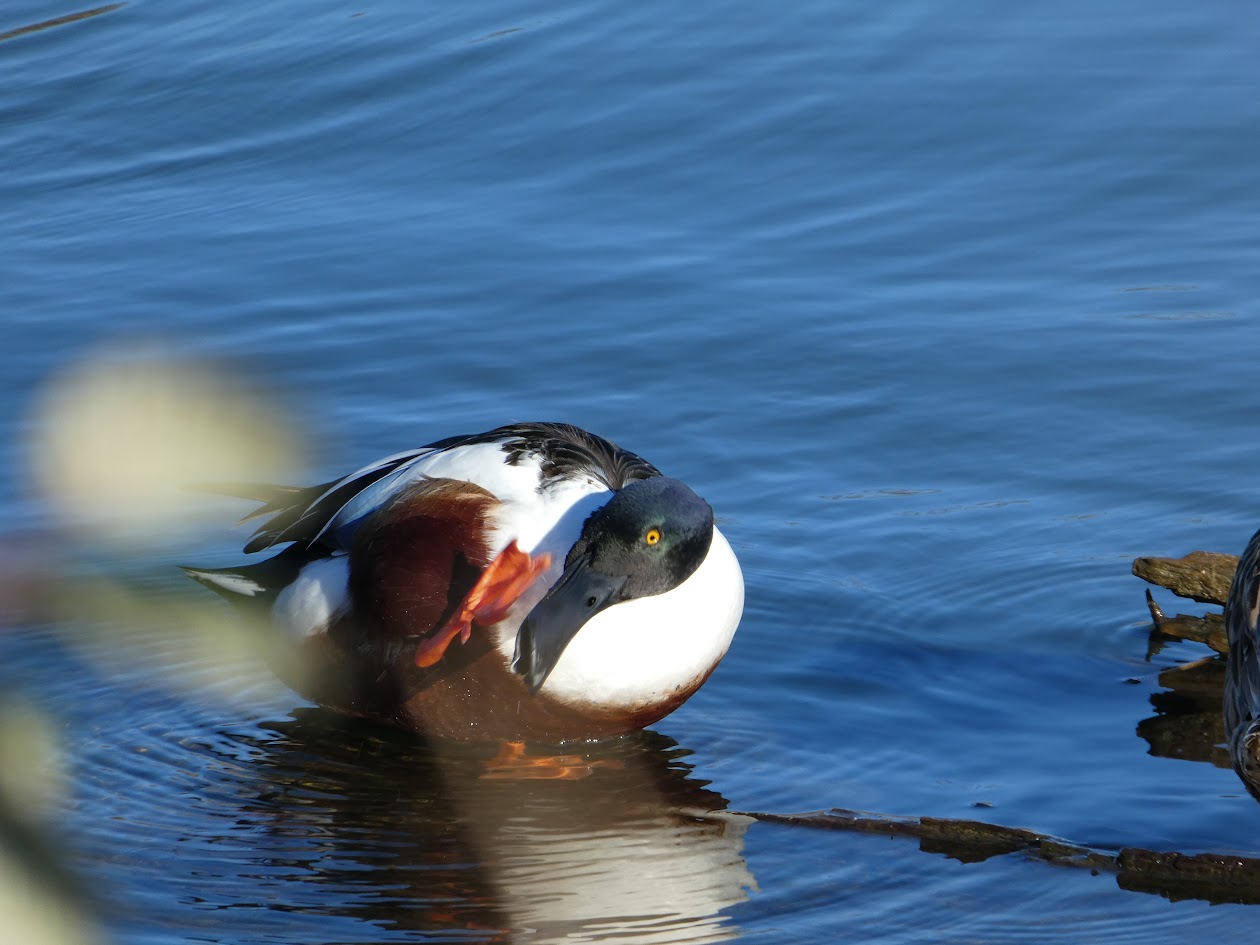
Can’t you just see Mr. Shoveler chuckling about that in the photo below?

“Excuse me while I scratch my itchy chin.”

So that’s the “scoop” from the shovelers.

Again, photo credits to my friend Sonia.


24 Comments

Sandhill Cranes

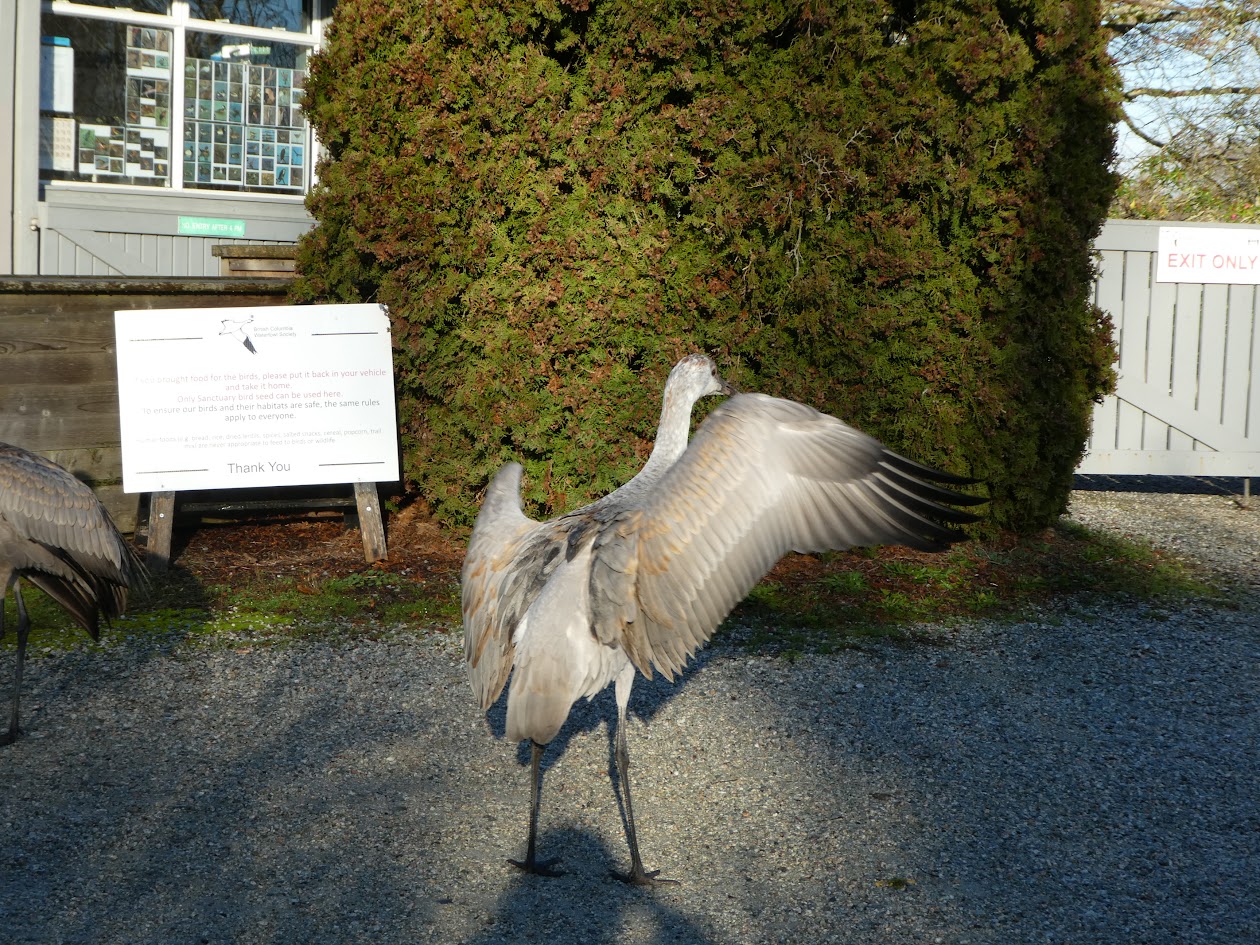
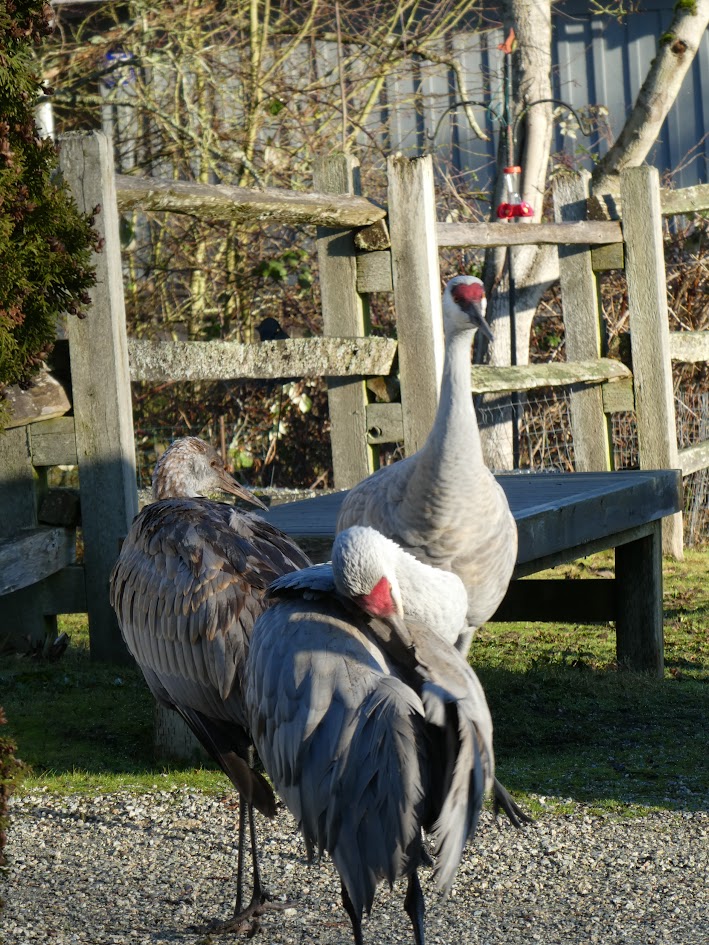
“If you will look in the direction I am pointing,” says Dr.  Crane, “you will see that there is a birdfeeder hanging  in a shrub. That is meant for the tiny hummingbirds; not for us big galoots. So please try to leave it alone.”

“I see that. It’s just past my head to the right.”

“It’s not for us,” says Sandy. “I’m going to keep preening my feathers so I won’t be tempted.”

“Maybe I’ll check it out later,” mutters Junior, “when Ma and Pa aren’t looking.”

“What a silly family,” the lovebirds say. “Don’t they know it’s just full of sugar water. We don’t eat that!”

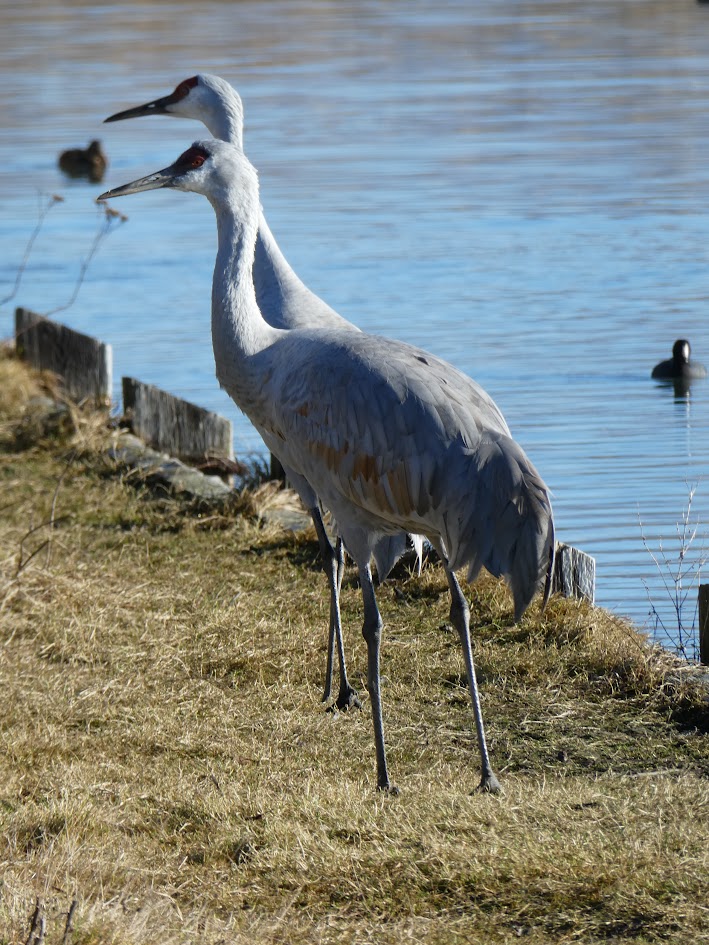
The above three photos were taken by Sonia at the Reifel  Migratory Bird Sanctuary.

The sandhill cranes below, could very well be cousins of the ones above.

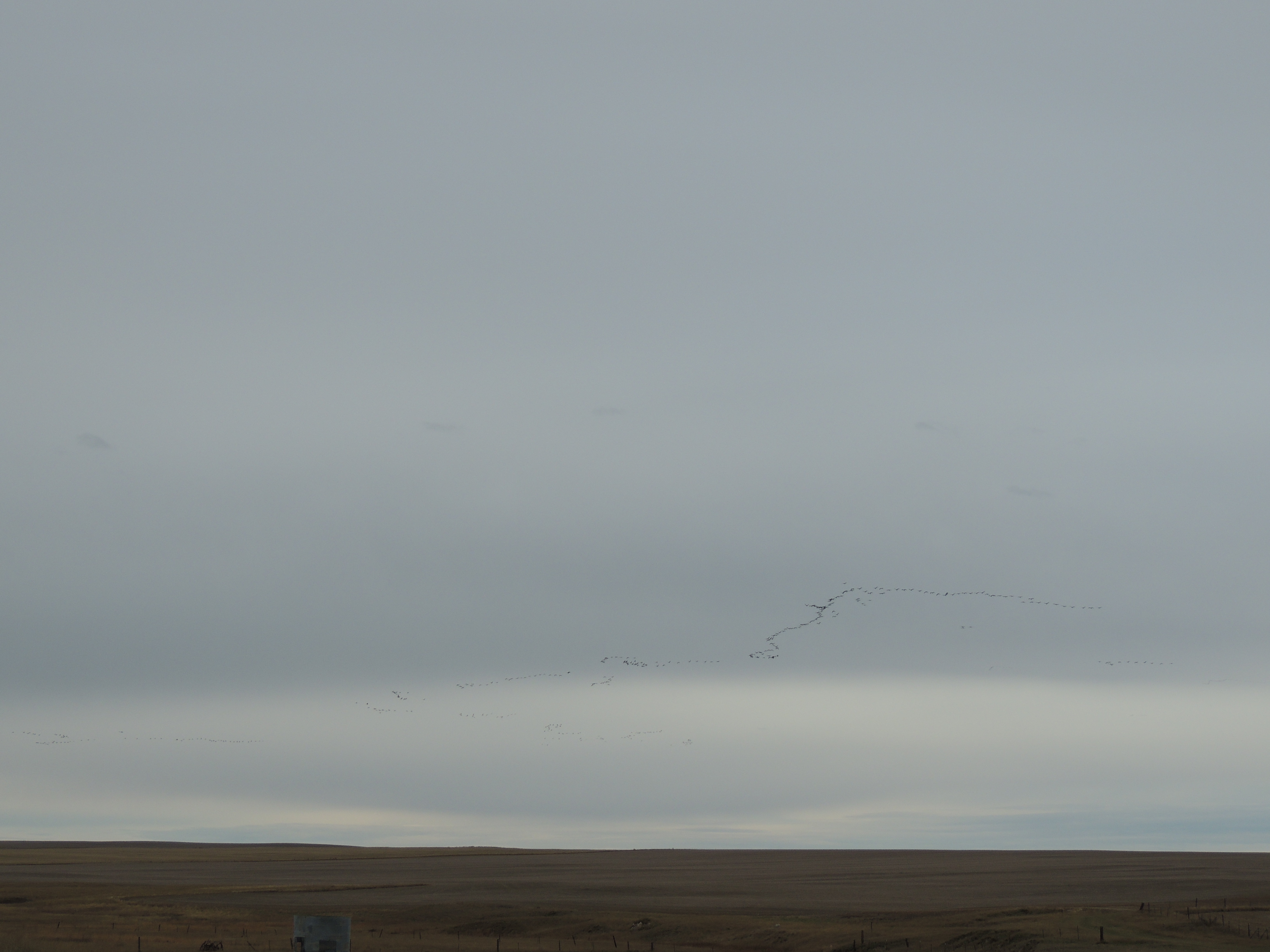
I saw these flying over Montana in the fall a few years ago, on their way south to warmer fields for feeding on grains and plant matter, and possibly snatching up the odd frog or other small animals.

They have to beware of ravens, crows, coyotes, and owls, but sometimes these would-be predators run the risk of being kicked by the cranes’ long legs or speared by their tough, sharp beaks. Even a coyote is not safe from having its skull speared if he is unlucky.

One flock is easier to see, but beyond that one are many more flocks looking like specks of dust in the distance.

Please turn the volume way up loud to hear the sound of sandhill cranes migrating. Unfortunately the first part of the video is not in focus, until I “got it together.” These sandhills were migrating over Montana when I noticed flock after flock after flock flying over. This video is mainly for the sound of the sandhills flying over.


10 Comments

Annie and the Honeydew Man

I posted this about five years ago and came across it again. I thought it was a sweet picture and couldn’t resist reposting it.

When my sisters and brother and I were little, we lived in a newly built, but unfinished house on the edge of town. The streets weren’t even put in place yet. Our road was just a track through a field of yellow grass. But it was perfect for us to play cowboys and gallop our pretend horses around the trails and up and down the hills of dirt that were not yet backfilled to the new house. We pretended to be characters from the western movies of the day — Annie Oakley, Gene Autry, Roy Rogers, and Dale Evans.  But Annie was my favourite.  My sister, maybe almost three years old, was really too little to keep up with us as we tore around on the hills of dirt, so she played Annie Oakley with a toy shotgun and guarded the house while the rest of us were out on the range.

I don’t know what is wrapped around her right hand, and I just noticed for the first time in decades that there is a doll peeking out from behind her left shoulder.

Fast forward to more modern times. When the Captain and I were on one of our trips to Baja California, we stopped to do some shopping in Ensenada. I found a puppet-style doll that I couldn’t live without. She was the Mexican version of Annie Oakley.

What made me even happier, was buying the doll that had to be her partner.  He is pictured here.

The store proprietor told me that this doll represents the hen-pecked husband, the Honeydew man (Honey, do this and Honey, do that), but in Spanish they called this fellow a “mandilon,”  because he is ordered about, and, in the original version of the word, probably wore an apron (a mandil). What woman would not want a mandilon to do things for her? I had to have this doll!

*****

In my novel Orion’s Gift,  Sylvia is all alone in the world. It seems that her life has taken a sudden turn and everything has been going wrong for her. Her husband is all about himself, and would not understand the news she just received in a letter.

She is trying to outrun her problems by escaping what she once thought was a perfect life near San Diego. She leaves everything behind to “run away” to Baja California where she plans to live in her VW van.

Baja seems to be a place for runaways. She meets Kevin at one of the campsites, and although there is an immediate attraction, Kevin has problems of his own.

Sylvia really needs moral support, so I gave her a mascot to lend her strength. Below is a short excerpt from Orion’s Gift, telling about how Sylvia came to adopt Annie.

Excerpt:

In one shop, handmade puppets on strings hung from the ceiling. Each doll had a unique character and, like orphans hoping to be adopted, seemed to call, “Take me with you.” I fell in love with a Mexican Annie Oakley. She held a mini six-gun in each hand and radiated confidence and self-reliance. I paid for her and happily carried her home to my van. I rigged up a spot on the curtain rod behind the seat for Annie to watch over me at night. She’d be my mascot, a reminder that I was strong and could take care of myself.

You can read Sylvia’s story in my novel “Orion’s Gift.”  She’s going to need Annie’s strength to face some of the challenges of being a woman travelling alone in Baja.

The e-book version is marked down to only 99 cents on amazon.com for the next few weeks. 


25 Comments

Pintail Duck

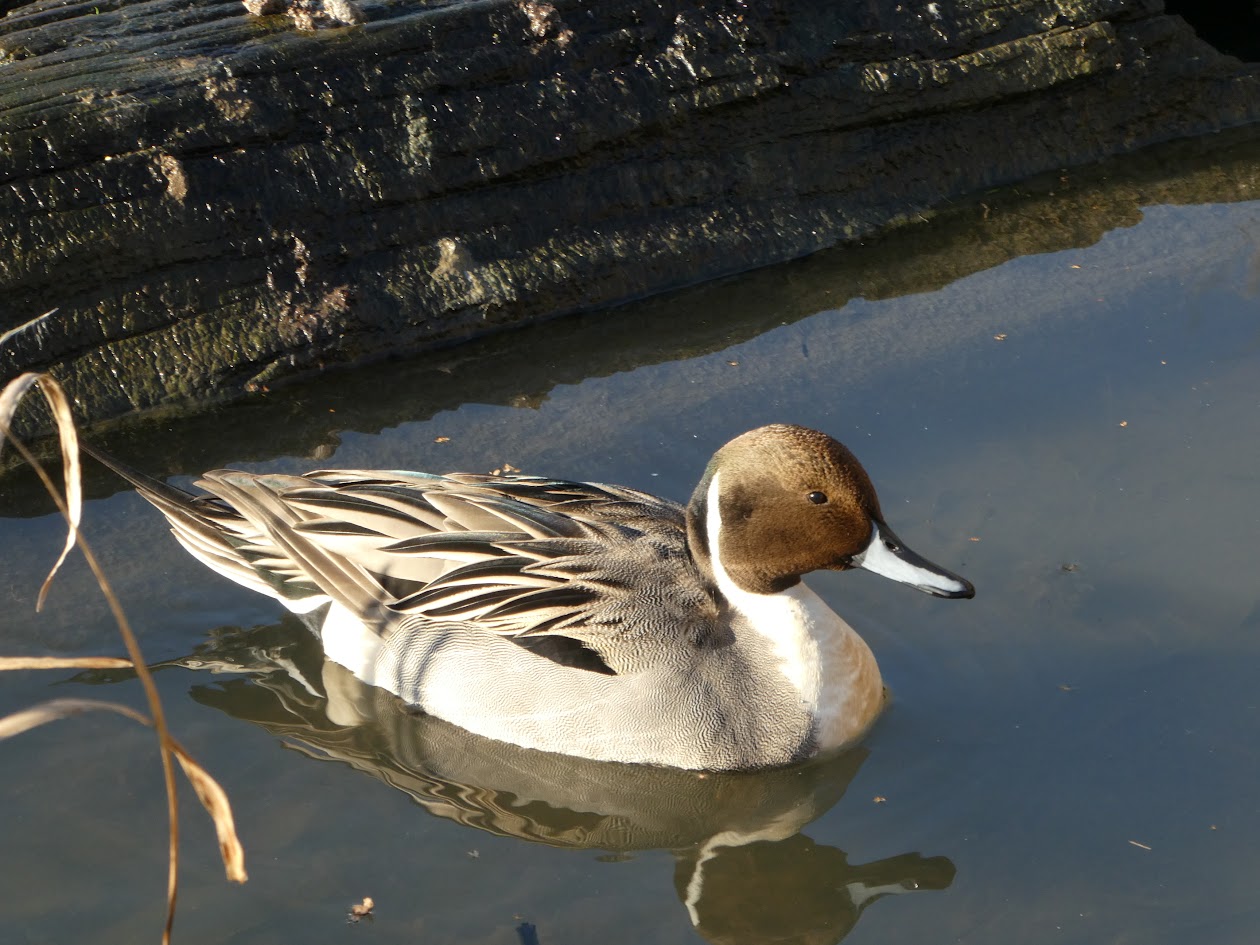
At the George C. Reifel Bird Sanctuary in southwestern BC, you can see may different species of waterfowl and other birds. These photos were taken by a friend, Sonia, who kindly allowed me to use them after her visit to this sanctuary. Many kinds of ducks visit this waterfowl refuge. The pintail (Anas acuta) is one of these.


I grew up thinking that all ducks were yellow when they were little and brown or white when they grew up. It was an eye-opener to me when I learned, a long time ago,  that there were so many kinds of ducks, each with special features that made each type unique and helped to identify them.

The pintail is obviously named for its long pointy tail, as you can see in the last photo, but another special feature of this duck is its long neck. Notice the long streak of white that goes up his neck to the side of his head. This one has his neck pulled in somewhat, perhaps to keep warm, but if it were stretched up to take a good look around, you would see that he has a much longer neck than most other ducks do.

And have you even seen such a beautiful design of feathers as what this duck has on his back?


The pintail tips up in shallow water to reach for plant matter in and above the soil under the water. Its long tail helps to balance it as it forages for seeds and rhizomes. It also finds food on land,  in fields where it eats  roots, grains, and other seeds.  In the nesting season it feeds mostly on aquatic insects, invertebrates, molluscs, and crustaceans.


These photos are of the drake pintail. The hen (female) pintail has a similar shape, without the long pointy tail feathers, and with more muted colours (keeping her safer when nesting).


51 Comments

Did Neanderthals Have Language?

It is my honour and great pleasure to introduce you to Jacqui Murray and her novel, Endangered Species, the first in her latest trilogy in the series called Man vs. Nature. Summaries of the novels in this trilogy may be found near the end of this post.

Who is Jacqui Murray?

Jacqui Murray is the author of the popular prehistoric fiction saga, Man vs. Nature which explores seminal events in man’s evolution one trilogy at a time. She is also author of the Rowe-Delamagente thrillers and Building a Midshipman , the story of her daughter’s journey from high school to United States Naval Academy. Her non-fiction accomplishments include 100+ books on tech into education, as well as reviews as an Amazon Vine Voice , and articles as a freelance journalist on tech ed topics.

*****

While reading about the Neanderthal tribes in this trilogy, it is natural to wonder about some things regarding how these primitive people lived. Here is a question many readers have about the people of those long ago times. Jacqui Murray explains the answers based on her extensive research of the topic.

Did Neanderthals Have a Language?

Language, like so much about Neanderthal culture and lifestyle, didn’t preserve over the four-hundred thousand years of their existence. The best we can do is extrapolate what might be based on what we do find.

Three questions dominate the discussion of whether Neanderthals had a language:

  • Could they speak?
  • Did they speak?
  • Could they write a language?

Could they speak?

Yes. They had the physical ability to speak.

First: The Neanderthal hyoid was indistinguishable from ours so there is no reason to think it wasn’t used exactly in the same way as ours. Their voice box was higher in the throat than ours, which could mean their voices were higher pitched, but it would have no impact on their ability to speak.

Second: Their chests were large. They could control their breath in the same way we do, which is a requirement of speaking.

Third: Their ears were attuned to human speech, as are ours, which meant vocal sounds were important. I won’t try to explain the physiological details of that, but it is documented scientifically by paleoanthropologists. You can dig into that topic if you like–it’s pretty interesting.

Because of all this, there is every reason to believe Neanderthals could speak.

Did they speak?

So, physiologically, they could speak, but did they? Two details to consider with this question:

First: The types of tasks Neanderthals accomplished were complex–turning bark or pitch into glue, hardening spear tips in fire and not burning them, hunting in a group. These were accomplished best by talking to each other and planning. Rebecca Wragg Sykes, author of the acclaimed Kindred: Neanderthal, Life, Love, Death, and Art goes so far as to assume these sophisticated tasks couldn’t be accomplished without talking:

“Some kind of vocal communication was a really important everyday part of Neanderthal life.” 

Second: Speaking is noisy. Neanderthals were more likely to want to melt into their environs rather than stand out. Speaking might have been less common outside their homebases and more common inside.

Could they write a language?

I’ll stipulate that writing as we know it was well beyond their cerebral toolkit, but they were playing with its elements. Shapes and geometric figures that have no basis in nature are found throughout Neanderthal habitats. To take this a step further, the same 32 geometric designs–lines, rectangles, ovals, dots, triangles, circles–occur in caves and on rock walls throughout Europe over tens of thousands of years, many at a time when only Neanderthals inhabited the caves.
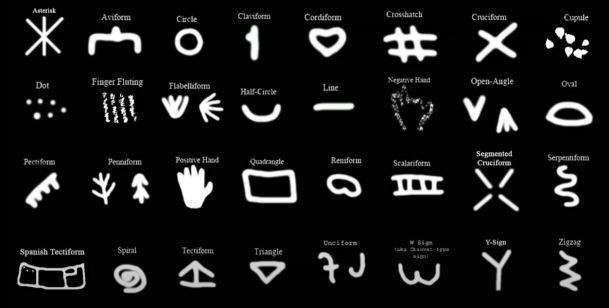
Called art by some experts, but “graphic symbols with meaning” by others, these predate common cave art that includes animals and spears and human activities. These symbols (handprint aside) appear nowhere except in the mind of the creators. Whether they were for writing or art or something else, we don’t know, but they are curious. In my trilogy, Savage Land, I propose that they were used by Neanderthal tribes to share information with other tribes about the area. Because Neanderthals were nomadic by nature and shared their caves with whoever was passing through, this could make sense.

*****

Savage Land is the third prehistoric man trilogy in the series, Man vs. Nature. Written in the spirit of Jean Auel, Savage Land explores how two bands of humans survived one of the worst natural disasters in Earth’s history, when volcanic eruptions darkened the sky, massive tsunamis crossed the ocean in crushing waves, and raging fires burned the land. Each tribe starring in the story considered themselves apex predators. Neither was. That crown belonged to Nature and she was intent on washing the blight of man from her face.


In Endangered Species, Book One of the trilogy, Yu’ung’s Neanderthal tribe must join with Fierce’s Tall Ones—a Homo sapiens tribe–on a cross-continent journey that starts in the Siberian Mountains. The goal: a new homeland far from the devastation caused by the worst volcanic eruption ever experienced by Man. How they collaborate despite their instinctive distrust could end the journey before it starts or forge new relationships that will serve both well in the future.


In Badlands, Book Two, the tribes must split up, each independently crossing what nature has turned into a wasteland. They struggle against starvation, thirst, and desperate enemies more feral than human. If they quit — or worse, lose — they will never reunite with their groups or escape the most deadly natural disaster ever faced by our kind.

 Join me in this three-book fictional exploration of Neanderthals. Be ready for a world nothing like what you thought it would be, filled with clever minds, brilliant acts, and innovative solutions to potentially life-ending problems, all based on real events. At the end of this trilogy, you’ll be proud to call Neanderthals family.

Endangered Species – Book 1 of the Savage Land trilogy

Endangered Species trailer: https://youtube/AxBlmays3vE?si=1SMtqDJiLYCRZvB6

Badlands – Coming soon – Book 2 of the Savage Land trilogy
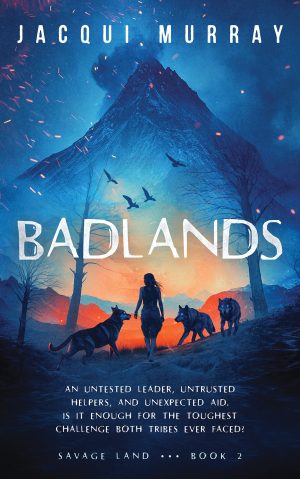
Book information:

Endangered SpeciesPrint, digital, audio available: http://a-fwd.com/asin=B0DJ9Y7PQ8

Badlands—digital on presale now: http://a-fwd.com/asin=B0DFCV5YFT

 Genre: Prehistoric fiction

Editor: Anneli Purchase

32 Comments

The Opportunist

When it’s hard times with cold, wet weather, and not yet warm bug season, birds will take advantage of what’s available and not be too fussy.

See the feeders all refilled,

On this chilly day,

And the suet is replaced,

“Just in time,” I say.


Tastes a bit like greasy bugs,

Though not quite the same,

Filler of the feeding place,

I’m so glad you came.


28 Comments

Great Blue Heron

When I first took this guy’s picture, I thought he had hurt his wing. It looked like he had maybe torn the top of his wing where it folds against his body. But when I looked up other photos of great blue herons, I saw that this is a natural colour on their wings. I was relieved to see it and wished I could have all that time back when I worried over his non-existent “owie.”

Mr. Patience, yes, that’s me,

Quietly I stand,

Waiting ’til the frog I see,

Makes a dash for land.


Then I spear him lightning quick

With my mighty beak,

Savouring his waist so thick,

Tuning out his squeak.