I have been using the alternate spelling of “widgeon” for some time now, but apparently it is considered old-fashioned, so I’ll go back to the “wigeon” (like “pigeon”) spelling.
***** After reading several comments about the spelling of this bird, I’m thinking I should go back to spelling it with the “d,” (widgeon). Oh, deardeardeardeardear. Whattodo?Whattodo?Whattodo?Whattodo?
The American wigeon (Mareca americana) likes small lakes, ponds, and marshes where it dabbles for plant and animal matter, but it also is often found in fields, yanking out small plants by the roots. Their short bills give them good leverage for this and they can decimate newly sprouted grain fields if they get in there to feed on the small shoots.
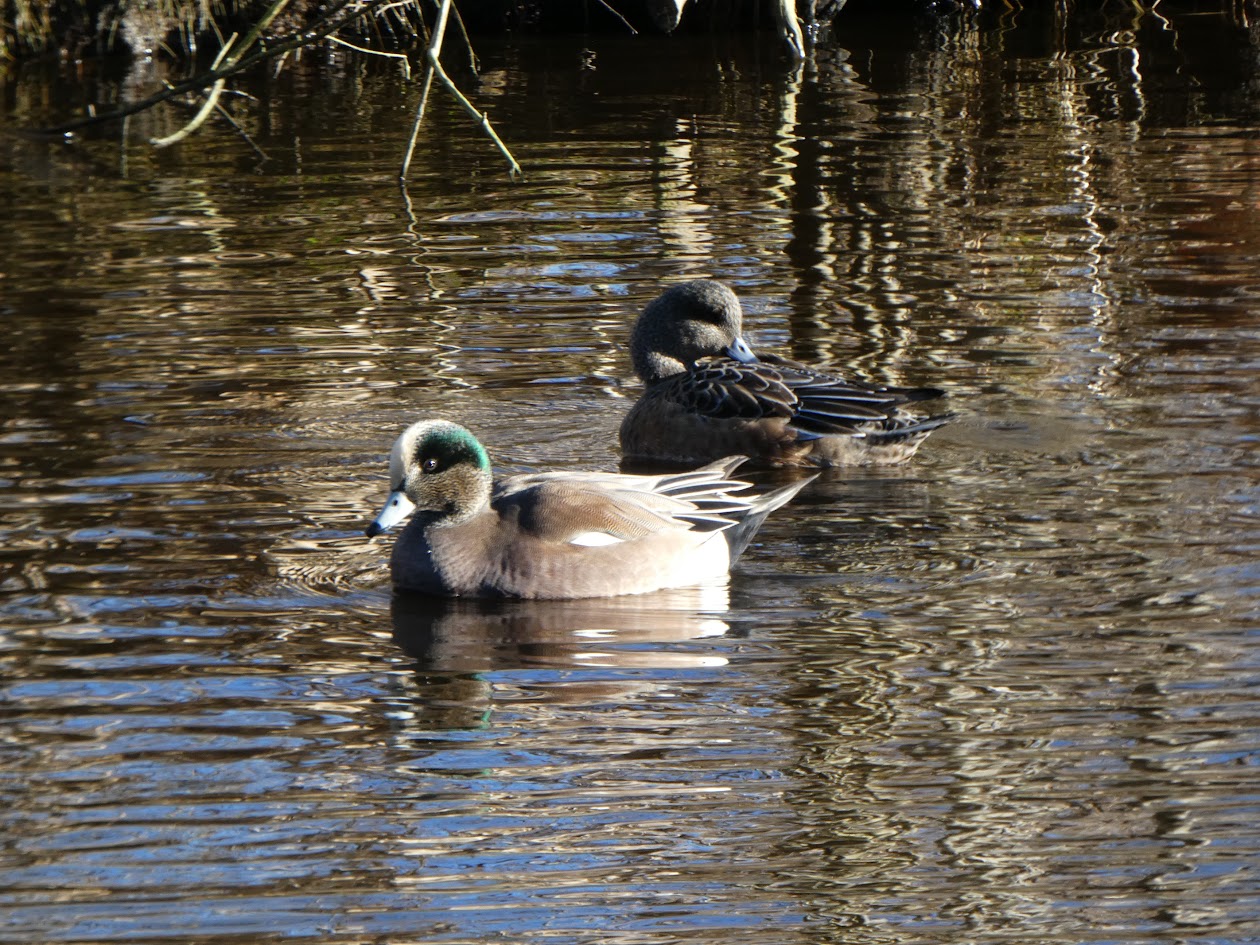
The drake wigeon has a distinctive green stripe on the side and back of his head, but it is the white feathers on top that give him the nickname “baldpate” (because he looks bald at a distance).

Mrs. Wigeon doesn’t mind him looking “bald.”
She says, “God only made so many beautiful heads; on all the others He put hair … er … feathers.”

I think they look quite cute together.
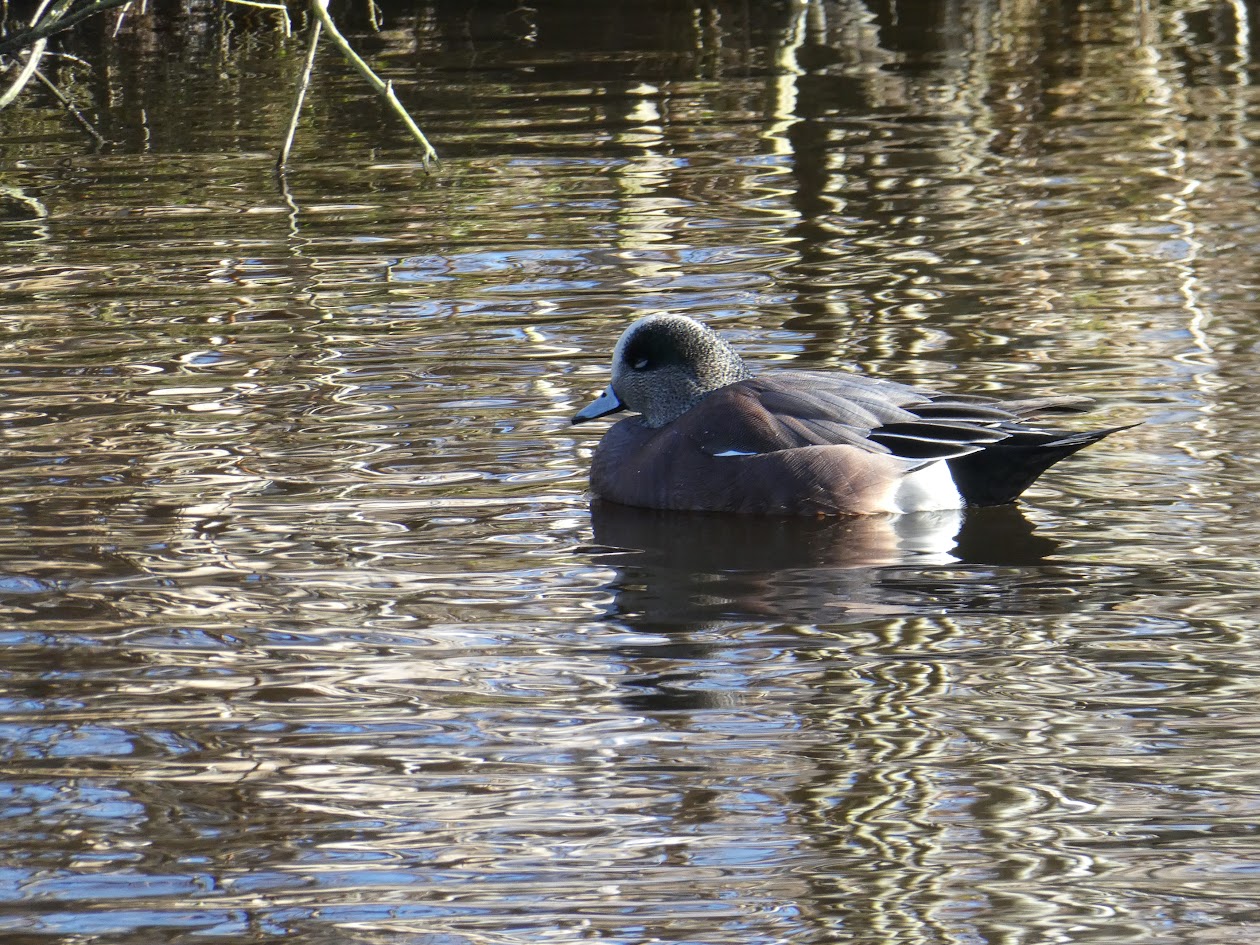
With a bit of shade on his side, Mr. Wigeon’s light rusty colours are more noticeable, and we can more easily see that his bill is a lighter slate blue than Mrs. Wigeon’s is, but both have a black tip on their bill.
Thank you, Sonia, for the photos.
















 wordsfromanneli