
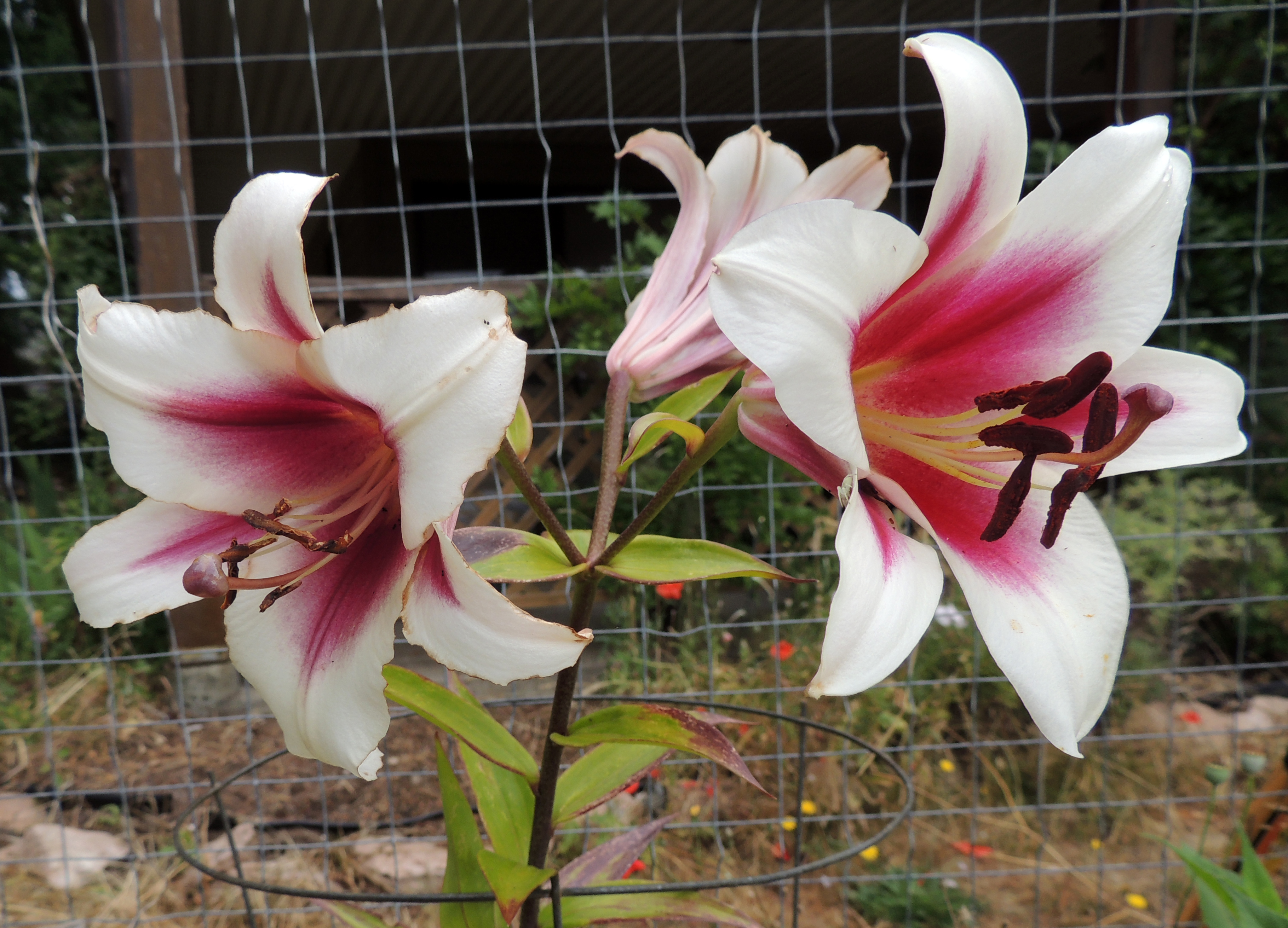
This lily looks a bit like a Himalayan lily, or a lily of Nepal (except the Nepal lily has a slight green tinge to the white parts of the petals).


*Disclaimer: I think hummingbirds are exempt from harm when they drink the nectar. I hope so anyway.
I’m giving myself another challenge for the month of May:
A picture of a bird or a flower with a short poem to go with it.
Don’t expect fancy poetry. It’s just for fun.

An oyster bed near the shoreline is encouraging to see. If you like oysters, be sure you’ve checked your local website for updates on any shellfish contamination that may be happening in your area.

We saw tons of oysters, but our fishing licences only allowed 12 each. That is certainly enough for a meal.

Poor Emma. She ran over these oyster shells and was soon limping along with sore feet from the rough barnacles on the shells.
After that, she preferred to run over pure sand or maybe a clam bed, both of which were easier on her feet.

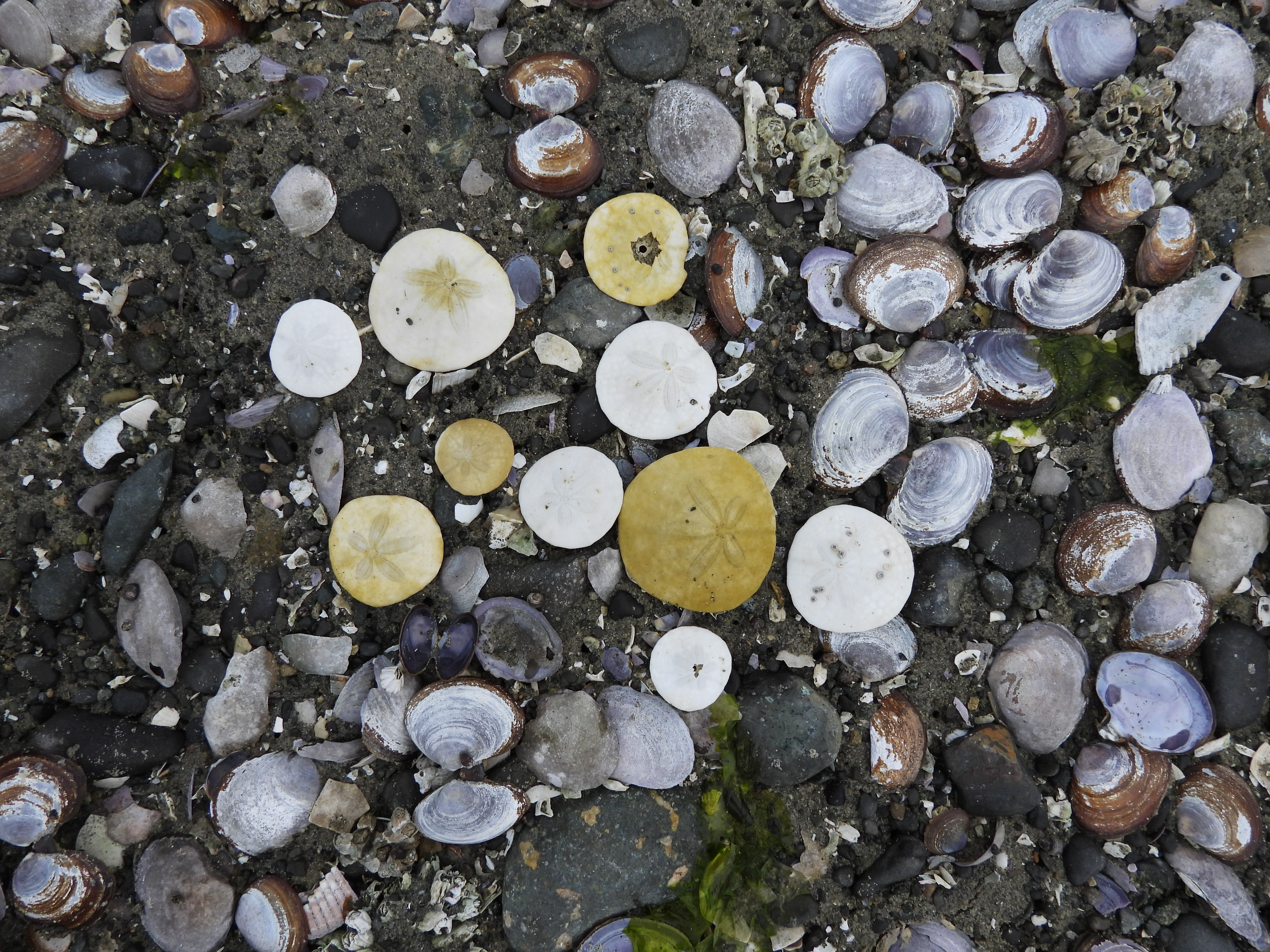
I found a bit of beach money to pay for the clams and oysters. See the sand dollars below? The whiter ones were dead and sun bleached; the yellower ones were probably not feeling well; and the darker purplish brown ones (not pictured) were quite alive. I didn’t get a picture of them because I didn’t find them until later when I figured out that they were a few inches below the surface of the sand.
Emma was interested in a lot of things on the beach. This oyster was by itself, away from the rest and was covered with big barnacles. It seemed out of place here among all the clam shells.

The beach had so much driftwood washed up that it was an endless job for Emma to explore for mice and other little creatures that left their telltale scents on or under the logs.

She finally decided to tackle that big job, one log at a time.
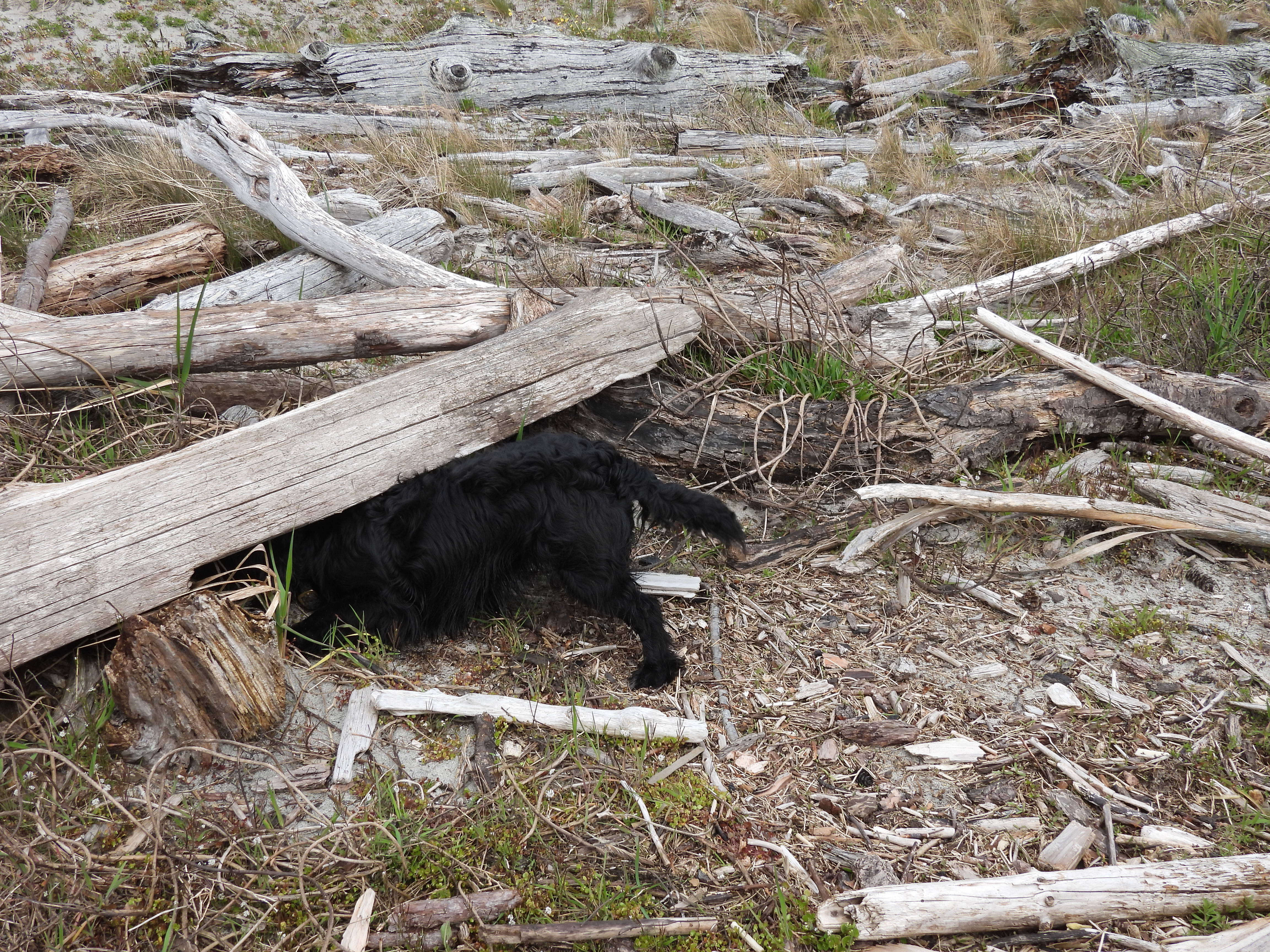 It kept her busy all day.
So much fresh air and a tiny bit of sunshine ensured that we all slept well that night.
Today we spent a few hours on a nearby island beach that sees little use because it is only accessible by boat.
I was surprised to see the sandy fields blooming with tiny wildflowers.

I don’t know the names of all these flowers but the blue ones (below) look like tiny violas. I’m sure they have a proper name but I don’t know what it is. The little white flowers on the reddish stems might be saxifraga.

But this one I know. It is Oregon grape (berberis aquifolium, or holly-leaved barberry). Those yellow flowers turn into blue berries that look like a cluster of tiny grapes. I’ve read that the berries also have many health benefits, but they should be washed before eating. I’ve never enjoyed eating them raw. They are very tarty, but they make an excellent Oregon grape jelly.


Notice the dry moss all around the flowers. Even the moss has tiny blooms. The island has a rather dry climate so it makes its own unique, messy, but very pretty, flower garden.
More flowers will bloom here in the next weeks. I recognized leaves of lupins, and many other new shoots from various plants coming up from last year’s stock that has gone to seed.
As I’ve mentioned before, my mother had trouble learning the English name for daffodils when we first came to Canada a very long time ago. She had heard of Daffy Duck because we children used to listen to a Saturday radio show called Kiddies’ Corner and they often played stories about Daffy Duck.
She also knew what dolls were, of course, because my little sisters had to have their dolls.
So the best she could do to get her tongue around the word “daffodils” was “daffy dolls.” My mother has been gone for 43 years already, but I can’t help thinking of her every year when my “daffydolls” bloom, usually in the same month when she died so long ago.
These flowers bring me happy thoughts of her wonderful sense of humour and her sunny disposition. She loved gardening and would be pleased to see daffydolls in my yard. I wish she could see them. But who knows? Maybe she can.

 wordsfromanneli