
wordsfromanneli

Thoughts, ideas, photos, and stories.


52 Comments

Not so Grisly Grizzlies

If you’re lucky enough to have a boat and can travel up Canada’s west coast, when you get close to the US (Alaska) border, you may find yourself near the Khutzeymateen Inlet, behind Somerville Island. You would then be in grizzly country. A few years ago,  a friend anchored in this inlet and saw some of these wonderful bears on the beach nearby. He took these photos and I am posting them with his permission. Farther up the inlet, south of the Kateen River, is an area that, in 1994, was declared the Khutzeymateen Grizzly Bear Sanctuary.


This might not be the best place to go ashore to stretch your legs.
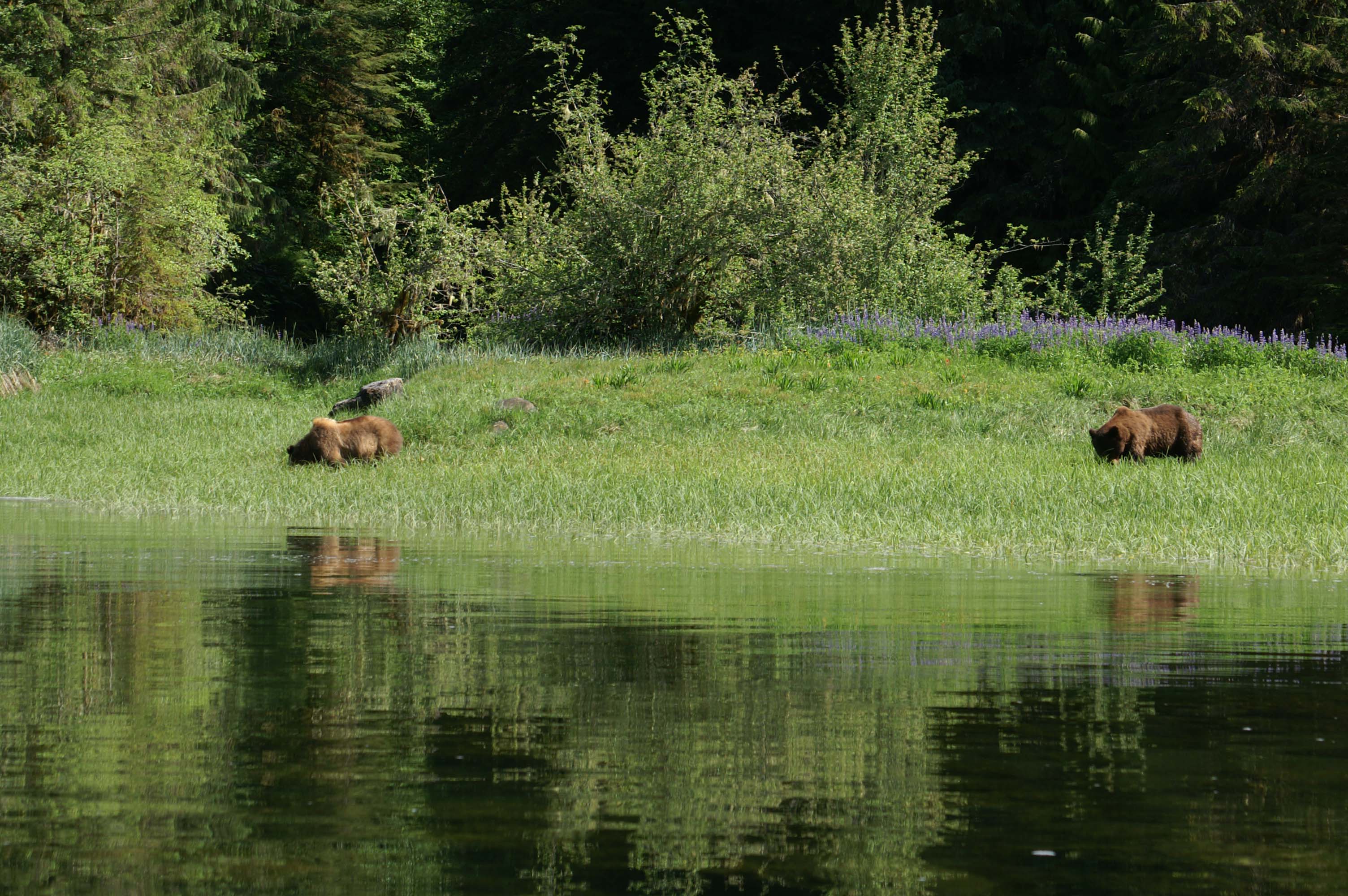
In case you were in doubt about what kind of bear this is, check out the hump on his (or her) back that identifies him (or her) as a grizzly. And no, he/she’s not a camel.
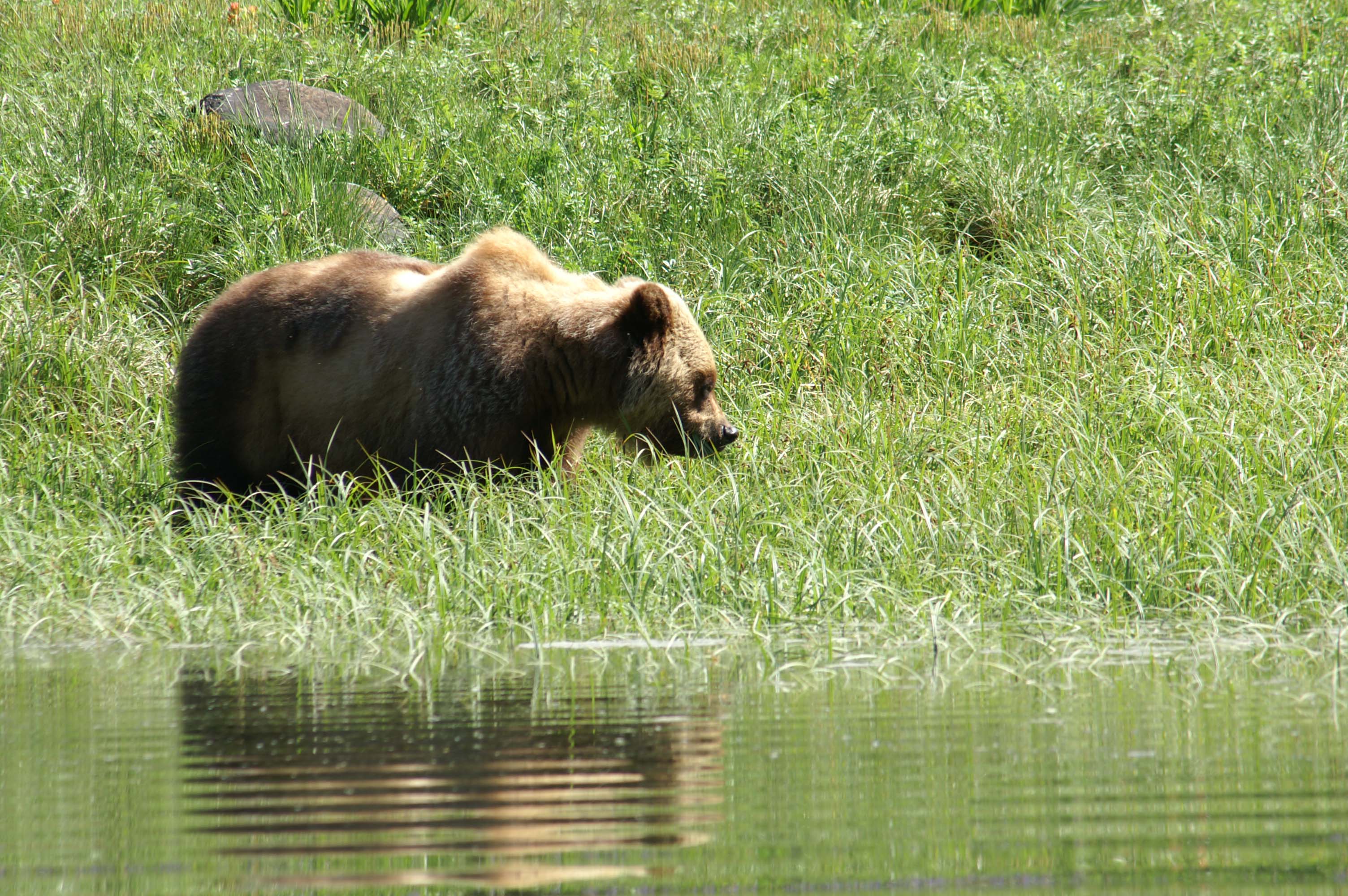
 

Camel, you say? Come over here and say that! Bruno, did you hear what he said? Just because my back has a hump….
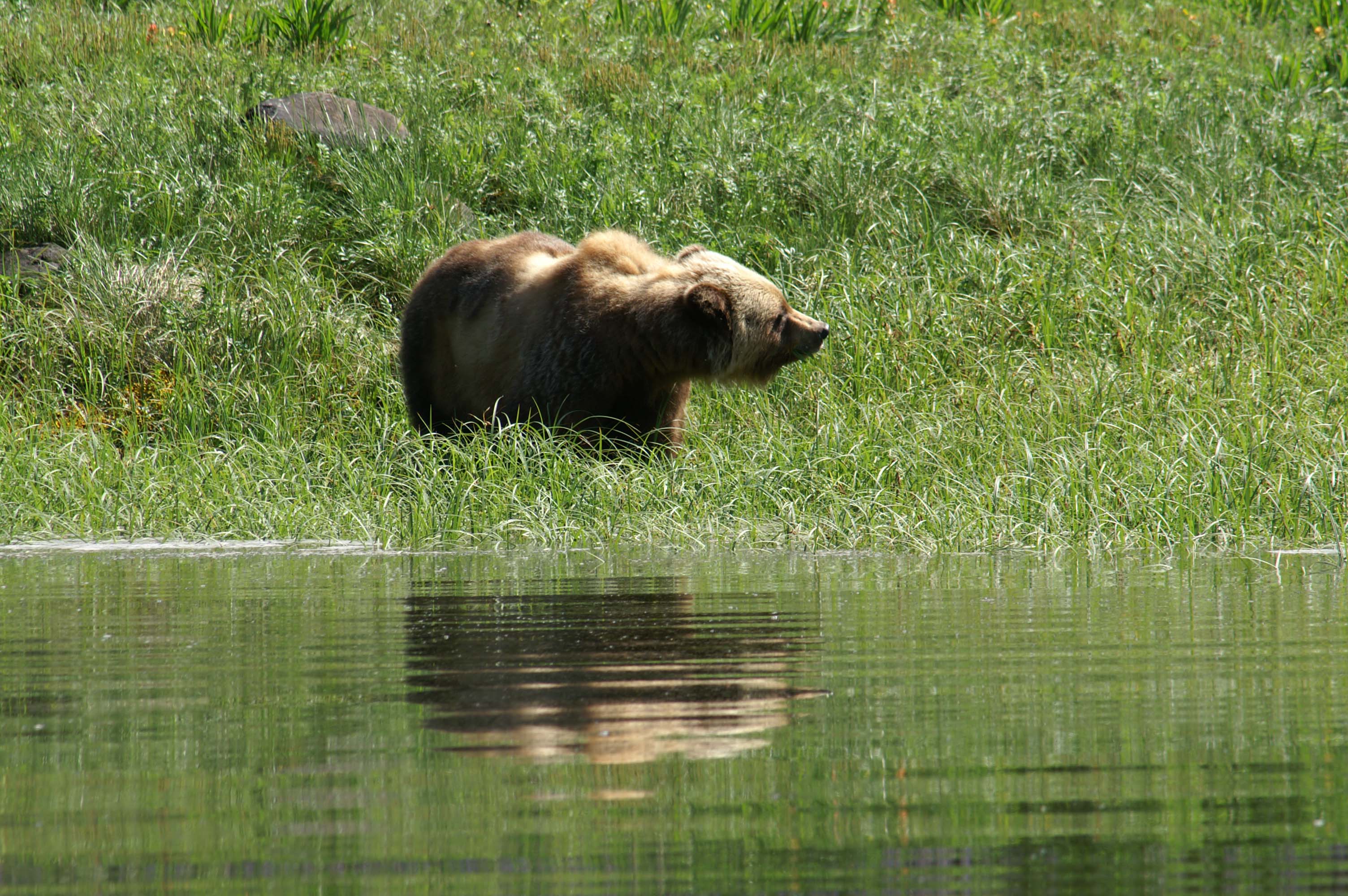
Yeah! I heard. You’re no camel. I’ll “back” you up on that, Honey. Get it? Get it? Ha ha … “back” you up? Although … that is quite a hump you have there.
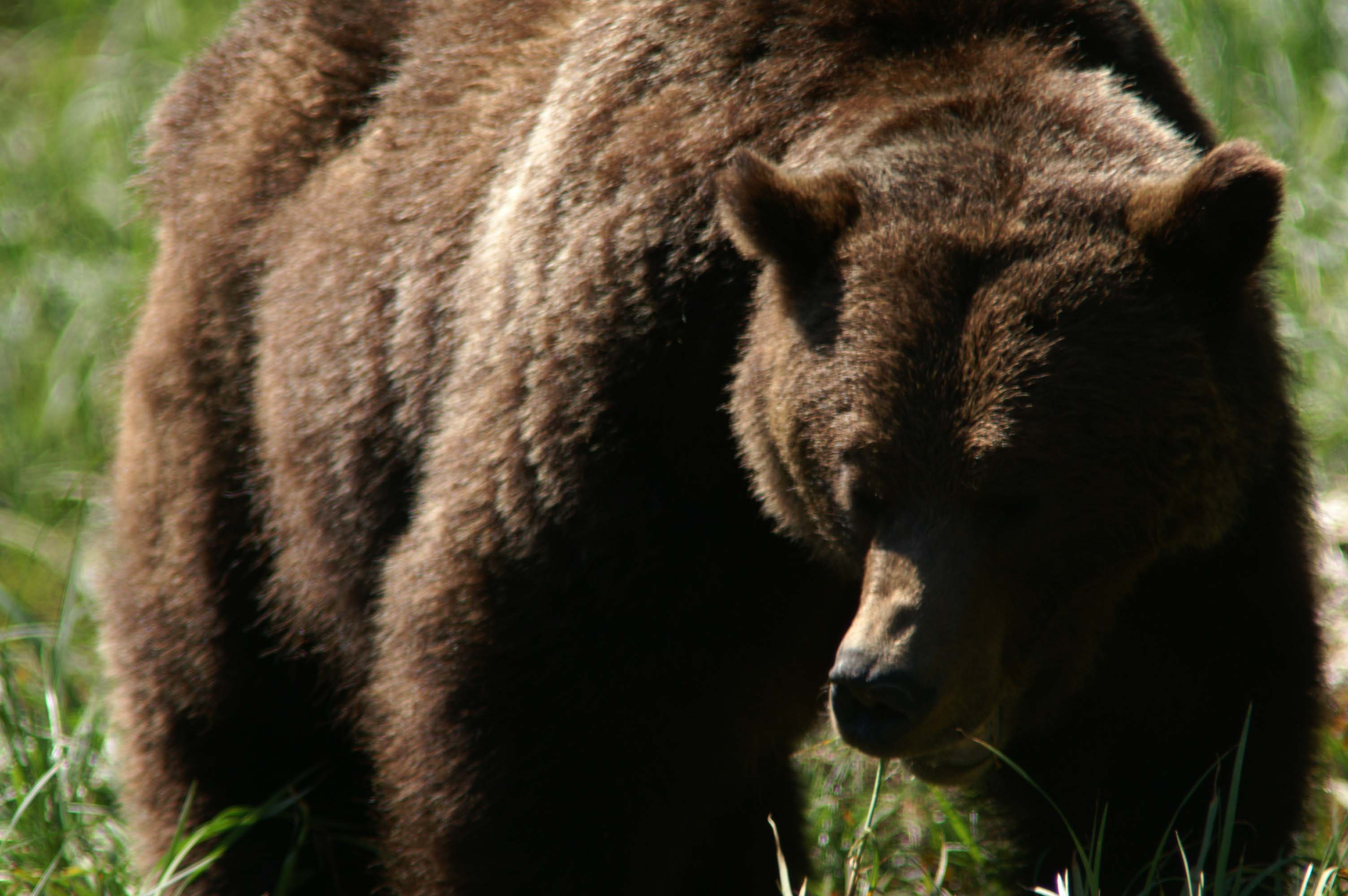
Now that’s enough out of you. You shouldn’t forget who your friends are. I might have to swim over to that boat and climb aboard to teach that guy a lesson.
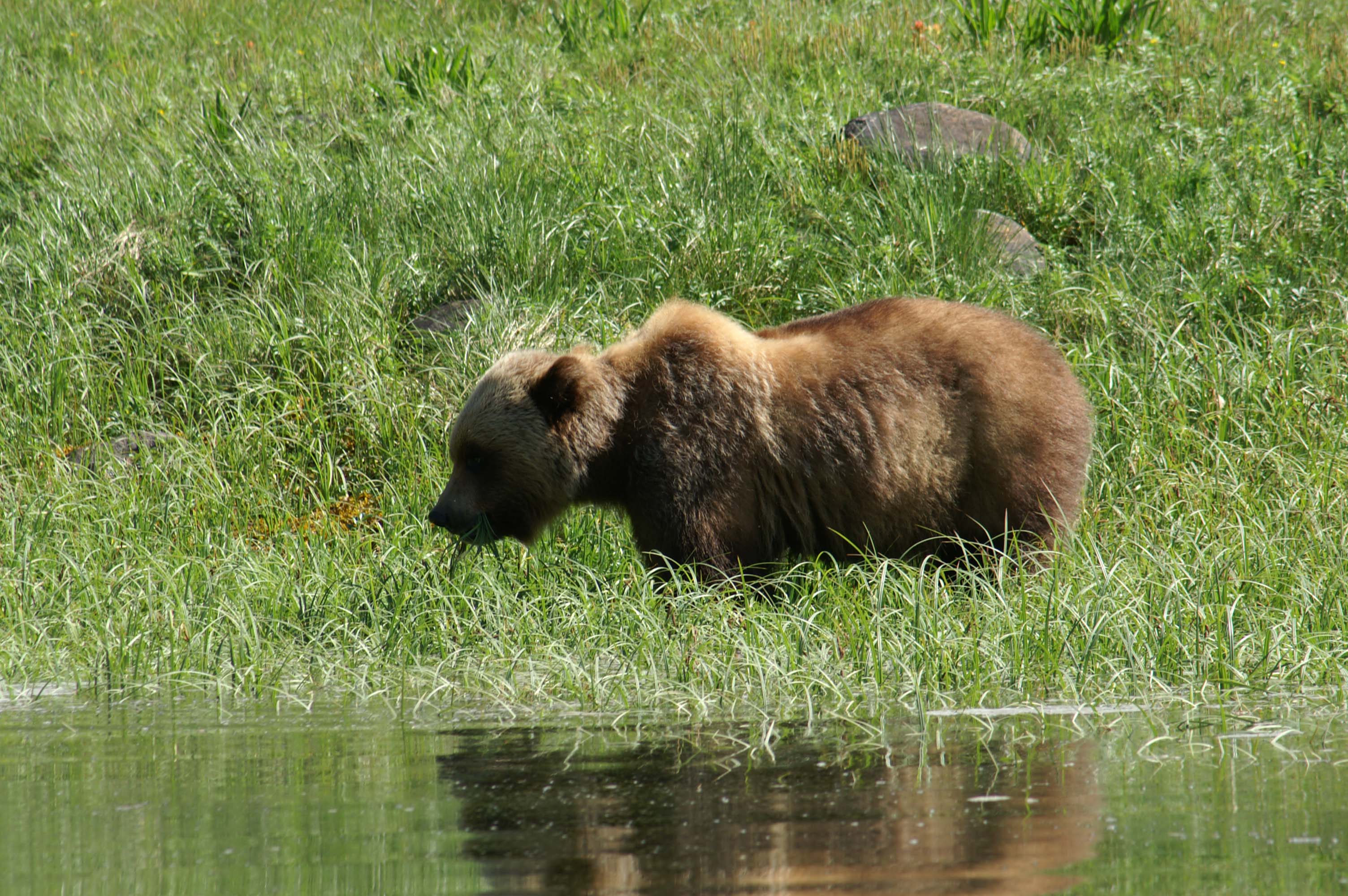
It’s okay, Honey. Calm down. He’s just another gawking human. I’ll keep an eye on him from here while I eat some salad.  Hmm … I wouldn’t mind a bit of hamburger with my grass.  But I don’t see him coming ashore any time soon.
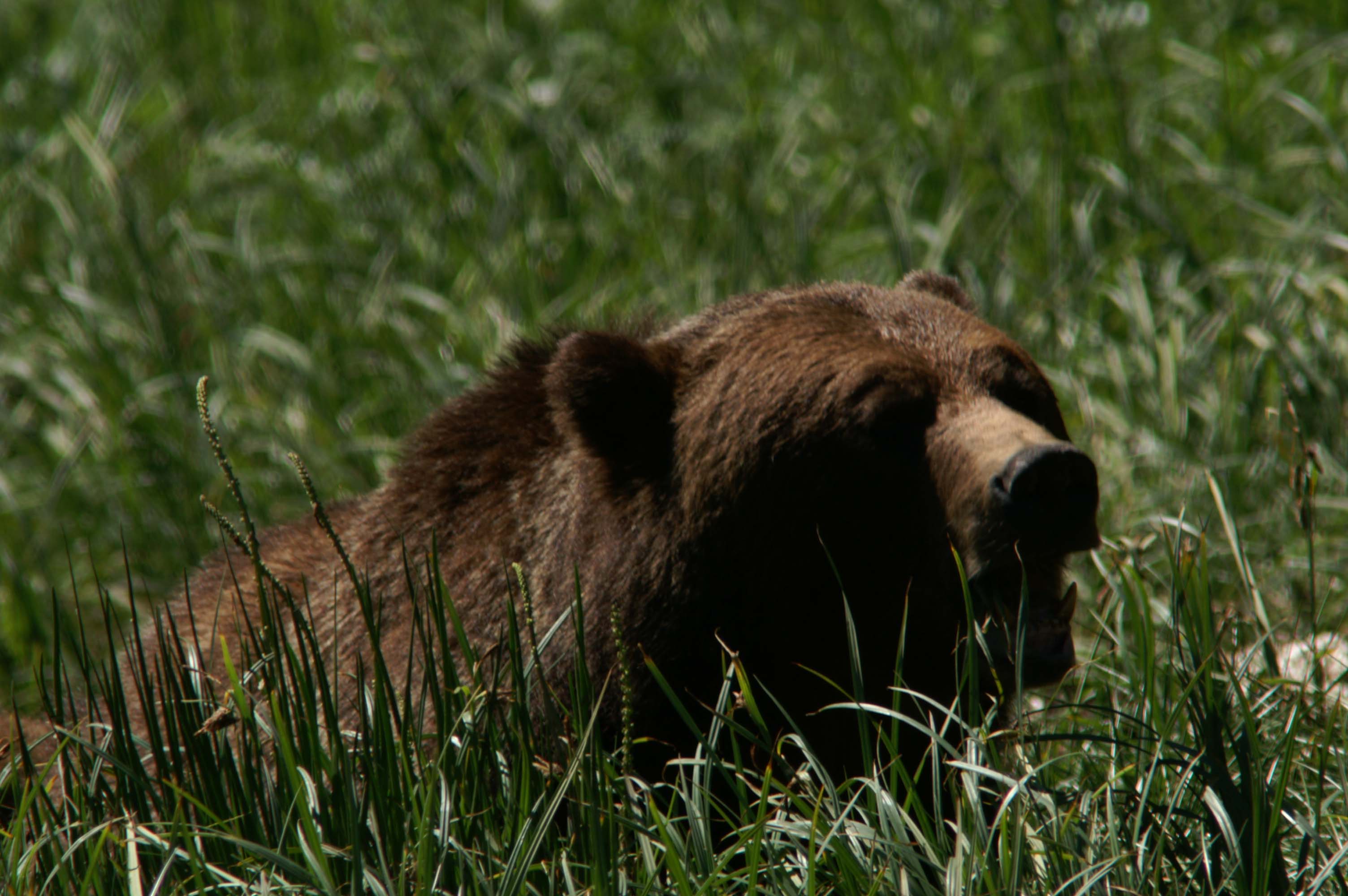


My thanks to Ken Johnstone who kindly allowed  me to use his photos.


45 Comments

It’s Dogwood Time

It’s time for the dogwoods to bloom. There are many bigger dogwood trees around, but ours is still quite small.

The robin is enjoying the spring morning sunshine while he wonders about the petal count of these flowers.

Most flowers have a number of petals that fall into the Fibonacci sequence, a mathematical sequence in which each number is the sum of the two preceding ones. So it goes like this: 0, 1, 1, 2, 3, 5, 8, 13, 21, 34, 55, 89, 144 … and it goes on forever.

Our Pacific dogwood usually has between four and six petals, so it’s different from most flowers which tend to follow the Fibonacci sequence.

Next time you’re in a flower garden, see which flowers you can find that have either  3, 5, 8, 13, or 21 petals. You’ll be surprised at what you find.

*Fibonacci sequence was used and further explored by an Italian mathematician, Leonardo Bonacci, who was called Fibonacci, possibly as a name made up from “filius Bonacci” (son of Bonacci). He was born about 1170. Yes, about 850+ years ago.

I bet he loved doing puzzles or writing code.

So what’s the next number after 144? The first nine commenters got it easily, so how about the next three numbers?


19 Comments

Dialect in Writing


Dialect 

If one or more of your characters have a dialect or accent that you feel is important to note in your novel, I would suggest that unless you are very familiar with those regional speech patterns or accents, use them sparsely so they don’t distract from the story. The safer way to do it would be to choose a few instances of the dialect and use them in dialogue. Try as much as possible to have the rest of the writing in plain English.

Falling out of character by messing up the dialect is going to do damage to your credibility as a writer and to the credibility of the character.

I’d like to give you some examples of how I have used dialect and accent of a character in my novels.

One of my secondary characters in The Wind Weeps is Monique, a French-Canadian girl. I wanted to show that she spoke with a French-Canadian accent, but I didn’t want the phonetic spelling of every word of her speech become a chore for the reader. My solution was to limit Monique’s dialect and accent to a few of the most obvious speech habits that were typical of French speakers of English.

Saying the soft sound of “th” (as in “they”) is often difficult for speakers of French origin,  so, for example, instead of saying “there,” Monique would say “dere.”  For the hard sound of “th,” she might say “somet’ing” instead of “something.”

In French the sound of “h” is not used, so in English, Monique would have a habit of dropping the sound of the letter “h.” I showed this by placing an apostrophe in its place.  If she were saying, “It’s time to have something to eat,” she would say, “It is time to ’ave somet’ing to eat.”

That reminds me of the last clue to Monique’s speech being different; she would not use contractions. Instead of “can’t,” she would say “cannot,”  or she would say “it is” instead of “it’s, and “I ’ave” instead of “I’ve.”

By using these three changes in the dialogue, the reader could instantly identify that it was Monique who was speaking.  Just to be sure, I gave Monique two more habits of her own. I added the odd case of her swearing by having her say, “Tabernac,” once in a while. I also had her use an expression that was all her own by having her conflate two common phrases she had heard used in English. When she wanted to say “For sure” or “Sure thing,” as she had heard others say, she ended up saying, “For sure t’ing.”  Whenever this came up in the book, we would always know it was Monique speaking.

If you’d like to check it out yourself, you can find The Wind Weeps and its sequel, Reckoning Tide, at all amazon   (click on amazon) outlets and at smashwords.com (Click on smashwords.com).

My books are all marked down to 99 cents US so you can load your e-reader with bargain reading.

You can find a review of The Wind Weeps, by clicking on this blog post by Diana Wallace Peach.

P.S. For those who follow both my blogs, I have copied this post for both this one time. I don’t intend to make that a habit.


32 Comments

Location, Location, Location

A few days ago, David Kanigan posted photos of a Canada goose nesting on a dock.

https://davidkanigan.com/2021/04/20/and-the-show-goes-on/

Please visit it to see this post.

I had mixed feelings about this goose’s choice of location. It’s right out in the open, and so vulnerable to predators and the weather. I hope for, but don’t expect, a good outcome for this brood. Still, if she pulls it off and any of her goslings hatch and survive, the goose will deserve a medal for bravery and stamina.

I thought of this goose nest when the Captain came home from a trip up the BC coast, having taken pictures of a goose nest in a very remote location. This is how it should be. This goose nest is beside a river, but somehow the goose knew about rivers rising in the spring, and it has placed this nest high up out of the reach of a flooding river.

The nest is on top of this tree stump, out of sight, and out of reach of the spring run-off in a rising river. It is sheltered from aerial predators by the new growth on top of the stump.  Being up high would also give it a slight advantage over animals that might threaten it from ground level.

But even with all of the advantages the goose has with this remote nest,  it is probably at just as much risk as the town goose in David Kanigan’s blog post.

Thank you, David, for showing the city goose as compared to my country goose. I hope they both manage to bring off a nice batch of goslings.


28 Comments

Marlie

Marlie is a good person. Maybe a bit naive…. A young teacher newly arrived in the Queen Charlotte Islands, she has a lot to learn. The rough island life tests her survival skills both physically and socially. She is surprised that with the beauty of the islands come hidden and unexpected dangers.


Here is a short excerpt from “Marlie” :

She pulled over to the side of the gas station after she gassed up, and made the call. At the pumps Brent was leaning his shoulder into the side of his truck, staring off into space as he held the nozzle in the gas tank. The profile of his face was perfect—manly, but fine. His blue checkered work shirt had a tear in the elbow. Jeans were dirty and smeared with dried blood—from the deer, she presumed. She sure hoped that was what the blood was from. How was she to know? She’d only just met him. His canvas vest had lots of pockets, more practical than fashionable. Seemed like islanders tended to be that way. Kodiak boots half unlaced told her he must have walked a lot today and maybe his feet were sore. Fancy, he was not.

It would have been great if she had been nicer to Brent, but as luck would have it, she chose instead a man who would get her into serious trouble. You will be shocked at how Marlie’s trusting nature is turned against her. Rough island life is about to get much rougher. When she most needs a friend, she realizes that she knows very few people in this new setting. She’s on her own.

If you like page-turner stories of love, adventure, and danger, why not download “Marlie”? It is available on all amazon outlets for Kindle and paperback, and on smashwords.com and nook.com (Barnes and Noble) for all formats of e-readers.

 Find Marlie here:   amazon.com

 and here: amazon.ca

Available in paperback as well.

To find out more, visit my website at http://www.anneli-purchase.com