wordsfromanneli

Thoughts, ideas, photos, and stories.


28 Comments

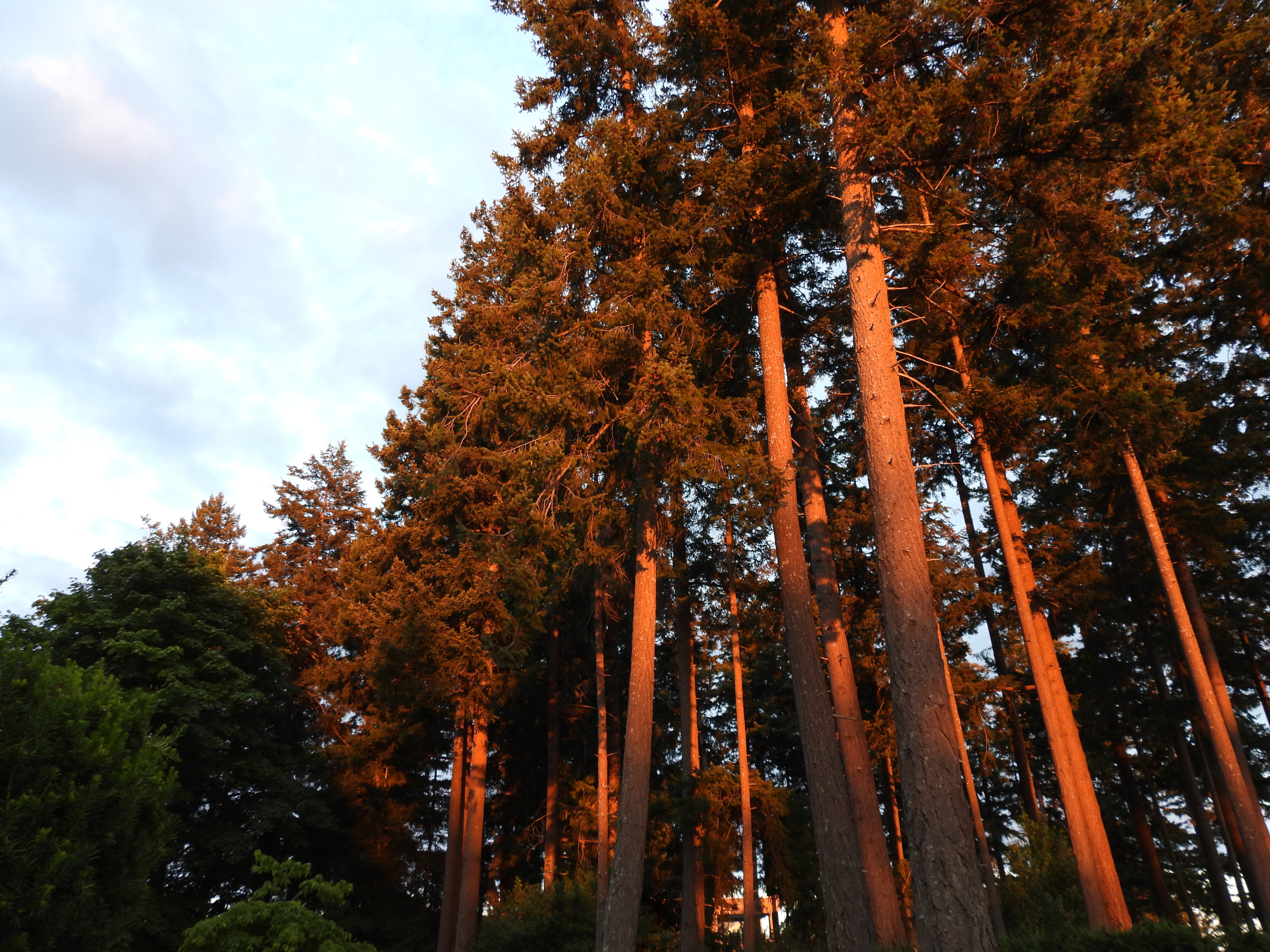
Trees

Can you imagine how shocked I was to learn, after many decades of knowing about Joyce Kilmer’s poem “Trees,” that Joyce was a man? Yes, Alfred Joyce Kilmer. He was born in the USA in New Jersey, Dec. 6,  1886. He died from a sniper’s bullet in the Second Battle of the Marne on July 30, 1918. He was only 31 years old. 

Basically he was best known for his poem about trees, which follows here:

Trees

by Joyce Kilmer


I think that I shall never see

A poem lovely as a tree.


A tree whose hungry mouth is pressed

Against the earth’s sweet flowing breast;


A tree that looks at God all day

And lifts her leafy arms to pray;


A tree that may in summer wear

A nest of robins in her hair;


Upon whose bosom snow has lain;

Who ultimately lives with rain.


Poems are made by fools like me,

But only God can make a tree.

Then along came Frederic Ogden Nash, New York writer of many funny poems, with a parody of Kilmer’s poem “Trees.”

Song of the Open Road

by Ogden Nash (1902 – 1971)


I think that I shall never see

A billboard lovely as a tree.

Indeed, unless the billboards fall

I’ll never see a tree at all.


Please visit my inspiration to do this post about trees, “Autumn Ash Trees” by Lynette D’Arty-Cross https://lynettedartycross.com/2025/10/09/autumn-ash-trees/


31 Comments

Like Watching Paint Dry

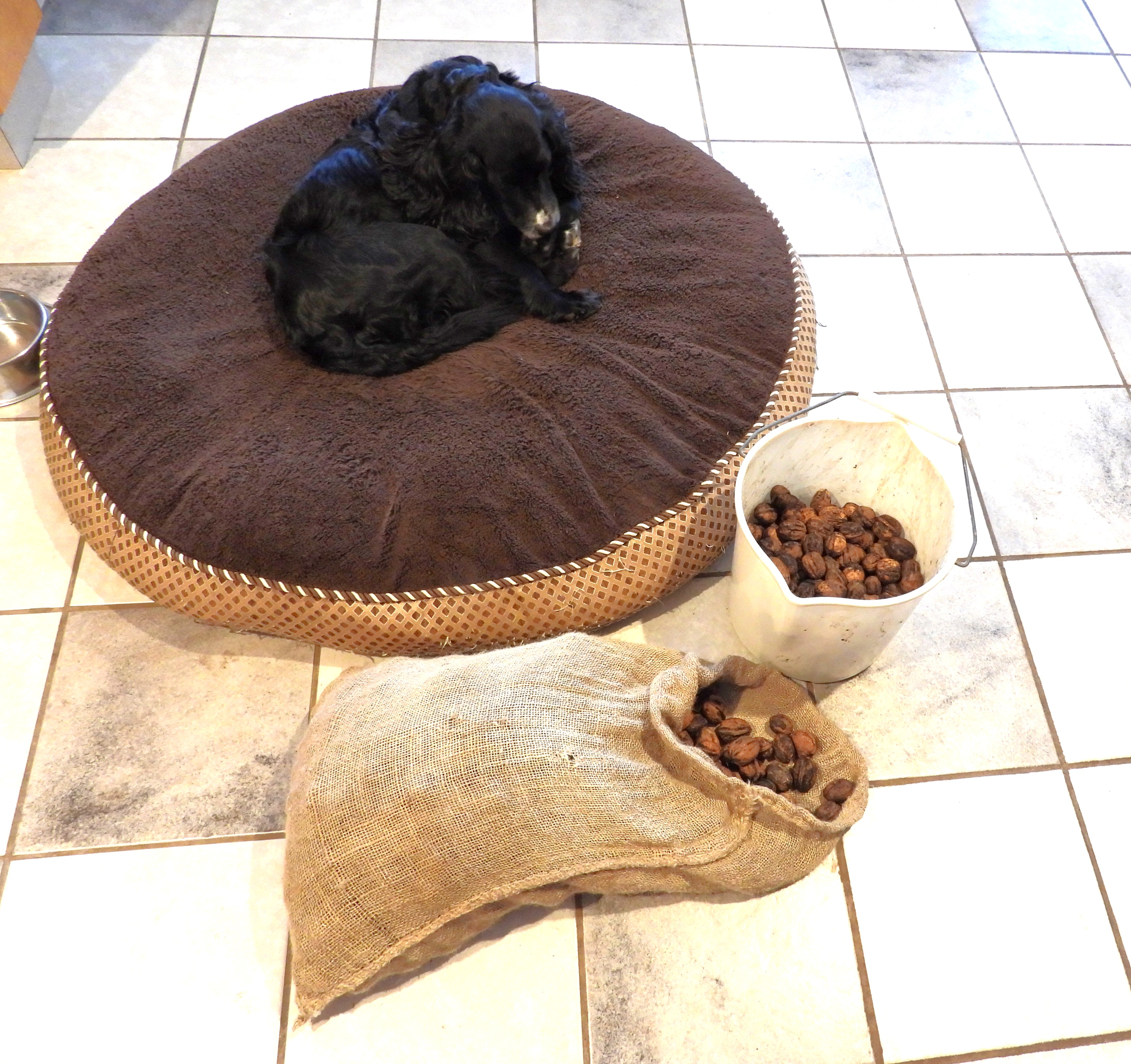
Might as well do my nails while I’m watching the walnuts dry.

In the lower level, by the woodstove, the walnuts are bagged and almost ready to be hung above the woodstove to finish drying. I think I’ll have to get another burlap bag or maybe two more, to hold all those nuts as they dry. All the messy work of scraping the black goo from the shells has been done. Now we wait. Most days, I sneak a few to bring out to the squirrels.

I wonder if there will be any walnuts left by Christmas.


37 Comments

Land of Plenty

Guess what I’ve been doing in between trying to get  photos of Crispin helping himself to the nuts on our two trees.

It’s that time of year when everywhere you look there is work to do, but you know you’ll be glad you did it later.

The squirrels have been working hard to clean out the nut trees, and I finally decided I should go out there and seriously pick up the fallen nuts, and shake the trees to get more of them down. The pears, apples, and plums are a bonus (from their own trees, of course). May we never go hungry.


Harvest time is very fine,

Though my grapes won’t turn to wine,

Could it be that I’ve been grazing,

Eating all the grapes? Amazing!


But the hazelnuts are here,

Glad that they don’t disappear,

Good to know the squirrels will share,

There’s enough and some to spare.


29 Comments

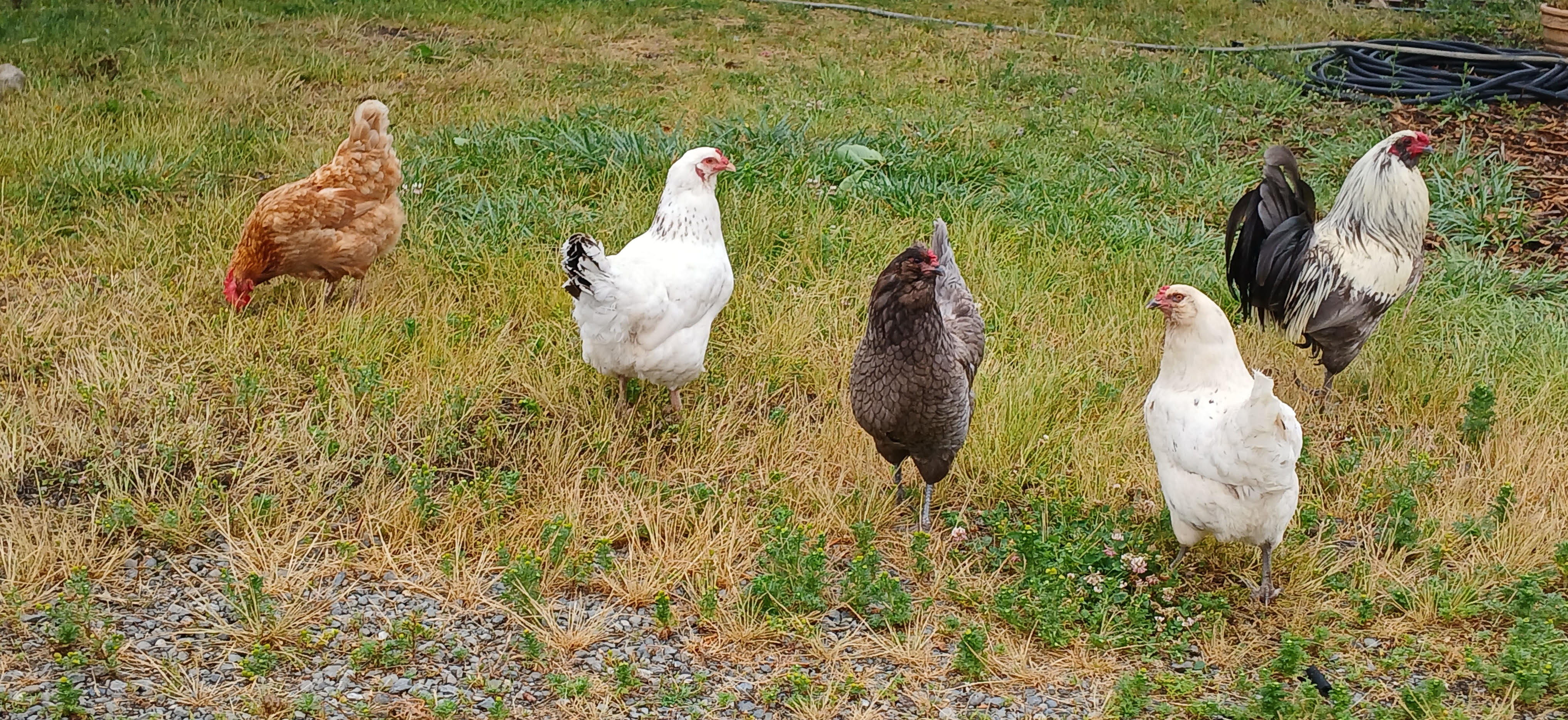
Chicken Little’s Sky

When Chicken Little saw this sky, she knew there was trouble ahead, so she squawked her famous lines and said, as you know:

Bok-bok-bok!

The SKY is falling,

And WE must tell the KING!

BoddOCK bok!

Well, who would’ve thunk that a chicken could forecast this dramatic weather phenomenon?!

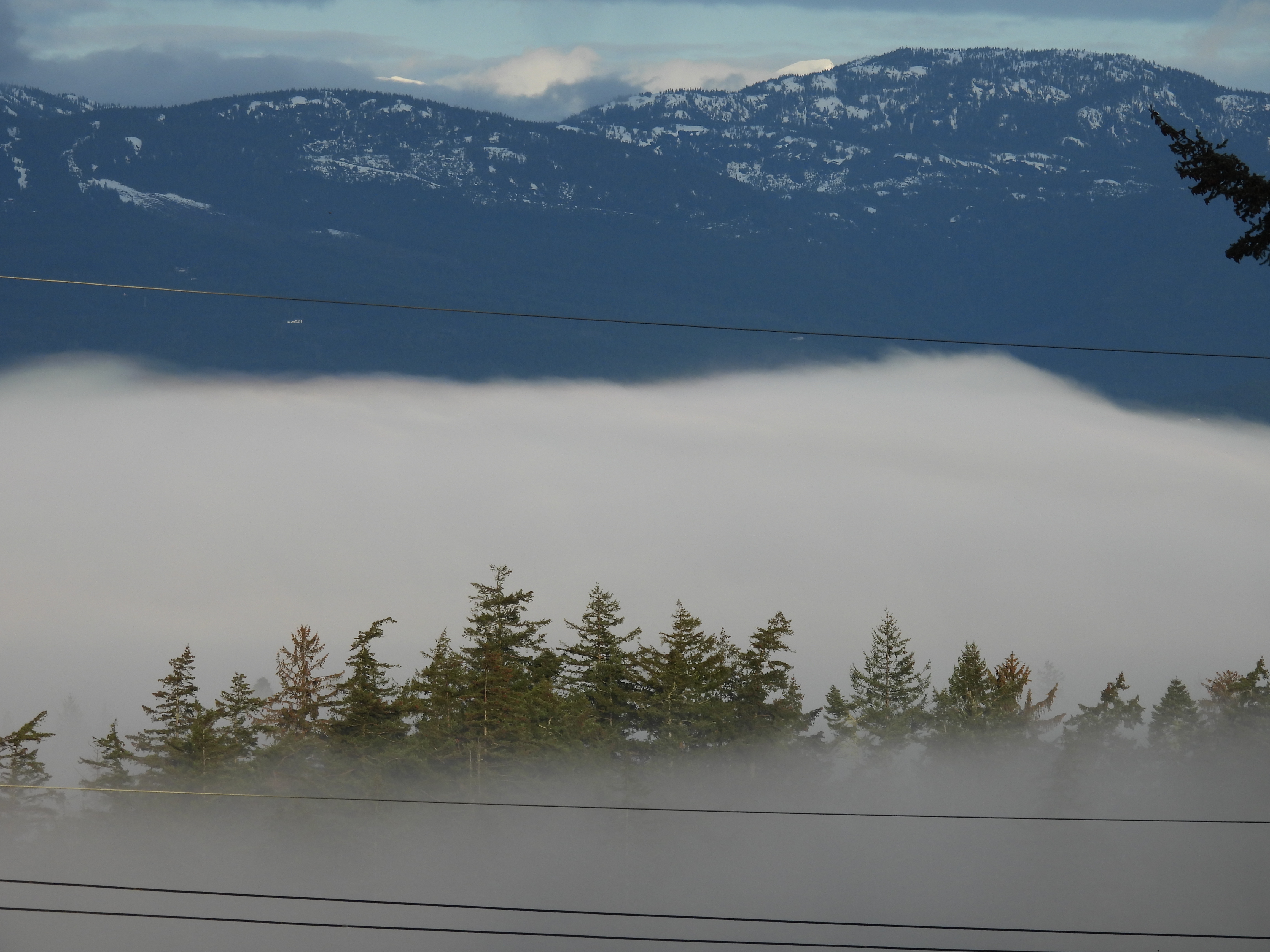
The very next day, the sky actually DID fall. That big dark cloud fell onto the ground and covered the whole valley.

And then, as Carl Sandburg said:

The fog comes in
on little cat feet.

It sits looking
over harbor and city
on silent haunches
and then moves on.

They say that “No man is an island,” but these fir trees aren’t too sure about that.


48 Comments

And so it Begins

Robbie Robin thinks of spring,

And the bounty it can bring,

In the lower elevation,

Life was like a long vacation.


Summer berries in the hills,

How delicious were these frills,

In the forests by the streams,

Food enough to fill his dreams.


Ah, but what’s that ridge of white?

Yes, it is a pretty sight,

But it means the days are chill, 

And he must come off the hill.


Food is scarce, the bugs are gone,

Must be time for moving on,

Back to lower, warmer climes,

And a few more happy times.


See my friends around my table,

Eating much as we are able,

Mountain ash is loaded full,

Grab the berries and just pull.


Oh, my heavens, see the snow,

I knew I was right to go,

One more feast on berries here,

Then I’ll say, “Goodbye, my dear.”


56 Comments

The Lost Dress

My lovely dress of golden leaves 

Is tattered now, and worn,

The wind has warned – no more reprieves,

This time the leaves get shorn.


I hold on tight with all my might,

While gusts and gales rip past,

They tear my dress, and though I fight,

 I’m nearly bare at last.


I shiver and the last leaves quiver,

Hanging by a thread,

Until they loosen, blowing whither

They know not, and spread.


My golden dress is on the ground,

For all to trod upon,

And scuffing feet will swish it ’round,

While gusts blow ’til it’s gone.


46 Comments

It’s Dogwood Time

It’s time for the dogwoods to bloom. There are many bigger dogwood trees around, but ours is still quite small.

The robin is enjoying the spring morning sunshine while he wonders about the petal count of these flowers.

Most flowers have a number of petals that fall into the Fibonacci sequence, a mathematical sequence in which each number is the sum of the two preceding ones. So it goes like this: 0, 1, 1, 2, 3, 5, 8, 13, 21, 34, 55, 89, 144 … and it goes on forever.

Our Pacific dogwood usually has between four and six petals, so it’s different from most flowers which tend to follow the Fibonacci sequence.

Next time you’re in a flower garden, see which flowers you can find that have either  3, 5, 8, 13, or 21 petals. You’ll be surprised at what you find.

*Fibonacci sequence was used and further explored by an Italian mathematician, Leonardo Bonacci, who was called Fibonacci, possibly as a name made up from “filius Bonacci” (son of Bonacci). He was born about 1170. Yes, about 850+ years ago.

I bet he loved doing puzzles or writing code.

So what’s the next number after 144? The first nine commenters got it easily, so how about the next three numbers?