wordsfromanneli

Thoughts, ideas, photos, and stories.


37 Comments

Dolphins of Baja

Cindy Knoke’s blog post (link to Cindy’s blog at the end of this post) about viewing dolphins reminded me that I had a scene in my novel, “Orion’s Gift,” that was very similar to her adventure.  I wrote that scene after the Captain and I had this very experience in a 12-ft. aluminum skiff many years ago. It is based almost completely on our own dolphin trip from when we were dry camping in Baja and the dolphins came into the Bay of Conception.

The excerpt is a bit long, but I hope you will bear with me and enjoy the ride.


In the novel, my character, Sylvia, has run away from her unraveling life in southern California. Without much planning she has bought a camper van and thinks she can escape her problems by dry camping on the beaches of the Baja peninsula on the Mexican side of the border.

She meets Kevin, another runaway from a bad marriage, and the two discover an unexpected attraction to each other.


Here is the dolphin scene from “Orion’s Gift.” (Notice the whitecaps in the photo above.)

Moments later, I pointed. “There!” Kevin started the motor and, at a slower, quieter speed, angled the boat towards the school’s probable destination, so that eventually our paths would cross.

Hundreds of sleek bodies broke the surface only to curve and dive down immediately and reappear a few yards farther on. Kevin cut the motor again and we drifted, a mere speck in the middle of the huge Bay of Conception, closer than we had hoped to a huge school of dolphins, all aiming for the head of the bay.

“Listen to them!” I whisper-shouted to Kevin. The mewling, whistling, singing, and crying, as they repeatedly broke the surface of the water, was an eerie choir piece. Hauntingly beautiful, it gave me goosebumps in spite of the warm day. Kevin’s face mirrored my feelings exactly—somewhere between awe and ecstasy. My mind was suddenly in turmoil, balancing this rare and precious moment with the realization that I probably had few of them left. Peaks of happiness and bottomless pits of misery played havoc with my emotions.

My eyes filled with tears. “Thank you for bringing me out here. That was so beautiful.” I lowered my head. Just needed a moment.

“It would have been a shame to have to enjoy this all alone,” he said.

Still trying to come to terms with the amazing spectacle we had just experienced, we sat a moment longer watching the last of the dolphins disappear in the distance.

“Uh-oh!” Kevin pointed towards the open end of the bay. “Whitecaps.” He started the motor and turned the skiff towards home. Within minutes, the breaking waves had moved much closer and the glassy smooth surface changed to ripples that grew into an uncomfortable lump. I’d heard San Diego fishermen talk about the lump in the sea. Now I knew what they were talking about.

“Hang on,” he said. “It could get bumpy. I’ll take us to the nearest point of land and then we’ll work our way home along the beach.”

I gripped the gunwales of the boat where they began to curve towards the bow. We bucked into the choppy whitecaps that had now overtaken us. In no time, the sleeves of my blue cotton shirt were soaked from the spray. Two-foot waves didn’t seem like much but they followed one after the other so briskly that the small skiff took a pounding. My stomach clenched into a knot of fear as we were tossed in every direction. I tightened my grip against the bouncing of the boat. More waves splashed over the bow, soaking the front of my shirt. I was glad the water was warm. It would have been an ordeal to be splashed with icy water every few seconds. The finer spray wet my face so the drops were running off my chin. I glanced at Kevin in the stern of the boat. He was completely dry except for a bit of salt spray in his hair. He looked so good and I could only imagine what I looked like. Drowned rats came to mind.

“We’re almost out of it,” Kevin yelled above the engine noise. He saw that I was bearing the brunt of the beating at the front of the boat. I could only nod as I looked over my shoulder at him.

Closer to the beach, we zigzagged to avoid rocks. Beaching the boat here would be difficult. We continued along the shoreline until we rounded a point and entered the mini bay where our own sheltered beach lay.

“Whew! That’s better,” I said.

We pulled the boat ashore and secured it with a line to a huge rock far above the high tide mark. Immediately, Kevin started apologizing.

I held up my hand. “Don’t. It was wonderful. Worth the beating we took on the way back.”

“Your beautiful hair.…”

My hands flew to my head. “My hair?”

“It’s such a mess!” Kevin pulled me close and hugged me, kissing my wet tangled hair. “I have a sun shower bag you can use.”

“I have one too. But I think, since I’m wet already, I’ll have a swim first and then rinse off with fresh water.”

“Good idea. I’ll join you.”

“Don’t forget to shuffle your feet in case of stingrays.”

“Stingrays!?”


Orion’s Gift at amazon.com

For e-readers other than Kindle, go to smashwords.com.

Cindy’s dolphin post: https://cindyknoke.com/2023/06/18/off-the-beaten-path-super-pods/

Thanks for reminding me of this wonderful time, Cindy.


45 Comments

The Lilac Notebook

You won’t want to miss this one. Carol Balawyder’s latest novel is something unique.

Here is Carol and a little bit about her.

Carol’s academic training is in English Literature and Criminology. She studied criminology so as to bring credibility to the crime novels she wanted to write.

These days Carol is retired from her teaching post of supervising and teaching criminology to college students. She has been busy as a volunteer, visiting Alzheimer’s patients. She brings along her little dog, Bau. One of the patients, Doris, especially loved spending time with Bau. The sweet relationship they developed is reproduced in Carol’s latest novel.

The Lilac Notebook is a study of the decline of a young woman in the early stages of Alzheimer’s.

Doris had lost her ability to speak. Ms. Balawyder used this as a focal point of the murder investigation in which her fictional character, Holly is accused, but unable to defend herself.

Her main character Holly, is partly based on Doris and her relationship with Bau.

My Review of The Lilac Notebook.

Carol Balawyder’s novel, The Lilac Notebook, left me thinking of the plight of one of her characters for many days afterwards. Although it is a crime story, it is different from every other one I’ve read, because Holly, the main character, has early onset Alzheimer’s.

Her husband has never loved her, and now that she has this debilitating disease, she knows that he will find her a burden. She makes the decision to leave before it gets too bad, signs up for a college course and makes friends with two women who will entangle her in a murder mystery.

We learn in detail of her challenges as Alzheimer’s symptoms manifest themselves. In some cases, Alzheimer’s patients lose the ability to speak. They can still hear and reason, but find it difficult to respond. Sometimes the right word is hard to find, and increasingly it becomes more difficult to speak.

After a second murder takes place in their part of the city, Holly and her friends fear for their safety. Holly is haunted by clues she tries to put together, and suspects that the killer may be somehow connected to them. Her speech is becoming difficult, so she records as much as she can remember in her lilac notebook.

When one of her friends suggests that possibly it is Holly herself who is doing the killing, she is in turmoil because her memory has been failing her more and more. She wonders if her friend could be right. Perhaps Holly did kill those people and she just doesn’t remember it.

I was particularly impressed by the way Ms. Balawyder weaves in the details of Holly’s advancing Alzheimer’s in such a compassionate way. We are made to feel Holly’s fears, trepidation, confusion, and frustration as “the plot thickens” and her disease becomes more debilitating.

Real life still happens to people with Alzheimer’s, but we rarely have a chance to look inside the heads of people who suffer from it. With the murder mystery entertaining us, we empathize with Holly’s plight as she tries to solve the murders even while she is implicated in the deeds.

A well-researched nail-biter of a story.


You can purchase The Lilac Notebook at:

amazon.com

amazon.ca

smashwords.com

While you’re there, check out her “Getting to Mr. Right” series.

Please feel free to reblog this post and help Carol to spread the word about her wonderful new novel.


46 Comments

Love, Love, Love

Because it’s February and Valentine’s month, along with my fish placemats, I plan to make some more heart placemats at the upcoming quilting retreat.

Did you see the movie with Adam Sandler where he frequently says, “Love, love, love”? He says it with a sigh, or as if people are making too big a deal of love, but really he wishes he could make the girl fall in love with him. I don’t know which of his many movies it was, but I remember him being on the beach being a bartender in a little beach bar.

Anybody know which movie I’m talking about? I just don’t remember.  All I remember is that every once in a while, he’d say, “Love, love, love,” as if it’s not all it’s cracked up to be.

On Valentine’s Day we like to show the special people in our life that we really do love them.

But shouldn’t we do that every day? How should we do that?


Here are a few ideas.

  1. Good relationships have a lot of give and take. The thing is, it’s not meant to be “one gives and the other takes.” You both have to give and take, equally.
  2. No good keeping score and saving up Brownie points. Just go for it, and be good to each other.
  3. Work towards a common goal. If you are working against each other in life’s goals, it’s not going to work. For example: If one makes the money and the other just spends it, it’s not going to work. Or if one always messes up the house and the other one always cleans it, it’s not going to work.
  4. Allow your partner his/her own space; time to pursue some creative hobbies or quiet time on their own.
  5. Say something nice to your partner every day.

Lastly, I was reminded the other day about how dogs behave when their owner returns after having been away for a while. If you’ve ever owned a dog, you might have noticed how they jump around and sometimes yip and bark and whine, or roll on their back hoping for a belly rub because they’re so happy to see you.

Wouldn’t it make your partner feel good if you showed how happy you were to see them when they come home? You don’t have to bark and yip, or roll on the floor with joy, but … well … you get the picture.

Happy Valentine’s Day


19 Comments

Characters We Love

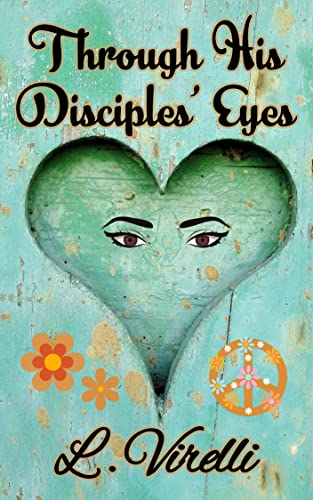
Lori Virelli’s new novel, Through His Disciples’ Eyes, is based on a mission that Joshua Cane undertook. He had “the gift of the gab,” and traveled about the country talking to people and helping them any way he could. Joshua never presented himself as a modern-day Jesus, but he happened to embody many of his good qualities. The followers of Joshua Cane were skeptical of him at first, but they soon came to adore him and to cling to his word. He did not seek fame; instead, it found him, most likely because his message “to forgive yourself” appealed to so many who heard him speak.

When we read a good book, its characters, with their aspirations, successes, dilemmas, and failures, continue to live in our head, sometimes long after we finish reading the book. The author’s challenge is to make us care about the characters.  Otherwise, why should we bother to continue reading?

In Lori Virelli’s novel, Through His Disciples’ Eyes,  I met several characters from various backgrounds, and soon worried about their problems and the potential dangers that might befall them.

The author does an excellent job of presenting her characters as having feelings, emotions, needs, and desires, just as we do. They are not perfect, but most people aren’t. Their imperfections make us empathize with them even more.

Julia is a young girl whose luck is spiraling downward. Luckily, she stumbles across Joshua and his group. Here, the story begins, and we learn to love Julia in spite of her troubled childhood and her many anxieties. Throughout the novel we watch her character grow into something admirable, but not without problems along the way.

Each of the characters (and they are a real variety pack) evolves along the story arc.

Tobias has some bad history, but he feels remorse, and worries about how he will be able to redeem himself.

Max has issues that many of us could identify with. We hope he can work through them.

The author cleverly weaves the actions and personalities of the characters together into a story that spans decades.

I enjoyed being a part of that ride, and I’m sure you will love this book and come away from it feeling good.


Here is the blurb about the book.

In the year 2029, the world is broken, and so is Max Greenwood. In his attempt to find inner peace, he learns of a long-lost prophet—Joshua Cane—who lived in the 1950s. His life appears to mirror that of Jesus, complete with healing miracles, disciples, and being murdered in his thirties.

Researching for more, Max uncovers information on two of the disciples. Tobias Jones is a tempestuous man who separates from Cane’s other followers to spread the prophet’s teachings on his own. His ideas to control the righteous message lead to trouble.

Julia Flores is a teen whose mother kicked her out. Homeless and feeling unloved, she finds purpose in following Joshua Cane on his Mission to spread peace. As she travels with him, emotional issues from her past emerge, causing drama along the way.

The stories of these troubled souls searching for meaning trigger life-altering revelations for Max Greenwood—revelations not only about Joshua and his disciples, but about himself and all of us.

L. Virelli interweaves concepts from self-help, spirituality, the Bible, and New Thought into an allegorical tale.

To find out more about the launch of this book, click this link:

https://loreezlane.wordpress.com/2022/12/06/its-heeerre/

Through His Disciples’ Eyes is available at amazon in both paperback and e-book.

Just click the link: https://www.amazon.com/dp/B0BNY1VCZF

*Please feel free to help Lori out by re-blogging this post or doing one of your own. I know it will be appreciated.


68 Comments

The Killing Wind

Winter,

Sudden and merciless,

Descends with a force,

Uninvited.


Clinging,

In the lee of the wind,

Near his source of food,

Hummingbird waits.


Snowstorm,

Filling every cranny,

Chilling and killing,

Bitter cold wind.

Howling,

Snowy blasts roaring by,

Threatening small lives,

Take shelter quick.


76 Comments

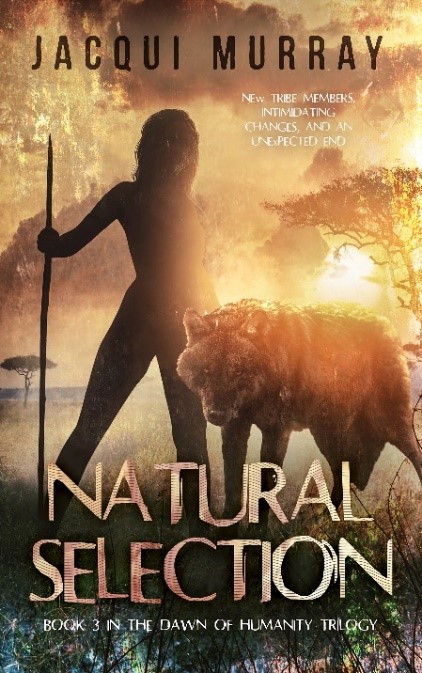
Jacqui Murray – Natural Selection

Jacqui Murray  has done it again. She has provided us with more wonderful entertainment with the release of Natural Selection, book three of her Dawn of Humanity trilogy. I’m so pleased to host her on my blog today. For a review of this latest page-turner, please also visit my other blog, https://annelisplace.wordpress.com/2022/11/06/natural-selection-my-review/

 Natural Selection


Summary


In this conclusion to Lucy’s journey, she and her tribe leave their good home to rescue former tribe members captured by the enemy. Lucy’s tribe includes a mix of species–a Canis, a Homotherium, and different iterations of early man. In this book, more join and some die, but that is the nature of prehistoric life, where survival depends on a combination of our developing intellect and our inexhaustible will to live. Each species brings unique skills to this task. Based on true events.


Set 1.8 million years ago in Africa, Lucy and her tribe struggle against the harsh reality of a world ruled by nature, where predators stalk them and a violent new species of man threatens to destroy their world. Only by changing can they prevail. If you ever wondered how earliest man survived but you couldn’t get through the academic discussions, this book is for you. Prepare to see this violent and beautiful world in a way you never imagined.


A perfect book for fans of Jean Auel and the Gears!Book information:


Title and author: Natural Selection by Jacqui Murray

Series: Book 3 in the Dawn of Humanity series

Genre: Prehistoric fiction

Editor: Anneli Purchase

Available print or digital) at: http://a-fwd.com/asin=B0B9KPM5BW


How did early man run down prey?

Early Man Hunted by Running Down Prey

In my latest trilogy, Dawn of Humanity, I present the almost unbelievable idea that early man–in this case, not Lucy’s kind but the next version of man, Homo erectus–hunted by chasing herds until the animals were too tired to continue. Readers who have never heard about what is called the “Endurance Running Hypothesis” or “persistence hunting” reject that idea, but many scientists don’t (to be fair, some do). Here’s why.

African land animals run fast, some at speeds of 45-60 mph. Most of us assume our ancestors hunted by surprising animals as they grazed, killing only the old or injured while the rest fled. That is true, but they also chased the herd and were likely to catch them.

How was that possible? Read on.

Because earliest man had few offensive traits like fangs or claws, evolution selected those who could run fast enough to escape predators and run down prey for food. That included physical characteristics like long legs, a prominent butt (for balance), loose hips, shock-absorbing joints, a stable head, shorter toes, a springy foot formation, considerably less body hair, skin loaded with cooling sweat glands, and a larger lung size. By the time Homo erectus arrived in man’s lineage (Xha and Wild in the story, Natural Selection), man could run all day while animals had to stop periodically to rest. Animal bodies were powerful, but covered in fur and their only way to cool off was to stop and pant. Herd animals would think they had escaped, because they could no longer see the tall skinny creatures who carried a tree limb wherever they went, but they hadn’t. Man ran slower, but because of his adaptive qualities, he ran endlessly. He caught up with the animals when they stopped to catch their breath. The animals would again take off, but each time they sprinted from their human predators, they had to stop sooner until they couldn’t run anymore and were speared by the chasers who never seemed to require rest.

This continues today as the preferred hunting technique of African wild dogs, domestic hounds, and the human hunter-gatherers still living in the central Kalahari Desert.

Want more? Check out this three-minute video on Endurance Running:


Author bio:

Jacqui Murray is the author of the popular prehistoric fiction saga, Man vs. Nature which explores seminal events in man’s evolution one trilogy at a time. She is also author of the Rowe-Delamagente thrillers and Building a Midshipman , the story of her daughter’s journey from high school to United States Naval Academy. Her non-fiction writing includes over a hundred books on integrating tech into education, and reviews as an Amazon Vine Voice. She is a columnist for NEA Today, and a freelance journalist on tech ed topics.

Social Media contacts:


Amazon Author Page:        https://www.amazon.com/Jacqui-Murray/e/B002E78CQQ/

Blog:                                       https://worddreams.wordpress.com

Instagram:                             https://www.instagram.com/jacquimurraywriter/

Pinterest:                                http://pinterest.com/askatechteacher

Twitter:                                   http://twitter.com/worddreams

Website:                                 https://jacquimurray.net


My review of Natural Selection can be found at https://annelisplace.wordpress.com/2022/11/06/natural-selection-my-review/


19 Comments

Dialect in Writing


Dialect 

If one or more of your characters have a dialect or accent that you feel is important to note in your novel, I would suggest that unless you are very familiar with those regional speech patterns or accents, use them sparsely so they don’t distract from the story. The safer way to do it would be to choose a few instances of the dialect and use them in dialogue. Try as much as possible to have the rest of the writing in plain English.

Falling out of character by messing up the dialect is going to do damage to your credibility as a writer and to the credibility of the character.

I’d like to give you some examples of how I have used dialect and accent of a character in my novels.

One of my secondary characters in The Wind Weeps is Monique, a French-Canadian girl. I wanted to show that she spoke with a French-Canadian accent, but I didn’t want the phonetic spelling of every word of her speech become a chore for the reader. My solution was to limit Monique’s dialect and accent to a few of the most obvious speech habits that were typical of French speakers of English.

Saying the soft sound of “th” (as in “they”) is often difficult for speakers of French origin,  so, for example, instead of saying “there,” Monique would say “dere.”  For the hard sound of “th,” she might say “somet’ing” instead of “something.”

In French the sound of “h” is not used, so in English, Monique would have a habit of dropping the sound of the letter “h.” I showed this by placing an apostrophe in its place.  If she were saying, “It’s time to have something to eat,” she would say, “It is time to ’ave somet’ing to eat.”

That reminds me of the last clue to Monique’s speech being different; she would not use contractions. Instead of “can’t,” she would say “cannot,”  or she would say “it is” instead of “it’s, and “I ’ave” instead of “I’ve.”

By using these three changes in the dialogue, the reader could instantly identify that it was Monique who was speaking.  Just to be sure, I gave Monique two more habits of her own. I added the odd case of her swearing by having her say, “Tabernac,” once in a while. I also had her use an expression that was all her own by having her conflate two common phrases she had heard used in English. When she wanted to say “For sure” or “Sure thing,” as she had heard others say, she ended up saying, “For sure t’ing.”  Whenever this came up in the book, we would always know it was Monique speaking.

If you’d like to check it out yourself, you can find The Wind Weeps and its sequel, Reckoning Tide, at all amazon   (click on amazon) outlets and at smashwords.com (Click on smashwords.com).

My books are all marked down to 99 cents US so you can load your e-reader with bargain reading.

You can find a review of The Wind Weeps, by clicking on this blog post by Diana Wallace Peach.

P.S. For those who follow both my blogs, I have copied this post for both this one time. I don’t intend to make that a habit.


190 Comments

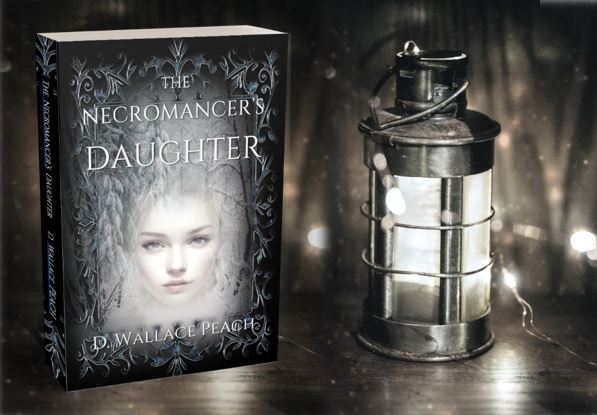
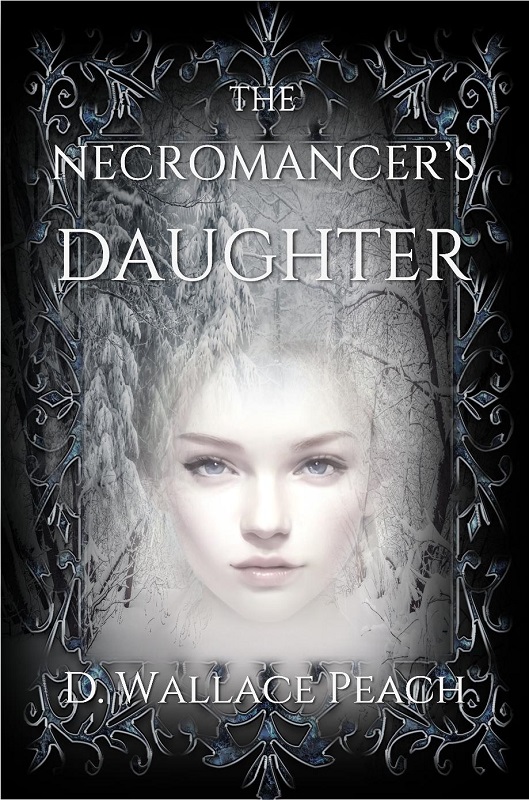
The Necromancer’s Daughter

Diana Wallace Peach has done it again. She has written a novel that you won’t be able to put down.

All the emotions of human nature play their part in this exciting novel. Love, adventure, and intrigue, with just enough of a touch of magic to be believable, all feature in this page turner.


A healer and dabbler in the dark arts of life and death, Barus is as gnarled as an ancient tree. Forgotten in the chaos of the dying queen’s chamber, he spirits away her stillborn infant, and in a hovel at the meadow’s edge, he breathes life into the wisp of a child. He names her Aster for the lea’s white flowers. Raised as his daughter, she learns to heal death.

Then the day arrives when the widowed king, his own life nearing its end, defies the Red Order’s warning. He summons the necromancer’s daughter, his only heir, and for his boldness, he falls to an assassin’s blade.

While Barus hides from the Order’s soldiers, Aster leads their masters beyond the wall into the Forest of Silvern Cats, a land of dragons and barbarian tribes. She seeks her mother’s people, the powerful rulers of Blackrock, uncertain whether she will find sanctuary or face a gallows’ noose.

Unprepared for a world rife with danger, a world divided by those who practice magic and those who hunt them, she must choose whether to trust the one man offering her aid, the one man most likely to betray her—her enemy’s son.

A healer with the talent to unravel death, a child reborn, a father lusting for vengeance, and a son torn between justice, faith, and love. Caught in a chase spanning kingdoms, each must decide the nature of good and evil, the lengths they will go to survive, and what they are willing to lose.


Please see my review of Diana Wallace Peach’s amazing new novel on my other blog: https://annelisplace.wordpress.com/


The Necromancer’s Daughter Links:

Amazon Global Link: http://a-fwd.com/asin=B0B92G7QZX

Barnes & Noble: https://www.barnesandnoble.com/w/the-necromancers-daughter-d-wallce-peach/1142003172

Kobo: https://www.kobo.com/us/en/ebook/the-necromancer-s-daughter-1

Apple: https://books.apple.com/us/book/the-necromancers-daughter/id6443278849

Smashwords: https://www.smashwords.com/books/view/1160370

About the Author

A long-time reader, best-selling author D. Wallace Peach started writing later in life when years of working in business surrendered to a full-time indulgence in the imaginative world of books. She was instantly hooked.

In addition to fantasy books, Peach’s publishing career includes participation in various anthologies featuring short stories, flash fiction, and poetry. She’s an avid supporter of the arts in her local community, organizing and publishing annual anthologies of Oregon prose, poetry, and photography.

Peach lives in a log cabin amongst the tall evergreens and emerald moss of Oregon’s rainforest with her husband, two owls, a horde of bats, and the occasional family of coyotes.


More about Diana Wallace Peach:

Amazon Author’s Page: https://www.amazon.com/D.-Wallace-Peach/e/B00CLKLXP8

Website/Blog: http://mythsofthemirror.com

Website/Books: http://dwallacepeachbooks.com

Twitter: https://twitter.com/Dwallacepeach


***** Don’t forget the review of Diana Wallace Peach’s amazing new novel on my other blog: https://annelisplace.wordpress.com/


14 Comments

Words like Gold Nuggets

I was reading “Fortune’s Rocks” by Anita Shreve and had a mixture of reactions throughout the experience.

First, I was dismayed at the use of such stuffy language, but I soon realized that it suited the 1899 New England setting perfectly. This was the way people in the wealthier class spoke and thought in those days.

In a short time I stopped noticing the stuffiness of the language, and felt immersed in that time and lifestyle.

So it was, that I scoffed only mildly when the mother who was hosting guests at her summer home did not want her photo taken. One of the guests had taken up photography and the hostess was not a fan of these new contraptions called cameras. The reaction of the hostess was not out of character, but had me chuckling about her overly sensitive personality.

When I read on, I was absolutely thrilled with Anita Shreve’s description of the photography session that followed.

This quote from the book tells how it played out as the other guests, one by one, sat to have their photos taken.

Even Olympia’s mother, in the end, relents and allows herself to be photographed, albeit behind a veil with eyes lowered, flinching each time she hears the shutter click, as though she might be shot.

This description had me laughing out loud, as I imagined the scene. It was then that I realized that much of the writing was so precisely worded that I was able to picture it clearly in my mind. Reading this book became like watching a movie.

I kept chuckling over the above quote for some time and finally decided I would write a short note to the author to tell her how much I was enjoying her book. I Googled her name to get a webpage contact, but immediately the search told me that Anita Shreve had died on March 29, 2018 at the young age of 71.  My happy mood was dashed and I felt shocked and saddened to find out this bad news.

Still, Anita has left a legacy of many fine books for us to enjoy.

Now I am wondering if you readers out there have had similar discoveries of passages that are nuggets of entertainment.

If you have, why not share them in your comments. Book title, author, and quote. We’d love to see what you’ve found.

I’m posting this on my anneli’s place blog as well, so you can comment on either one (or both).