wordsfromanneli

Thoughts, ideas, photos, and stories.


51 Comments

Did Neanderthals Have Language?

It is my honour and great pleasure to introduce you to Jacqui Murray and her novel, Endangered Species, the first in her latest trilogy in the series called Man vs. Nature. Summaries of the novels in this trilogy may be found near the end of this post.

Who is Jacqui Murray?

Jacqui Murray is the author of the popular prehistoric fiction saga, Man vs. Nature which explores seminal events in man’s evolution one trilogy at a time. She is also author of the Rowe-Delamagente thrillers and Building a Midshipman , the story of her daughter’s journey from high school to United States Naval Academy. Her non-fiction accomplishments include 100+ books on tech into education, as well as reviews as an Amazon Vine Voice , and articles as a freelance journalist on tech ed topics.

*****

While reading about the Neanderthal tribes in this trilogy, it is natural to wonder about some things regarding how these primitive people lived. Here is a question many readers have about the people of those long ago times. Jacqui Murray explains the answers based on her extensive research of the topic.

Did Neanderthals Have a Language?

Language, like so much about Neanderthal culture and lifestyle, didn’t preserve over the four-hundred thousand years of their existence. The best we can do is extrapolate what might be based on what we do find.

Three questions dominate the discussion of whether Neanderthals had a language:

  • Could they speak?
  • Did they speak?
  • Could they write a language?

Could they speak?

Yes. They had the physical ability to speak.

First: The Neanderthal hyoid was indistinguishable from ours so there is no reason to think it wasn’t used exactly in the same way as ours. Their voice box was higher in the throat than ours, which could mean their voices were higher pitched, but it would have no impact on their ability to speak.

Second: Their chests were large. They could control their breath in the same way we do, which is a requirement of speaking.

Third: Their ears were attuned to human speech, as are ours, which meant vocal sounds were important. I won’t try to explain the physiological details of that, but it is documented scientifically by paleoanthropologists. You can dig into that topic if you like–it’s pretty interesting.

Because of all this, there is every reason to believe Neanderthals could speak.

Did they speak?

So, physiologically, they could speak, but did they? Two details to consider with this question:

First: The types of tasks Neanderthals accomplished were complex–turning bark or pitch into glue, hardening spear tips in fire and not burning them, hunting in a group. These were accomplished best by talking to each other and planning. Rebecca Wragg Sykes, author of the acclaimed Kindred: Neanderthal, Life, Love, Death, and Art goes so far as to assume these sophisticated tasks couldn’t be accomplished without talking:

“Some kind of vocal communication was a really important everyday part of Neanderthal life.” 

Second: Speaking is noisy. Neanderthals were more likely to want to melt into their environs rather than stand out. Speaking might have been less common outside their homebases and more common inside.

Could they write a language?

I’ll stipulate that writing as we know it was well beyond their cerebral toolkit, but they were playing with its elements. Shapes and geometric figures that have no basis in nature are found throughout Neanderthal habitats. To take this a step further, the same 32 geometric designs–lines, rectangles, ovals, dots, triangles, circles–occur in caves and on rock walls throughout Europe over tens of thousands of years, many at a time when only Neanderthals inhabited the caves.
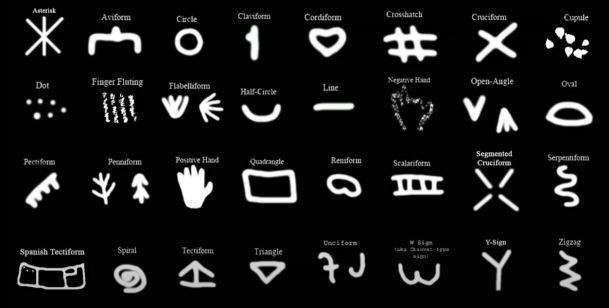
Called art by some experts, but “graphic symbols with meaning” by others, these predate common cave art that includes animals and spears and human activities. These symbols (handprint aside) appear nowhere except in the mind of the creators. Whether they were for writing or art or something else, we don’t know, but they are curious. In my trilogy, Savage Land, I propose that they were used by Neanderthal tribes to share information with other tribes about the area. Because Neanderthals were nomadic by nature and shared their caves with whoever was passing through, this could make sense.

*****

Savage Land is the third prehistoric man trilogy in the series, Man vs. Nature. Written in the spirit of Jean Auel, Savage Land explores how two bands of humans survived one of the worst natural disasters in Earth’s history, when volcanic eruptions darkened the sky, massive tsunamis crossed the ocean in crushing waves, and raging fires burned the land. Each tribe starring in the story considered themselves apex predators. Neither was. That crown belonged to Nature and she was intent on washing the blight of man from her face.


In Endangered Species, Book One of the trilogy, Yu’ung’s Neanderthal tribe must join with Fierce’s Tall Ones—a Homo sapiens tribe–on a cross-continent journey that starts in the Siberian Mountains. The goal: a new homeland far from the devastation caused by the worst volcanic eruption ever experienced by Man. How they collaborate despite their instinctive distrust could end the journey before it starts or forge new relationships that will serve both well in the future.


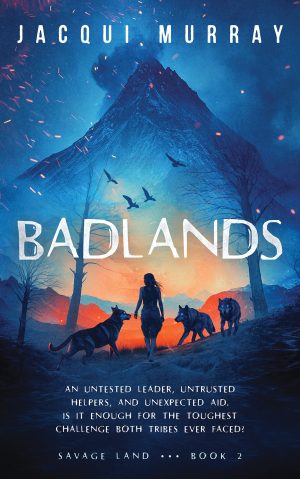
In Badlands, Book Two, the tribes must split up, each independently crossing what nature has turned into a wasteland. They struggle against starvation, thirst, and desperate enemies more feral than human. If they quit — or worse, lose — they will never reunite with their groups or escape the most deadly natural disaster ever faced by our kind.

 Join me in this three-book fictional exploration of Neanderthals. Be ready for a world nothing like what you thought it would be, filled with clever minds, brilliant acts, and innovative solutions to potentially life-ending problems, all based on real events. At the end of this trilogy, you’ll be proud to call Neanderthals family.

Endangered Species – Book 1 of the Savage Land trilogy

Endangered Species trailer: https://youtube/AxBlmays3vE?si=1SMtqDJiLYCRZvB6

Badlands – Coming soon – Book 2 of the Savage Land trilogy
Book information:

Endangered SpeciesPrint, digital, audio available: http://a-fwd.com/asin=B0DJ9Y7PQ8

Badlands—digital on presale now: http://a-fwd.com/asin=B0DFCV5YFT

 Genre: Prehistoric fiction

Editor: Anneli Purchase

50 Comments

A is for Anneli

I thought I would attempt a project that would take me to Christmas. The plan is to focus on the letters of the alphabet in their natural sequence and blab on about something that begins with that letter each day.

I hope the posts won’t be very long, since it means a post every day, and my usual policy is not to post more than once a week, twice at the most. There are too many posts to follow if we all posted every day, so I ask your indulgence for 26 days, once for each letter of the alphabet.

Starting with A, I will introduce myself after about thirteen or so years of blogging.  My name is Anneli, and for those of you who struggle with the pronunciation, it rhymes with Emily.

I’m all about taking care of my best dog, Emma, an English field cocker spaniel who thinks she is human.

Second to that priority, my passions are writing, copy editing, cooking, and taking care of the little birds and animals that live around me.

My novels are pictured on the sidebar of the blog, in case you are interested in checking them out.

My main philosophy in life is to try to do good things to make the world a better place, be creative if possible, and do no harm to others.

So there you are, your letter for today:

A is for Anneli.


45 Comments

The Lilac Notebook

You won’t want to miss this one. Carol Balawyder’s latest novel is something unique.

Here is Carol and a little bit about her.

Carol’s academic training is in English Literature and Criminology. She studied criminology so as to bring credibility to the crime novels she wanted to write.

These days Carol is retired from her teaching post of supervising and teaching criminology to college students. She has been busy as a volunteer, visiting Alzheimer’s patients. She brings along her little dog, Bau. One of the patients, Doris, especially loved spending time with Bau. The sweet relationship they developed is reproduced in Carol’s latest novel.

The Lilac Notebook is a study of the decline of a young woman in the early stages of Alzheimer’s.

Doris had lost her ability to speak. Ms. Balawyder used this as a focal point of the murder investigation in which her fictional character, Holly is accused, but unable to defend herself.

Her main character Holly, is partly based on Doris and her relationship with Bau.

My Review of The Lilac Notebook.

Carol Balawyder’s novel, The Lilac Notebook, left me thinking of the plight of one of her characters for many days afterwards. Although it is a crime story, it is different from every other one I’ve read, because Holly, the main character, has early onset Alzheimer’s.

Her husband has never loved her, and now that she has this debilitating disease, she knows that he will find her a burden. She makes the decision to leave before it gets too bad, signs up for a college course and makes friends with two women who will entangle her in a murder mystery.

We learn in detail of her challenges as Alzheimer’s symptoms manifest themselves. In some cases, Alzheimer’s patients lose the ability to speak. They can still hear and reason, but find it difficult to respond. Sometimes the right word is hard to find, and increasingly it becomes more difficult to speak.

After a second murder takes place in their part of the city, Holly and her friends fear for their safety. Holly is haunted by clues she tries to put together, and suspects that the killer may be somehow connected to them. Her speech is becoming difficult, so she records as much as she can remember in her lilac notebook.

When one of her friends suggests that possibly it is Holly herself who is doing the killing, she is in turmoil because her memory has been failing her more and more. She wonders if her friend could be right. Perhaps Holly did kill those people and she just doesn’t remember it.

I was particularly impressed by the way Ms. Balawyder weaves in the details of Holly’s advancing Alzheimer’s in such a compassionate way. We are made to feel Holly’s fears, trepidation, confusion, and frustration as “the plot thickens” and her disease becomes more debilitating.

Real life still happens to people with Alzheimer’s, but we rarely have a chance to look inside the heads of people who suffer from it. With the murder mystery entertaining us, we empathize with Holly’s plight as she tries to solve the murders even while she is implicated in the deeds.

A well-researched nail-biter of a story.


You can purchase The Lilac Notebook at:

amazon.com

amazon.ca

smashwords.com

While you’re there, check out her “Getting to Mr. Right” series.

Please feel free to reblog this post and help Carol to spread the word about her wonderful new novel.


14 Comments

Words like Gold Nuggets

I was reading “Fortune’s Rocks” by Anita Shreve and had a mixture of reactions throughout the experience.

First, I was dismayed at the use of such stuffy language, but I soon realized that it suited the 1899 New England setting perfectly. This was the way people in the wealthier class spoke and thought in those days.

In a short time I stopped noticing the stuffiness of the language, and felt immersed in that time and lifestyle.

So it was, that I scoffed only mildly when the mother who was hosting guests at her summer home did not want her photo taken. One of the guests had taken up photography and the hostess was not a fan of these new contraptions called cameras. The reaction of the hostess was not out of character, but had me chuckling about her overly sensitive personality.

When I read on, I was absolutely thrilled with Anita Shreve’s description of the photography session that followed.

This quote from the book tells how it played out as the other guests, one by one, sat to have their photos taken.

Even Olympia’s mother, in the end, relents and allows herself to be photographed, albeit behind a veil with eyes lowered, flinching each time she hears the shutter click, as though she might be shot.

This description had me laughing out loud, as I imagined the scene. It was then that I realized that much of the writing was so precisely worded that I was able to picture it clearly in my mind. Reading this book became like watching a movie.

I kept chuckling over the above quote for some time and finally decided I would write a short note to the author to tell her how much I was enjoying her book. I Googled her name to get a webpage contact, but immediately the search told me that Anita Shreve had died on March 29, 2018 at the young age of 71.  My happy mood was dashed and I felt shocked and saddened to find out this bad news.

Still, Anita has left a legacy of many fine books for us to enjoy.

Now I am wondering if you readers out there have had similar discoveries of passages that are nuggets of entertainment.

If you have, why not share them in your comments. Book title, author, and quote. We’d love to see what you’ve found.

I’m posting this on my anneli’s place blog as well, so you can comment on either one (or both).


10 Comments

Visiting at Luanne’s


My sweet Emma and I are happy to let you know that we are guests at Luanne Castle’s blog today. Why don’t you stop there for a quick visit?


Luanne Castle has written a lovely review of one of my books, Julia’s Violinist.

I’d be delighted if you would visit her blog post and find out more about this novel that is so dear to my heart.

Please visit: https://writersite.org/2021/12/20/my-review-of-julias-violinist-by-anneli-purchase-and-note-from-the-author/


27 Comments

Pigs, Music, Books

We know that pigs are smart.

I read somewhere that pigs like music, especially Mozart’s compositions. While this piece is not by Mozart, it is a German song often sung by community choirs, so maybe that inspired the pig to learn to play it. It is called “Komm, Trost der Welt” (Come, Comfort of the World), and refers to the night and how it brings consolation, respite, and relief to many  who work hard all day long and have a lot of cares.

You can see that I used the music sheet that the pig is playing from as part of the cover of my novel “Julia’s Violinist.”

The pig is not a character in my book, but once he learns to play the song, I’ll teach him to read so he can enjoy “Julia’s Violinist.”

You can buy this novel for less than the price of a hamburger at amazon if you have Kindle, or at smashwords.com if you have any other kind of e-reader.  Just click on the image of the book on the sidebar of this blog.


17 Comments

Against All Odds

Three Great Books

We all love to read a book that is so good we can’t put it down. Imagine finding three of them! You’ll get that in the Crossroads Series written by Jacqui Murray. Her books caught me by surprise. I read “Survival of the Fittest” not realizing at the time that it was the first of three in The Crossroads Series.

Well, I LOVED the book.

It was a story that could have been true, but of course it was fiction. The setting is  Africa, 850,000 years ago. Yes, you read that right. It was a long, long time ago when mankind was in the early stages of development. People, like animals, had to live by their wits and be very strong, smart, and lucky, or die.  Only the fittest survived the ordeals these people went through in their everyday life: hunting and gathering food, traveling in rough terrain, being attacked by “Others,” and surviving natural disasters.

Though the life rules were different, human nature, even then, was something we can relate to today. The emotions that ran through these people of long ago were much the same as what we feel now.

Xhosa, a strong female character leads her group on a long migration in search of a place where they can be safe and have enough food and shelter to survive. Some other smaller tribes join up with hers for safety, and each brings a new dynamic to the group. Ms. Murray is skilled at making you care about her characters, and before you know it, you will be hooked.

Without saying too much more about the plot, I just want to tell you that I was sorry the book ended, but overjoyed to find that there was a Book Two, called “The Quest for Home.”

I devoured that book as well and still wanted more!

Now, at last, Ms. Murray has Book Three ready for publication. I was lucky enough to have a sneak preview and I can tell you you’re in for a treat if you read these books. “Against All Odds” completes the three-book series.

In this final book, Xhosa’s extraordinary prehistoric saga concludes, filled with hardship, courage, survival, and family.


Jacqui Murray is the author of the popular Building a Midshipman, the story of her daughter’s journey from high school to United States Naval Academy, the Rowe-Delamagente thrillers, and the Man vs. Nature saga. She is also adjunct professor of technology in education, blog webmaster, an Amazon Vine Voice,  a columnist for  NEA Today, and a freelance journalist on tech ed topics. Look for her next prehistoric fiction, Laws of Nature, Book 2 in the Dawn of Humanity trilogy, Winter 2021.

 Available digitally (print soon) at: Kindle US   Kindle UK   Kindle CA   Kindle AU


You can find out more about Jacqui Murray by clicking the links below:

Amazon Author Page:        https://www.amazon.com/Jacqui-Murray/e/B002E78CQQ/

Blog:                                       https://worddreams.wordpress.com

Instagram:                             https://www.instagram.com/jacquimurraywriter/

LinkedIn:                                http://linkedin.com/in/jacquimurray

Pinterest:                                http://pinterest.com/askatechteacher

Twitter:                                   http://twitter.com/worddreams

Website:                                 https://jacquimurray.net

For your entertainment, here is the book trailer for Book Three, “Against All Odds.”